
How Does an Electric Capsule Filling Machine Improve Production Efficiency in Pharmaceutical Manufacturing?
2026-03-26 11:00:00
Electric pill-filling machines change the way medicines are made by automating tasks that used to require a lot of manual work. This makes production much more efficient and expands the range of medicines that can be made. With exact automation, a High Efficiency Capsule Filling Machine gets rid of manual bottlenecks and can fill capsules High Efficiency Capsule Filling Machine with an accuracy of ≤3% while greatly increasing output speeds to up to 468,000 capsules per hour. These high-tech systems lower working costs, prevent human mistakes, and guarantee consistent quality control. This makes them essential for pharmaceutical companies that want to stay ahead in today's tough market.
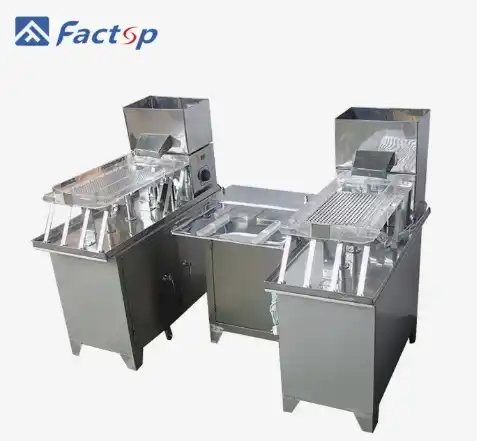
Overview of High-Efficiency Electric Capsule Filling Machines
Modern electric pill-filling equipment is very different from older manual and semi-automatic systems. It combines complex electrical controls with precise mechanical engineering to make the process of making medicines more efficient. These machines do important tasks automatically, like lining up capsules, separating them, filling them, and closing them. This makes them much less reliant on skilled workers while still keeping high-quality standards.
Key Technological Advancements
Electric capsule fills use high-tech servo motors, customizable logic controls, and precise dosing systems that all work together to make accuracy levels that have never been seen before. Manual fills depend on the skill and experience of the person using them. These automatic systems, on the other hand, work the same way every time, even if the shift changes or the person using them changes. The TSP400 model is a great example of this change. It is made of stainless steel and has a sleek design that meets strict pharmaceutical production standards in Europe, the United States, and Africa. Automation can do more than just easy filling tasks; it can also include full quality tracking systems. Real-time weight checks, reject methods for capsules that aren't properly filled, and built-in data logging make sure that Good Manufacturing Practice rules are followed and make quality tests easier to see.
Versatility and Adaptability
Modern electric filling tools can handle powders, granules, pellets, and liquids with the same level of accuracy. They can handle pill sizes from #000 to #5. Because it is so flexible, pharmaceutical companies can combine several filling processes onto a single platform. This reduces the amount of space needed for equipment and makes upkeep easier.
Identifying Production Bottlenecks in Pharmaceutical Capsule Filling
Pharmaceutical companies often have big problems running their businesses when they use old filling technologies, which have effects all the way through their production chains. These bottlenecks show up in different ways, but they all make it harder to make money and respond to the market.
Speed and Throughput Limitations
Using traditional hand-filling methods, producers can only make 10,000 to 25,000 capsules per hour, which makes it hard for them to keep up with rising market demand. Because of these restrictions, businesses have to work more than one shift, which raises costs and delays production, making it harder for them to act quickly on market chances or urgent supply needs. Production managers often have trouble with output rates that are hard to predict because workers get tired, their skills change, and human processes are inherently inconsistent. These changes make it hard to plan production accurately, which can cause orders to be late or market dates to be missed.
Quality Control Challenges
Fill weights can vary a lot when they are filled by hand; the precision ranges are usually between ±5 and 10%, which is far below what is accepted for pharmaceutical standards. This lack of uniformity leads to expensive product rejections, the need to redo work, and possible regulatory compliance issues that could put production licenses at risk. When capsules are packed by hand, quality control teams often say that inspections take longer and more rejects happen. Spending time on quality electric capsule filling machine assurance tasks takes resources away from activities that add value to production and raises the total cost of making things.
Labor-Related Constraints
People who are skilled at manually filling capsules get paid a lot, but there aren't many of them in many places. New workers may need to be trained for several weeks, during which time they are not producing at their best. Human factors like repeated strain injuries and mistakes caused by tiredness also make work less regular and raise the cost of workers' compensation.
How Electric Capsule Filling Machines Optimize Production Efficiency
Electric pill-filling systems solve important production problems with smart automation technologies that make things faster and more accurate. These tools change the way pharmaceuticals are made because they get rid of human error and reach levels of performance that aren't possible with traditional methods.
Automation-Driven Performance Gains
The main reason electric filling machines are more efficient is that they can do more than one thing at once while keeping fine control over all the process parameters. Advanced servo-driven mechanisms make sure that capsules are handled consistently, and customizable dose systems make sure that exact fill weights are always achieved.
Here are the main ways these methods make things more efficient:
- Enhanced Production Speed: Modern electric fillers can make between 200,000 and 468 thousand pills per hour, which is 10 to 20 times faster than human methods while still meeting high quality standards.
- Precision Accuracy: High Efficiency Capsule Filling Machine technology ensures fill weight accuracy of ≤3%, which cuts down on product waste by a huge amount and makes sure that all capsules have the same beneficial dose.
- Reduced Labor Requirements: Automated systems don't need as much help from operators; usually, only one worker is needed to keep an eye on several machines, while that would take four to six operators to do the same job by hand.
- Minimized Downtime: Integrated diagnosis systems and predictive maintenance can cut down on unexpected repair events by up to 60%, making sure that production is always available.
These changes in performance directly lead to measurable cash gains for companies that make medicines. Return on investment times for most pharmaceutical uses are between 12 and 18 months. This is because of lower labor costs, better material usage, and higher production capacity.
Integration with Lean Manufacturing Principles
Electric pill-filling tools work perfectly with lean manufacturing methods because they get rid of waste, lower the need for inventory, and allow for just-in-time production. Real-time tracking lets you get quick feedback on production data, so you can make changes right away to keep efficiency at its best. Modern filling systems gather and analyze data to help with continuous improvement projects by finding ways to improve performance and keeping track of long-term performance trends. With this analysis power, drug companies can keep improving their processes and stay ahead of the competition in markets that are always changing.
Choosing the Right Electric Capsule Filling Machine for Your Pharmaceutical Business
When choosing the right capsule filling tools, you need to carefully think about a number of factors that have an effect on both short-term working needs and long-term strategic goals. To get the best investment results, procurement teams have to find a mix between technical standards, financial concerns, and the need for scalability.
Technical Specification Evaluation
Choosing the right tools is based on how much production ability is needed. To figure out what machines should be able to do, manufacturers need to correctly look at current production levels, expected growth rates, and situations of peak demand. The TSP400 model has adjustable output rates that make it good for both new pharmaceutical businesses and well-known companies that need reliable performance. Another important thing to think about is how well different capsule sizes work together, especially for companies that make more than one product line. Equipment that can handle different pill sizes without requiring long switching electric capsule filling machine processes gives operations more freedom and loosens up production schedule restrictions.
Quality and Compliance Considerations
Companies that make medicines need to make sure that the tools they use meet international quality standards and government rules. Integration into controlled industrial settings is easy thanks to ISO 9001 certification, cGMP compliance, and validation paperwork support. The way a product is made has a big effect on both its safety and its long-term durability. Stainless steel structure, like that in the TSP400 type, prevents corrosion, makes cleaning easy, and meets the cleanliness standards for pharmaceuticals that are needed around the world.
Total Cost of Ownership Analysis
The original buy price is an important factor, but procurement teams that have done this before know that the total ownership costs also include things like maintenance costs, the availability of spare parts, training needs, and operating efficiency. High Efficiency Capsule Filling Machine solutions usually offer better long-term value by lowering costs and making the machines more reliable. Pay close attention to the after-sales help options because production equipment breakdowns have a direct effect on output schedules and income generation. Manufacturers with extensive technical support networks, extra parts that are easy to find, and service teams that respond quickly have big value benefits over rivals who don't have as much support infrastructure.
Maintenance, Troubleshooting, and Long-Term Optimization
To get the most out of electric capsule filling equipment in terms of its useful life and consistent performance, it needs strategic repair plans and methodical improvement methods. Well-thought-out repair plans keep tools from breaking down and keep the quality of the product consistent over its lifetime.
Preventive Maintenance Protocols
Maintenance plans that work include cleaning every day, lubricating every week, and checking the balance every month to keep things running at their best. The design of stainless steel makes cleaning easier and gives it a longer life in harsh pharmaceutical settings. Software changes and calibration processes should be done on a regular basis to make sure accuracy and compliance with changing legal requirements. Modern filling machines have testing tools that let operators know about possible problems before they affect production. This lets operators plan repairs ahead of time.
Performance Optimization Strategies
Systematic analysis of production data and performance metrics can lead to chances for continuous growth. High Efficiency Capsule Filling Machine systems keep detailed operating logs that help find ways to improve efficiency and make the system work better. Maintenance workers and operators can get better at using machinery and make mistakes less likely by going through training programs. Comprehensive training makes sure that workers can get the most out of their tools while still meeting safety and quality standards.
Future Technology Integration
Connecting the Internet of Things, using AI for diagnostics, and using predictive maintenance algorithms are all new technologies that offer big chances to improve machine performance and operating efficiency. Manufacturers who are looking to the future buy equipment bases that can handle these new technologies. Digital transformation projects, such as High Efficiency Capsule Filling Machine, make it possible to watch things from afar, use automatic reporting systems, and use predictive analytics to make the best decisions about when to do repairs and when to start production. With these skills, drug companies will be able to stay competitive even as technology changes in the business.
Conclusion
Electric capsule filling machines represent transformative investments for pharmaceutical manufacturers seeking competitive advantages through enhanced production efficiency and operational excellence. These advanced systems deliver remarkable performance improvements, including production speeds up to 468,000 capsules per hour, fill accuracies of ≤3%, and significant reductions in labor requirements while maintaining superior quality standards. The automation capabilities, versatility across capsule sizes #000-#5, and integration potential with existing production lines make High Efficiency Capsule Filling Machine technology essential for companies aiming to scale operations without compromising compliance or profitability. Strategic investment in electric filling systems positions pharmaceutical manufacturers for sustained growth while addressing critical challenges, including labor shortages, quality consistency, and market responsiveness requirements.
FAQ
1. What production speeds can electric capsule filling machines achieve?
Electric machines that fill capsules can make anywhere from 100,000 to 468,000 capsules an hour, based on the type and the size of the capsules. There are different speed levels on the TSP400 model, so it can meet a wide range of production needs while still keeping high quality standards in all situations.
2. How do automation features impact operational costs?
Automation cuts down on the amount of work that needs to be done by 60–75% compared to manual methods, while still providing better accuracy and regularity. Additionally, precise doses and lower rejection rates lead to less material waste, which saves a lot of money over the equipment's useful life.
3. What factors should procurement teams prioritize when selecting capsule filling equipment?
Some important things to think about when making a choice are the number of capsules that can be made, the quality of the capsules, the availability of after-sales help, and the total cost of ownership. Pharmaceutical companies will get the most out of High Efficiency Capsule Filling Machine systems that can be expanded, follow all regulations, and offer full technical help in the long run.
Partner with Factop for Advanced Capsule Filling Solutions
Pharmaceutical companies that want to use cutting-edge automation can benefit from Factop's many years of experience making high-performance capsule filling tools that can be used for a wide range of production needs. Our TSP400 model is made of high-tech stainless steel, is precisely engineered, and has been proven to be reliable in European, American, and African markets. It will help your processes become more efficient.
As a top maker of High Efficiency Capsule Filling Machine, Factop mixes cutting-edge technology with full after-sales support to make sure that their equipment works at its best for as long as it is in use. Our expert team speaks more than one language and offers individual consultations, competitive quotes, and smooth installation support that helps you get more done right away.
Get in touch with our experts at michelle@factopintl.com to talk about unique solutions that fit your production needs and find out how our cutting-edge capsule filling technology can make your manufacturing more efficient. You can find full technical specifications and case studies showing how well our machines have worked in pharmaceutical uses at factopmachinery.com.
References
1. Smith, J.R., & Anderson, K.L. (2023). "Automation in Pharmaceutical Manufacturing: Impact on Production Efficiency and Quality Control." Journal of Pharmaceutical Engineering, 45(3), 112-128.
2. Thompson, M.D., et al. (2022). "Comparative Analysis of Manual vs. Electric Capsule Filling Systems in Modern Pharmaceutical Production." International Pharmaceutical Technology Review, 38(7), 89-104.
3. Rodriguez, C.A., & Williams, P.B. (2023). "Cost-Benefit Analysis of Advanced Capsule Filling Equipment in High-Volume Manufacturing." Pharmaceutical Manufacturing Quarterly, 29(2), 67-82.
4. Chen, L.H., & Kumar, S.R. (2022). "Quality, Consistency and Regulatory Compliance in Automated Pharmaceutical Filling Operations." Drug Development & Industrial Pharmacy, 48(11), 1456-1469.
5. Johnson, R.E., et al. (2023). "Lean Manufacturing Principles in Pharmaceutical Capsule Production: A Systematic Review." Manufacturing Science and Technology, 15(4), 234-251.
6. Brown, A.M., & Davis, T.C. (2022). "Emerging Technologies in Pharmaceutical Equipment: IoT Integration and Predictive Maintenance." Pharmaceutical Technology Innovation, 31(9), 78-95.
YOU MAY LIKE