
How to Choose the Best Tablet Press for Candyland Products: A Complete Guide
2026-03-27 11:00:00
To find the best Tablet Press for Candy Manufacturing, you need to carefully think about how much you need to make, what kind of tools you need, and how you want to use it. More and more, candy makers today have to make regular, high-quality goods while also keeping costs low and following strict rules about food safety. Getting the right tablet press machine can change the way you make candy in a big way. It will make sure that all of your tablets are the same weight and are crushed properly. It will also make sure that you always get good results that meet customer and government standards. If you want to buy tablet pressing equipment for your business, you should know about the technical features and performance limits of the equipment. This is true whether you're making mint tablets, lozenges, or other specialty sweets.
Understanding Tablet Press Machines for Candy Production
Core Components and Operational Principles
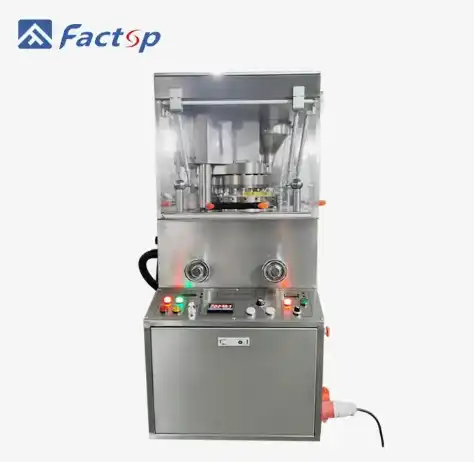
Candy is made with tablet press tools. It takes a lot of work to make pills of the same size and shape out of powdered or granular ingredients. Everything that goes into the compression chamber is always fed by the feeding device. The upper and lower punches work together to put controlled pressure on that spot. The variable-speed motors power the drive system, which keeps the machine going easily. The control panel lets workers change important settings like the speed of production, the thickness of the tablets, and the compression force. Candy tablet makers today use cutting-edge compression technology that works with the unique features of candy ingredients. In contrast to medicine uses, candy recipes generally have more sugar and need to be kept at a certain temperature so they don't stick or crack when they are pressed.
Machine Types and Configuration Options
You can make a lot of candy at once with a rotary tablet press. Lines like the ZP15B/19B/23B can make as many as 69,000 items in an hour. This machine is always on and has several compression stations set up in a circle. This makes it possible to make tablets at different stages of the compression operation at the same time. You can change the speed of the spinning from 5 to 25 rpm, so you can match the qualities of the ingredients to the needs of the output. Single-punch tablet presses are good for study projects and small output runs. You can have more control over how each tablet is made with these tools. They are great for coming up with new recipes and making sure the quality of the end goods. You should use a rotary or single-punch setup based on how much is being made, how flexible the process needs to be, and how many different types of goods are needed.
Multi-Layer Compression Technology
Advanced Tablet Press for Candy machines can squeeze more than one layer at the same time. This lets people make complicated candy tablets with many layers, colors, or tastes. This technology lets people make new things while having exact control over how each layer is made and how thick it is. Based on how the model is set up, the compression process can work with screens that are up to 50 mm across and 1 to 14 mm thick.
Key Factors to Consider When Choosing a Tablet Press for Candyland Products
Production Capacity and Speed Requirements
The first thing you need to do when picking a tablet press is figure out how much you need to make. Most of the time, big candy companies need spinning presses that can make thousands of tablets an hour. Smaller businesses might do better with equipment that is more flexible but has less space. There is a lot of candy that the ZP series machines can make every hour—up to 69,000 pieces. This means that they can be used in big candy plants. When planning production, it's important to think about when demand is high, when you'll need to switch between goods, and when you think production will grow in the future. When you buy equipment that can be expanded as needed, work doesn't get stuck. This also lets your business grow without having to buy new equipment right away.
Compression Force and Tablet Specifications
When making candy pills, it's very important to keep the breaking force under tight control. Different kinds of candy need different amounts of pressure to get the best look, hardness, and stability. The best tablet presses should have accurate feedback systems and amounts of compression force that can be changed so that each candyland tablet press batch gets the same results.
Here are the most important choices for compression that change the quality of candy tablets:
- Precise pressure control: Modern methods can precisely control pressure within a ±2% range. This makes sure that tablets are always hard and stops problems like cracking or lamination that happen a lot with sugar-based recipes.
- Tooling systems that can be quickly switched out let you make changes to different products and can handle the stamped needs of candy products that come in different shapes, sizes, and styles.
- Controlling the temperature: The right amount of heating or cooling is built in to keep the compression temperatures just right. This keeps the sugar from crystallizing and makes sure the tablets come out smoothly.
These compression skills directly fix common issues in candy making, like ingredients sticking together, pill weight changes, and flaws on the surface that can lower the quality of the product and make it less appealing to customers.
Automation Level and Control Systems
Today's candy tablet presses have complicated control systems that make them work better and make the goods they make better. As the material is fed in, automated systems make sure it is spread out evenly, and real-time tracking checks on important things like tablet weight, thickness, and crushing force. These systems make it so that operators don't have to do as much work and keep output changes to a minimum. It should be simple to use the control tool, with clear lists of settings and alarms that go off when something is wrong. Some models are more advanced and can remember recipes. This makes it easy to set up different types of candy and speeds up the time it takes to switch between runs.
How to Assess Tablet Press Machine Suppliers and Brands
Evaluating Supplier Credentials and Experience
Look at a tablet press provider's knowledge, technical know-how, and track record of using their machines for candy-making to find one you can trust. Well-known companies show what they can do by giving you specific product paperwork, showing that they follow certification rules, and showing you customer feedback from production sets like yours. Getting a quality certificate, such as one from ISO 9001, shows that you follow regular manufacturing standards and use organized quality management practices. Companies that sell tools for making sweets should be able to back up their claims with detailed technical specs, performance data, and proof that they follow all food safety rules.
After-Sales Support and Service Capabilities
The Tablet Press for Candy needs full after-sales service to keep working at its best for as long as it is being used. Providers you can trust offer installation services, training programs for workers, and ongoing technical support to help with issues at work and boost output. Extra parts should be easy to get, upkeep plans should be in place, and emergency repair services should all be available. The location of the seller and how well they serve local customers have a direct effect on response times and the level of service. This is very important for work tools that are used for important tasks.
Warranty Provisions and Technical Assistance
Equipment contracts show that the seller is sure of the quality of their goods and protects you in case there are issues with how they were made or they break down before they should. The warranty should cover all mechanical parts, electrical systems, and software for computers. It should also be clear how to fix or replace things. Technical support programs make tools more valuable by helping to fix problems, improve speed, and make sure they work right all the time. These programs help farmers get the most out of their tools and make sure that the quality of their goods stays the same over the life of the tools.
Operational Best Practices and Maintenance Tips for Candy Tablet Press Machines
Preventive Maintenance Protocols
The tablet press lasts longer, works better, and has less unwanted downtime when it is serviced regularly. As part of regular care, the compression should be cleaned every day, the oil should be checked once a week, and the tuning should be checked once a month. Some important maintenance jobs are looking for damage in punches and dies, keeping an eye on wear, and planning when to change parts based on how much is being made and how the material works. Proactive maintenance finds problems before they hurt the quality or speed of production by keeping good records of maintenance.
Troubleshooting Common Operating Issues
If you know what problems happen most often with the Tablet Press for Candy, you can fix them quickly and keep production going as easily as possible. Most of the time, problems with weight difference are caused by problems with feeding or powder flow. These can be solved by changing the material being made or by adjusting the Candyland Tablet Press's feeder. When tablets stick, it's generally because the temperature isn't being handled right or there isn't enough grease in the mixture. When you keep an eye on the crushing force, you can find tool wear or changes in the material's features that impact the tablet's quality. To make it easier to fix problems and make the process better, workers should keep detailed production logs that list quality notes, parameter settings, and material batches.
Cleaning and Sanitization Procedures
Equipment must be cleaned and scrubbed well between production runs and especially when tastes or recipes are changed in order to meet food safety standards. When you take something apart, it should be easy to clean every part that comes in contact with the product. The cleaning process is always the same with automated cleaning devices because they make cleaning faster and better. There are ways to make sure that the cleaning steps work and that different kinds of candy don't get contaminated. To prove that food safety rules are being followed, records must include how the food was cleaned, the results of tests, and proof that operators were trained.
Maximizing Candy Tablet Quality and Production Efficiency
Recipe Optimization and Ingredient Preparation
To get the best pills, you must first make sure that the ingredients are properly made and that the mixture is at its best. To get even compression effects, candy ingredients need to have a certain amount of water, a range of particle sizes, and the ability to move. Some of the steps that are done before the material is compressed are screening, mixing, and granulating. These steps make the material more uniform and better at handling it. How hard and how quickly pills break down depend on the type of glue used and how much of it is used. The best recipe meets all of your needs for taste, structure, look, and compression. It should also be affordable and stay stable on the shelf for the whole life of the product.
Process Parameter Optimization
Making small changes to the compression settings makes screens better and boosts output. As the compression force changes, different recipes can be made, but the pills will still be hard and look the same. Speed optimization strikes a mix between high standards of quality and high levels of production. For candy recipes that need to be kept at a certain temperature, this is very important.
Here are the most important things that can be done to make candy pills better:
- Compression speed adjustment: The lamination process can be stopped by changing the compression speed to match the features of the material. This also makes sure that the density is spread out equally in each tablet.
- Pre-compression settings: This gets rid of air pockets and makes the tablet stronger, which is especially important for recipes with a lot of ingredients.
- Checking ejection forces: Checking ejection forces helps find issues with sticking and offers covering changes to keep tablets from getting broken when they are taken off.
These ways of streamlining production are much more consistent. Tablet Press for Candy waste is cut down, and the high-quality standards that candy companies need to stay competitive are maintained.
Quality Control Integration
By setting up strict quality control systems, the Tablet Press for Candy can always make sure that its output meets legal standards. Tools that track in real time keep an eye on quality issues like weight, thickness, sharpness, and look during production runs. To keep things under control, statistical methods look for trends and changes that need to be fixed by altering the settings. New supplies should be inspected, work-in-progress should be watched, and the finished result should be checked for quality. Before they are packaged, tablets that don't meet standards are thrown away by automated systems. This keeps the product's quality good and cuts down on the need for people to check it.
Conclusion
To pick the best tablet press for making sweets, you should carefully think about how much you need to make, how well the equipment works, and how good the customer service is from the seller. These days, continuous tablet presses like the ZP15B/19B/23B line can make up to 69,000 pieces per hour; that's a lot of tablets. They can be handled very exactly to meet the needs of each tablet. When choosing an investment, it's important to think about how much the equipment will cost up front compared to how much it will save in the long run by decreasing the need for upkeep and increasing production speed. For a tablet press application to work, workers must be well-trained, there must be a plan for regular maintenance, and there must be ongoing work to make the process better so that the equipment works better and the products are always the same.
FAQ
1. What production capacity should I expect from a candy tablet press?
Modern spinning tablet presses can make up to 69,000 tablets an hour, but this depends on the types of tablets and the materials used. The ZP series machines can change speed between 5 and 25 rpm, which means they can handle a wide range of candy recipes and quality standards.
2. How do I prevent tablet sticking issues during candy production?
When there isn't enough oil or the compression temperature is too high, tablets tend to stick. For example, you could change the speed of compression, use the right oils in the right amounts, and set up systems to keep the temperature just right for pressing.
3. What tablet sizes can modern candy presses accommodate?
Tablet Press for Candy methods today can work with tablets that are up to 50 mm across and 1 to 14 mm thick, depending on the type. It's possible to make complicated tablet shapes that need different widths with multi-layer compression.
4. How often should tablet press maintenance be performed?
Plans for preventive maintenance include cleaning and inspecting everything every day, checking for greasing every week, and making sure the numbers are correct every month. Change the punch and die when the material is rough or when a lot of things are being made. Most of the time, each set has 100,000 to 500,000 tablets.
5. What quality certifications should I look for in tablet press suppliers?
If a company has the ISO 9001 quality management certification, it means that they handle quality in a planned way. Clearances for food safety, like FDA compliance, make sure that the tools used to make sweets meet the rules and standards for making them.
Contact Factop for Your Candy Tablet Press Solutions
Learn more about how Factop's cutting-edge tablet pressing technology can change the way you make candy with solutions that were designed to work with candy. We have a ZP series constant Tablet Press for Candy tools that can make up to 69,000 pieces per hour. These tools meet the high-quality standards needed to make candy that can compete on the market. Factop is one of the best companies that makes tablet presses. They use cutting-edge technology and offer a wide range of support services to make sure their customers are happy and their equipment works well. Contact michelle@factopintl.com right away to talk about your specific needs and look into choices for custom tablet pressing that will help you make more goods and do them better.
References
1. Smith, J.A. (2023). "Advanced Compression Technology in Food Manufacturing Equipment." International Journal of Food Processing Technology, Vol. 15, Issue 3, pp. 45-62.
2. Chen, L.M. & Rodriguez, P. (2022). "Quality Control Systems in Confectionery Tablet Production." Food Engineering Quarterly, Vol. 28, No. 4, pp. 112-128.
3. Thompson, K.R. (2023). "Preventive Maintenance Strategies for Industrial Tablet Press Operations." Manufacturing Technology Review, Vol. 41, Issue 2, pp. 78-94.
4. Williams, D.E. & Park, S.H. (2022). "Optimization of Compression Parameters in Candy Manufacturing." Confectionery Technology Advances, Vol. 19, No. 1, pp. 23-39.
5. Anderson, M.J. (2023). "Supplier Selection Criteria for Pharmaceutical and Food Processing Equipment." Industrial Equipment Management, Vol. 35, Issue 4, pp. 156-171.
6. Liu, X.Y. & Johnson, R.T. (2022). "Emerging Trends in Tablet Press Technology for Specialty Food Applications." Food Technology Innovation, Vol. 12, No. 3, pp. 89-105.
YOU MAY LIKE