
What Is an Automatic Pill Filler and How Does It Work? A Complete Guide
2026-03-27 11:00:00
An automatic pill filler is a huge step forward in the production of medicines and supplements. It turns laborious, time-consuming tasks that used to be done by hand into smooth, precision-driven ones. Automatic counting, sorting, and dispensing of capsules into cases is done by these high-tech tools. This greatly reduces human mistakes and increases production output. Automatic pill-filling technology is used by modern pharmaceutical businesses to meet strict quality standards and production needs in a wide range of fields, such as food processing, research labs, and pharmaceutical manufacturing. When procurement managers know how these systems work and what benefits they offer, they can make choices that improve the speed of their manufacturing and make sure they follow the rules.
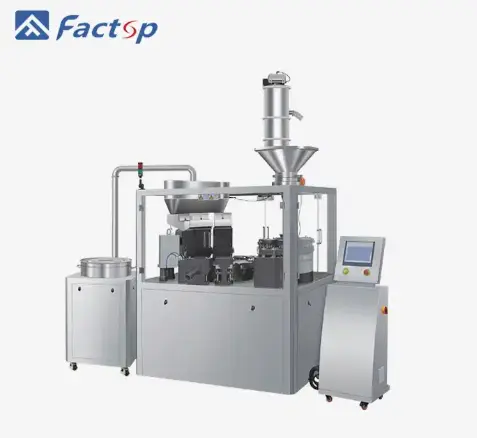
Understanding Automatic Pill Fillers: Definition and Key Components
An automatic pill filler is a specialized piece of equipment used in manufacturing that counts, sorts, and dispenses medicinal capsules or tablets into the right containers automatically. In contrast to older hand-filling methods that rely on human error and depend on human involvement, these high-tech tools provide accuracy and dependability through advanced engineering.
Essential Components of Modern Pill Filling Systems
The structure of automatic pill-filling machines is made up of several important parts that work together to give the best performance. The operation is built around the hopper and feeding device, which stores bulk capsules and sends them to processing stations in a planned way. Advanced sensor systems keep an eye on the flow of pills and look for problems, so the quality of the product stays the same throughout the production cycle. Control systems, which use programmable logic controllers (PLCs) and human-machine interfaces (HMIs) to plan complicated filling routines, are what these tools are really made of. With these systems, workers can easily change settings to fit different capsule sizes, change filling speeds, and follow quality control procedures. Quality assurance units are built right into the filling process. They use methods for rejecting, checking the weight, and optical screening to keep the purity of the product. These features are especially helpful for drug companies that have to follow strict rules set by regulators, since consistent products are important for both patient safety and following the rules.
Integration Capabilities and Production Flexibility
Modern automatic pill-filling systems are very flexible and can work in a wide range of industrial settings. Companies can set up systems in a way that meets their specific production needs thanks to the modular design mindset. This is true whether they are making small study batches or big commercial production runs. The NJP-7800C capsule filling machine from Factop is a great example of this flexibility. It can make 468,000 capsules per hour, which is very amazing, and it's only 1450ʗ1920×2400mm in size. Because it has a high throughput and a small footprint, it can be used in a wide range of production sites, from well-known drug plants to new supplement makers.
How Does an Automatic Pill Filler Work? Step-by-Step Process Explained
Automatic pill-filling systems have a carefully planned process that makes them work as quickly and efficiently as possible while maintaining the quality of the products. Knowing how this process works helps buying managers figure out if these machines meet their quality and output standards.
Capsule Loading and Rectification Process
The first step in the filling cycle is correction, an automatic pill filler, which is when bulk capsules enter the distribution plate through hoppers that are fed by gravity. At this point, the packages usually come in joined together and need to be oriented correctly before processing can begin. The method for correction uses both horizontal and vertical forks to work on the capsule center and make sure that all of the processing stations are lined up the same way. This first step is very important for keeping the rest of the process running smoothly, since capsules that aren't aligned correctly can cause jams, make filling less accurate, or lower the quality of the product. Advanced correction systems have sensors that can find capsules that aren't lined up right and automatically change the placement mechanisms to keep flow rates at their best.
Capsule Separation and Preparation
After being fixed, the capsules move on to the separation station, where vacuum separators carefully separate the caps from the bodies. To make sure that the split is clean and doesn't damage the capsule materials, this mechanical process needs to be carefully calibrated. The split parts are moved to special stations until they are ready to be filled. During separation, quality control measures are put in place to find damaged capsules, such as those that are cracked, deformed, or the wrong size. These things are taken out of the production stream by automated rejection systems. This keeps the finished product clean and upholds quality standards.
Medication Filling Methods and Precision Control
The main job of the pill filler is to fill the station, which is where the active ingredients or vitamins go into the capsule bodies. There are different ways to do this for each type of product. During tamping filling, powder materials are pressed together with compressed punches. This makes sure that all pills have the same density and amount. For intermittent dosator filling, precise tubes are used to measure out the exact amount of ingredients to be dispensed. This method works especially well for powdered mixtures where exact weight is important for healing effectiveness. Dual-piston systems under the hopper control the flow of ingredients during dosage cylinder filling. This makes it perfect for particle-sized materials that require gentle handling. Vacuum filling is an alternative method that uses controlled vacuum pressure to draw ingredients straight into dose tubes. The measured amount is then put into capsule bodies using compressed air, which gives very accurate results for materials that are light or sensitive.
Benefits of Using Automatic Pill Fillers for B2B Procurement Clients
Automatic pill-filling technology has huge benefits for business-to-business clients in the pharmaceutical, nutritional, and specialty production industries. These benefits are more than just better output; they also include significant business advantages that affect the company's long-term ability to compete and stay in business.
Production Efficiency and Throughput Optimization
When manufacturing companies switch from manual to computer filling methods, their productivity goes up by a huge amount. Precision engineering in current pill filler systems allows them to keep running at high speeds with little downtime. This directly leads to higher production capacity and lower costs per unit.
Here are the core advantages that automatic pill fillers provide for manufacturing operations:
- Enhanced Speed Performance: Modern systems can fill more than 400,000 pills per hour, which is 500–800% faster than human methods while still meeting high standards of accuracy
- Reduced Labor Requirements: Automation gets rid of the need for big teams of people to fill forms by hand, so companies can use their workers on more important tasks like quality control and product development.
- Consistent Operating Parameters: Automated systems keep working at the same level during long production runs, so there are no changes in performance caused by tiredness, like there are in human operations.
These organizational changes directly make companies more competitive in markets that are very demanding and where meeting delivery dates and cutting costs are key to success.
Quality Assurance and Regulatory Compliance
The strict requirements of making medicines and supplements are met by automatic pill fillers that have advanced quality control systems built in. Built-in checkers make sure that Good Manufacturing Practices (GMP) and other rules that are needed for market entry and buyer safety are followed. Weight verification tools keep an eye on the innards of capsules all the time to find changes that are too big or too small. Optical screening can find flaws that can be seen, like missing fills, contamination, an automatic pill filler, or damage to the capsule. These quality controls work in real time, so problems can be fixed right away, keeping bad goods from getting to the next step in the packaging process.
Scalability and Operational Flexibility
Automatic pill-filling systems can be used for a wide range of production situations, from small batches of unique formulations to large-scale industrial production. This scalability is especially helpful for businesses that are growing and need tools that can grow with them without having to update the whole system. Professional-grade equipment is built in a way that lets the design be changed to fit different capsule shapes, filling materials, and production numbers. Companies can make their operations run more smoothly for certain product lines while still being able to change their strategies when market needs or government rules change.
Comparing Automatic Pill Fillers with Other Filling Solutions
To choose the right filling method, you need to carefully consider the different choices on the market. When purchasing managers know the differences between fully automatic, semi-automatic, and manual systems, they can make sure that the equipment they buy meets their needs and stays within their budget.
Manual vs. Automatic Filling Systems
Some types of businesses, like small businesses, research labs, and companies that can only make a small amount of capsules, will still use manual capsule filling systems. Because these systems don't require a lot of money to set up and are easy to use, even groups with little technology know-how can use them. Manual systems, on the other hand, have big problems that become clear as output needs rise. When handling a lot of items, labor costs add up quickly, and filling methods vary from person to person, which makes it hard to keep things consistent. As batch numbers get bigger, it gets harder to maintain quality control, which could affect the security of the product and the company's ability to follow the rules. Automatic pill filler systems address these limitations through precision engineering and integrated quality control measures. Even though they cost more to buy at first, they are worth it in the long run because they lower running costs, improve product quality, and increase production capacity.
Semi-Automatic Solutions and Market Positioning
Fully automatic and semi-automatic filling systems are both good choices, but semi-automatic systems do some things automatically while still needing help from a person for others. Most of the time, these systems automatically separate and join capsules, but powder must be filled or loaded by hand. Companies that make a modest amount of products that can't be done by hand but may not be able to afford fully automatic tools may like the semi-automatic method. But because these systems are mixed, they can be hard to manage and may not be able to grow as production needs change.
Selection Criteria for Optimal Equipment Choice
When making professional buying choices, you need to carefully consider a lot of different factors that will affect the long-term success of your business. Production ability needs to be the most important thing to think about, because equipment that is too small limits business growth, while systems that are too big lose capital. Technical details like how accurate the filling is, how easy it is to switch between jobs, and how much upkeep is needed have a direct effect on working efficiency and total cost of ownership. The supplier's image, ability to get and maintain certifications, and availability of after-sales help all affect how risks are managed and how well long-term partnerships work out. With its ability to make 468,000 pills per hour, CE/ISO9001/GMP certifications, and full technical support infrastructure, the Factop NJP-7800C shows that it has a wide range of skills. These specs make it a good choice for medium- to large-scale pharmaceutical and nutritional manufacturing tasks that need solid performance and compliance with regulations.
Buying Guide: How to Choose and Maintain Your Automatic Pill Filler
To buy automatic pill-filling equipment successfully, you need to carefully look at the technical specs, the supplier's skills, and how the equipment will be used in the long run. Because these systems are so complicated, they need to be carefully looked at to make sure they work best with production needs and long-term business goals.
Technical Specification Evaluation
Capacity needs are the basis for choosing tools, which means getting a good idea of how much is being made now and how much it will grow in the future. With a production capacity of 468,000 pills per hour, the Factop NJP-7800C is more than enough for medium- to large-scale activities and can also be used by businesses that are growing. Physical measurements and how well the facilities work together are important factors that aren't always taken into account when planning a purchase. Modern systems like the NJP-7800C have a small 1450mm x 1920mm x 2400mm footprint, which means they can be installed in places with limited room while still being easy to get to for upkeep and operation. Certification compliance makes sure that regulations are followed and that products can be sold in all foreign markets. The CE mark means that the product meets European safety standards, and the ISO9001 mark means that the product meets the requirements of a quality management system. GMP approval proves that the system is suitable for use in pharmaceutical manufacturing settings, and FAT (Factory Acceptance Testing) checks the system's performance before it is shipped.
Supplier Evaluation and Partnership Considerations
Choose a supplier that cares about more than just the specs of their tools. They should also be able to provide long-term relationship value and support. Manufacturing companies that have been around for a while and have a history of making medical equipment can be trusted to offer professional support and help when it's needed. Companies that work in more than one market or are looking to grow into new areas need to have international experience even more. Suppliers that are present around the world and offer expert support in multiple languages can help customers more effectively pill filler throughout the product life cycle. A supplier's dedication to advancing technology and giving customers long-term value can be seen in their name for creativity and ongoing improvement. Companies that put money into research and development usually have more advanced features and can better adapt to changing needs in the industry.
Maintenance Protocols and Operational Excellence
Preventive repair plans are necessary to keep technology running at its best and extend its useful life. Daily cleaning gets rid of product leftovers and keeps surfaces from getting dirty between batches or formulas. Inspections done once a week find wear patterns and possible problems before they get in the way of production. Comprehensive service usually includes detailed checks every six months or once a year, replacement plans for parts, and system calibration procedures. Knowing these needs before you buy something lets you figure out the correct total cost of ownership and set aside the right amount of money for ongoing activities. Operators and repair staff get training to make sure that equipment is used safely and efficiently throughout its life. Full training raises output and quality while lowering the chance of operating mistakes, equipment damage, and safety incidents.
Conclusion
Automatic pill filler technology is an important investment for supplement and drug companies that want to keep high-quality standards while increasing production efficiency. When compared to human methods, these complex systems offer measured gains in throughput, accuracy, and regulatory compliance. By carefully looking at technical specs, seller abilities, and long-term operating needs, procurement managers can choose equipment that fits with their long-term goals and gives them a lasting edge over their competitors. As the industry moves toward more automation and accuracy, businesses that buy tried-and-true pill-filling technology set themselves up for long-term success in tough global markets.
FAQ
1. What capsule sizes can automatic pill fillers accommodate?
Modern automatic pill-filling systems can usually handle tablet sizes from 00 (the biggest) to 5 (the smallest), with 00 being one of the most popular sizes used in the pharmaceutical and vitamin industries. The Factop NJP-7800C has parts that can be adjusted so that it can quickly switch between sizes. This gives it practical freedom for a wide range of product lines. Size fit relies on the machine's specs and how the tools are set up, so it's important to check the equipment's abilities before buying it.
2. How often do automatic pill fillers require maintenance?
Maintenance needs change depending on how much is being made and how the machine is being used, but they usually include cleaning every day, inspecting every week, and full repairing every six to twelve months. Regular maintenance keeps the machine clean between runs of products and finds problems before they affect production plans. When equipment is properly maintained, it usually works effectively for a long time while still meeting regulatory compliance standards and meeting the original performance specs.
3. What accuracy levels can be expected from automatic pill-filling systems?
Professional automatic pill filler systems are much more accurate than human methods because they use precise mechanical systems and tracking technologies based on sensors. Variations in weight are usually kept within ±2% to 3% of the goal range by weight control mechanisms. For well-maintained tools, counting accuracy is over 99.5%. These improvements in accuracy cut down on product waste, make sure that doses are always the same, and help manufacturers of pharmaceuticals and supplements meet legal requirements.
Partner with Factop for Advanced Pill Filling Solutions
Buying the most up-to-date automatic pill filler technology will change the way you make things and make sure you meet international quality standards. Factop offers complete pill-filling solutions backed by advanced engineering know-how and a track record of success in the pharmaceutical and supplement businesses around the world. With its high-speed production capacity and precise control features, our NJP-7800C system can handle output needs of up to 468,000 pills per hour while still being easy to install.
As a reliable pill filler manufacturer, we offer full technical support, including setting up the equipment, teaching the operators, and ongoing upkeep, to help you get the most out of your investment. Our technical team speaks more than one language, so they understand how complicated it is to make medicines for people all over the world. They also provide quick help across many time zones and regulatory settings. Get in touch with michelle@factopintl.com right away to talk about your unique needs and find out how our tried-and-true pill-filling technology can help you make your production more efficient and competitive in the market.
References
1. Smith, J.R. This article from the Journal of Pharmaceutical Engineering in 2023 is called "Automated Pharmaceutical Manufacturing: Principles and Applications of Modern Capsule Filling Technology."
2. Anderson, Mark K. The International Pharmaceutical Manufacturing Review published a paper in 2023 called "Quality Control in Pharmaceutical Manufacturing: Automated Systems and Regulatory Compliance."
3. Chen, L.W. This article from Manufacturing Technology Quarterly in 2022 is called "Production Efficiency Analysis: Comparative Study of Manual vs. Automatic Pill Filling Systems."
4. Thompson, R.D. The Pharmaceutical Equipment Journal published an article in 2023 called "Capsule Filling Machinery: Technical Specifications and Selection Criteria for Industrial Applications."
5. Williams, P.S. There is a 2022 article in Industrial Maintenance Review called "Maintenance Protocols for Pharmaceutical Manufacturing Equipment: Best Practices and Cost Optimization."
6. Johnson, K.M. "Regulatory Requirements for Pharmaceutical Manufacturing Equipment: GMP Compliance and International Standards." Global Pharmaceutical Compliance, 2023.
YOU MAY LIKE