
Find Your Perfect Fit: Choosing a Capsule Filling Machine
2026-04-16 11:00:00
The key question when selecting the right capsule filling system is: what machine will help reach production goals without putting quality at risk, slowing down work, or causing service problems? The system needs to fit batch size, pill type, accuracy goal, and compliance needs, whether for a pharmaceutical plant, supplement brand, lab, or contract manufacturer. The fastest machine is not always the best fit. The right fit is one that aligns with budget and growth plans while delivering stable output, consistent fill weight, easy cleaning, and reliable support.
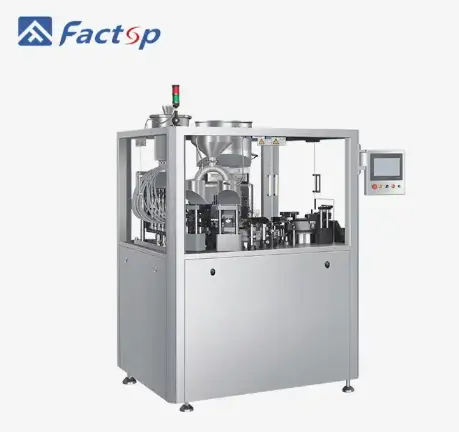
Understanding Capsule Filling Machines: An Industry Overview
A lot of different types of medicines, supplements, nutraceuticals, and herbal goods use capsule filling tools. In theory, their job is easy: they just need to take out the empty capsules, put powder, pellets, grains, or certain liquids inside the body, close the capsule, and let out the final units. In real life, the value of the tools rests on how well they work, how fast they work, and how well they can be controlled.
How does a capsule filling machine work?
Capsules are fed into the machine and orientated; the cap and body are separated; doses are given; the machine locks, and the capsules are ejected. Automatic types may also have control alarms, dust gathering, rectification, and refusal of faulty capsules. The dosing system, pill holder, vacuum or mechanical separation unit, control panel, and safety container are typically the most important parts.
The way of filling is important because it has a direct effect on the accuracy of the fill weight. Systems with tamping pins or dosators are often used for powder mixtures. To keep the flow steady, granules and pellets may need to be fed in different ways. When materials are purchased for more than one type of product, their compatibility should be verified prior to purchase.
Manual and semi-automatic choices
For research and development, pilot projects, and very small batches of output, manual machines work well. They are less expensive and give you more options, but they require more work and produce less. The tools in the middle are semi-automatic. They make things more consistent, lighter for operators, and a good choice for small businesses that want to be more efficient but don't want to switch to a fully automatic line.
Automatic systems for scale
Automatic tools are designed to keep working and give you more control over the process. They work great for drug companies, bigger supplement makers, and contract packers who need to meet strict output goals. Most of the time, these tools are more consistent, don't need as much help from a user, and work better with equipment for polishing, sorting, and packing.
Size range, accuracy, and compliance
Depending on the model and spare parts, most capsule filling machines can handle typical capsule sizes from 000 to 5. Buyers should make sure that the machine can handle the pill sizes, output range, and fill accuracy tolerance that are needed for their recipe.
Compliance is also important. When I work in an industry that is controlled, I should look for safeguarding, emergency stop systems, easy-to-clean touch parts, and designs that are based on good manufacturing practice (GMP). Smooth surfaces, low dust leakage, and repair places that are easy to get to all help lower the risk of contamination and downtime.
Assessing Your Business Needs: Matching Capsule Filling Systems to Your Operations
A smart buy starts with how the capsule filler equipment will work, not what the leaflet says it can do. The best match depends on what is being produced, the nature of the operation, and the required speed of growth. The right capsule filling system should align with those operational goals.
Which buyers need which system?
A study lab usually wants things to be small, easy to set up, and quick to switch over. A company that makes plant supplements might pay attention to how powder flows, how flexible pill materials are, and how much they cost. Validated performance, stable high-speed output, and documentation support are generally the most important things for a pharmaceutical company. Veterinarians who make medicines and people who work with speciality chemicals may need to handle odd materials in a rough way.
Performance indicators that actually matter
After reviewing the handouts, a useful set of KPIs has a direct impact on the overall running cost. Throughput per hour is important, but other key metrics include fill weight accuracy, rejection rate, cleaning time, ease of size changeovers, user requirements, spare parts accessibility, and control system usability. A machine with better service and fewer dosage errors—even at a slightly lower speed—can generate greater overall value.
Another critical factor is the capability of those performing upkeep. Output planning is slowed if removing, cleaning, or replacing key parts is difficult. This is especially relevant for buyers managing a high number of SKUs and frequent product changeovers.
Manual vs automatic: cost and efficiency
Manual tools lower the cost of entry but make more jobs dependent on labour. Even though they cost more to buy, automatic systems can lower unit costs in middle to large production settings. If I think the number of orders will go up, a semi-automatic or automatic tool might keep me from having to buy the same thing twice.
Maintenance and uptime planning
Maintenance that is done regularly is necessary for reliable output. Operators need to clean the contact parts after each use, check the wear parts, keep an eye on the vacuum and air systems, and make sure that the dose stations don't get clogged up. I trust a provider more when they offer training, help with planning spare parts, and troubleshooting, than when they just ship tools.
Comparing Capsule Filling Systems: Making an Informed Decision
People often look at speed, freedom, support, and the total cost of ownership when they compare their choices. The way people search also shows that they really want to find things like an automatic capsule filler, a capsule packaging machine, capsule filling tools, a semi-automatic capsule filling machine, and the price of a capsule machine. The question that drives all of them is the same: which capsule filling system works best for my business model?
What to compare beyond the machine itself?
Some buyers look at names like CapsuleFillerPro, PharmaFill, and CapsuleTech and compare the level of technology, guarantee, service response, and availability of parts. Even if two tools have the same estimated output, they can be very different to own.
High-speed vs. standard output models
High-speed models are useful for maintaining continuous capsule production, ensuring consistent staff efficiency, and reducing the cost per capsule as production volume increases. Standard models may be the best choice when there is a need to produce a wide variety of SKUs in short runs, and when operational flexibility is more important than maximising output.
When comparing choices, looking at the whole process of acquiring the machine, not just the price, is helpful.
- Outright purchase: If I buy something outright, I own it outright, and it may make sense when I have accepted capital expenditures and a stable production estimate. This path works well for well-known makers who want to keep track of their assets, get direct depreciation benefits, and plan their processes for the long run.
- Leasing or financing, including letting or buying capsule filler equipment, can help protect cash flow while increasing capacity. This choice may be suitable for small businesses, growing nutritional brands, and contract manufacturers that need to manage seasonal demand. The payment terms, service coverage, upgrade options, and end-of-term responsibilities need to be reviewed.
Implementing Your Capsule Filling System: From Purchase to Production
It's not enough to just buy the machine. Installing, teaching, and controlling the process early on will determine the real outcome of the Capsule Filling System implementation.
What to check before buying online or remotely?
The verification includes the reliability of the provider, the factory's production capabilities, the scope of service, the details of the guarantee, and whether customisation is possible. Videos of the machine in operation, technical drawings, electrical specifications, a list of recommended spare parts, and the range of capsule sizes that can be used are also reviewed. An indicator of the seller's competence is the ability to explain how the machine fits into the user's workflow.
Installation and staff training
Professional placement helps keep problems with alignment and starting from happening. It's also important to train. Operators need to know how to add capsules, change doses, clean the machine, recognise common alarms, and check for wear on parts. When there is good training, mistakes happen less often, and starting goes more smoothly.
Planning for growth and upgrades
To increase future capacity, selecting a machine base that accommodates scalable tools, downstream equipment that is compatible with it, or a path from semi-automatic to fully automated operations preserves capital and reduces the risk of future issues.
Why Choose Our Capsule Filling Solutions for Your Business?
We at Factop know that business-to-business buyers don't just buy tools. They are buying peace of mind about compliance, reliable output, and uninterrupted service. Jining Factop Pharmacy Machinery Company is a professional company that designs and makes pharmacy equipment like grinders, mixers, granulators, and packing lines. They also make tablet presses and capsule filling system equipment. Based on honesty, new ideas, and working together to benefit everyone, Factop is dedicated to making more value for clients around the world.
What makes Factop a practical partner?
The way we do things is based on stable tools, accurate filling, and quick help, including capsule filler equipment. We help both big businesses that need reliable automatic output and small businesses that want systems that are cheap and have room to grow. Our company also knows what plant managers, purchasing heads, quality control leaders, and production managers go through when they have to balance quality, cost, wait time, and service after the sale.
Service that supports real production
We help our customers choose the right machine, set it up, help with installation, train employees, plan maintenance, and keep in touch with them technically. That is important when downtime impacts company promises and shipping schedules. A good relationship with a source can be worth as much as the machine itself.
Conclusion
The right pill packing machine is the one that fits the product, the output goal, the need for compliance, and the growth plan. The best choice balances output, accuracy, upkeep, and support. Manual, semi-automatic, and automatic capsule filling system solutions each have their own specific roles. Looking at the big picture lowers risk and raises long-term yield. Factop helps B2B buyers make that choice by providing useful advice, reliable tools, and service based on what manufacturers really need.
FAQ
1. How do I choose the right speed and capacity for my production volume?
I start by looking at the current hourly demand, the projected growth, the batch size, the supply of labour, and how often the products change. A manual or mostly manual machine might be enough if output is low and SKUs change often. An automatic capsule filling system typically provides better efficiency and lower long-term unit cost if I run steady, higher-volume production.
2. What maintenance does an automatic capsule filling machine need?
As part of routine maintenance, parts that come into contact with the product are cleaned, wear parts are checked, vacuum and air systems are monitored, parts that need to be oiled are oiled as directed in the manual, and dosing consistency is checked. Schedules for preventative maintenance and training for operators are very important because they help keep accuracy and cut down on unplanned downtime.
3. Can I upgrade from a manual system to an automatic one later?
Yes, a lot of businesses that are growing start out with human or semi-automatic methods and then switch to automatic ones as demand grows. I should think ahead and pick a provider that can help me with training, spare parts, and finding tools that work with what comes next. Work
Partner with Factop for Capsule filler equipment Solutions
Are you ready to find a Capsule Filling System provider you can trust? If you want to get the best quality, output, and price, Factop can help you compare the different machines. You can get a price, talk about a system for sale, or set up a test with our team by emailing michelle@factopintl.com. You can trust Factop to help you with your next business update.
References
1. U.S. Food and Drug Administration, Current Good Manufacturing Practice regulations for finished pharmaceuticals
2. European Commission, EudraLex Volume 4, EU Guidelines for Good Manufacturing Practice
3. World Health Organization, WHO Good Manufacturing Practices for Pharmaceutical Products
4. ASTM International, capsule and pharmaceutical manufacturing standards publications
5. Adinath International, technical article on capsule filling machine types and working principle
6. Ruida Packing, technical guide to capsule filling machine operation and applications
YOU MAY LIKE