
Flower basket tablet press machines with automation features
2026-04-16 11:00:00
With strong pressure, stable shaping, and adjustable tools, a flower basket tablet press machine can turn powders or granules into bigger tablets. Automation features make the process faster, safer, and easier to manage. If you're a business buyer, the real value isn't just making tablets. It means constant output, less reliance on labour, easier upkeep, and a clearer view of the process. When I look at this kind of equipment for use in a lab, pharmaceutical, nutraceutical, food, chemical, or pharmaceutical setting, I pay close attention to the compression force, pill size range, control choices, ease of cleaning, and provider support. These things have a direct effect on uptime, quality, and return on investment.
Introduction
People on buying teams, quality teams, and production teams all ask me the same thing: how can a company make the line more consistent without making it too hard to use or too expensive? That's a good place for flower basket tablet presses that can be automated.
These tools are often used for goods that need tablets that are bigger, have unique forms, or compress well over time. People who buy things today aren't just looking at output. They also want it to be easy to run, have less downtime, make production safer, and get help from suppliers they can trust. The goal of this guide is to help B2B buyers figure out what's most important before they buy.
Understanding Flower Basket Tablet Press Machines and Their Automation Features
How does the machine work?
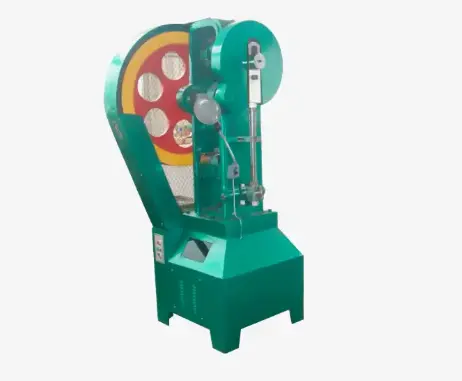
A flower basket tablet press machine has a single-station compression frame and a set of dies that are only used for making tablets. The process includes raw material preparation, die filling, compression, ejection, and inspection. Powders or granules move from the hopper into the die hole. Any extra material is trimmed down, and the punch presses down on the tablet to make it.
This design is suitable for larger tablets, products with complex shapes, and applications where steady pressure is more important than high output volume. Common application areas include pharmaceuticals, nutraceuticals, food tablets, chemical tablets, and certain types of industrial materials.
What automation features really mean for buyers?
Most buyers searching for this topic want a clear answer to how automation improves daily operations. Automation improves control, consistency, operator safety, and service effectiveness.
Common automation-related tasks include:
- Programmable controls allow operators to set compression pressure, speed, and other output parameters. This helps maintain batch-to-batch consistency and reduces errors during changeovers. In B2B manufacturing, even small process variations can lead to rework, waste, or failed quality inspections for entire production lots.
- Automated monitoring and fault reporting help production teams detect overload, abnormal sounds, stuck punches, or unstable processes early. This reduces unplanned stops and supports planned maintenance scheduling. In multi-shift operations, early fault detection helps maintain shipping schedules and lowers emergency service costs.
Key specifications to review
For example, the THP-6T model of the Flower Basket Tablet Press Machine has one set of punch dies, 60 kN of compression force, a maximum tablet diameter of 30 mm, a maximum tablet thickness of 13 mm, and a production rate of 3000 pieces per hour. These specifications provide a reference point for buyers producing larger tablets in controlled batches. When evaluating machine suitability, these numbers should be assessed against product formulation, target tablet dimensions, required hardness, and daily output requirements.
Advantages of Automated Flower Basket Tablet Press Machines for B2B Clients
Better throughput with stable quality
Automation helps maintain consistent compression conditions, which reduces tablet weight variation, improves appearance control, and ensures more consistent tablet hardness. In regulated industries, this consistency supports quality control and documentation requirements. In commercial applications such as supplements or confectionery tablets, it helps protect brand reputation and customer satisfaction.
A flower basket tablet press machine does not need to be the fastest machine in a facility. It needs to operate reliably, produce acceptable tablets, and reduce manual intervention requirements. Automated flower basket models are often well-suited to this role.
Lower operating risk and easier maintenance
Procurement teams evaluate both purchase price and long-term operating and maintenance costs. Machines with lubrication points, accessible components, clear operating controls, and easy-to-maintain punch and die systems simplify service work.
Recommended operating practices include checking die condition before use, verifying granule quality, testing compression manually or through controlled startup, listening for abnormal sounds, cleaning residual powder after production, and applying anti-rust treatment to tooling during storage. Automation supports these practices by providing operators with better feedback and reducing reliance on individual judgment.
Comparing Flower Basket Tablet Press Machines With Other Tablet Press Types
Flower basket vs rotary tablet press
For high-volume production, a rotary tablet press is typically the preferred choice. It produces significantly more tablets per hour, which suits large pharmaceutical or nutraceutical production lines. Trade-offs include higher cost, greater setup complexity, and larger floor space requirements.
A flower basket tablet press machine is a better choice for larger tablets, specific shapes, controlled production, and moderate output with less complexity. When the application does not require rotary-scale speed, it may offer better value.
Flower basket vs single punch press
Single-punch tablet presses are often the best choice for laboratory work, research and development, and very small production runs. While they are helpful and easy to use, they typically provide less process control or production consistency than a more robust flower basket design.
For B2B buyers transitioning from trial production to full-scale production, a flower basket machine serves as a useful intermediate option. It handles higher compression forces and maintains production stability better than a single punch system while costing less and being easier to operate than a rotary system.
Procurement Guide: How to Select and Buy Automated Flower Basket Tablet Press Machines?
What to check before requesting a quotation?
A buyer-focused evaluation should connect technical specifications to practical business needs, such as a flower basket tablet press. The following points should be discussed with each supplier:
- Throughput capacity: Real demand, not ideal specifications, should determine throughput capacity. A machine producing 3000 pieces per hour may be suitable for one product line but too small or too large for another. Output requirements should be assessed alongside planned shifts, break windows, and future growth to ensure the purchase meets both current needs and expansion plans.
- Automation level: The level of automation should match operator skill levels and quality objectives. Some facilities require only basic controls and safety features. Others need advanced tools for process stability, tracking, and troubleshooting. Operator interface simplicity, spare parts availability, and supplier post-installation service capability should be verified.
Why does supplier credibility matter?
Post-delivery support is as important as equipment performance. Before purchasing, buyers should verify the supplier’s manufacturing capability, quality control systems, training availability, installation assistance, and service and parts response times.
Jining Factop Pharmacy Machinery Company designs and manufactures pharmaceutical equipment, including grinders, mixers, granulators, tablet presses, capsule filling machines, and packaging lines. With bilingual staff experienced in international business, the company has established long-term relationships in Asia, America, Europe, and South Africa. Factop operates on principles of integrity, innovation, and mutual benefit, focusing on global cooperation and customer value.
Procurement teams value this background because it demonstrates equipment expertise, export experience, and cross-functional communication capability. A flower basket tablet press machine from a credible supplier provides long-term reliability.
Future Trends and Innovations in Automated Flower Basket Tablet Press Technology
Smarter production and predictive maintenance
The market is moving toward connected equipment. Buyers increasingly want online monitoring, production data access, and rapid fault detection capabilities. These functions align with Industry 4.0 principles and support the growing emphasis on uptime, documentation, and process control in the pharmaceutical and nutraceutical industries.
A Flower Basket Tablet Press Machine does not need excessive features to be useful. It must provide actionable information about operating conditions, simplify troubleshooting, and connect to the broader production system in a scalable way.
Energy and sustainability expectations
Energy efficiency is becoming more important in purchasing decisions. Facilities want equipment that uses power efficiently, reduces waste, and simplifies cleaning. Improved material handling and stable compression help reduce rejected tablets, supporting both cost reduction and environmental goals.
For many B2B buyers, the most future-proof machines, like the Flower Basket tablet press, balance reliability, ease of maintenance, and upgradeability.
Conclusion
Automated flower basket tablet presses offer strong compression, consistent processes, safety features, and reasonable investment levels for B2B buyers. They are suitable for companies needing larger tablets, specific shapes, or steady mid-volume production without the complexity of a full rotary system. Evaluation should focus on real production requirements, automation value, maintenance needs, and supplier support. A model such as the THP-6T Flower Basket Tablet Press Machine can be a good choice when its compression force, size range, and output align with the product line and long-term business plan.
FAQ
1. How does automation improve safety in a flower basket tablet press?
Automation improves safety by reducing manual intervention, simplifying process controls, and providing alerts for abnormal machine conditions. Features such as controlled startup, overload detection, and easier troubleshooting help reduce operational risk and unplanned downtime.
2. What is the difference between a flower basket tablet press and a rotary tablet press?
A flower basket press is generally better suited for larger tablets, unique shapes, and moderate output requirements with less complexity. A rotary press is the best choice for high-volume production where maximum output per hour is the primary goal, and the budget allows for a larger investment.
3. Can an automated flower basket tablet press handle different formulations?
Yes, provided the material properties are appropriate, and the machine specifications meet product requirements. Before purchasing, buyers should verify powder quality, tablet size, thickness, compression force requirements, and die compatibility. This helps ensure consistent compression in pharmaceutical, food, nutraceutical, or chemical applications, and balance.
Partner with Factop for Flower Basket Tablet Press Solutions
You can trust Factop to help you find a trusted Flower Basket Tablet Press Machine maker, supplier, or machine for sale. Email our team at michelle@factopintl.com for technical help, a unique setup, and a price quote that beats the competition. You can talk to us about the THP-6T and other types to help you pick the best one for your business needs.
References
1. Encyclopedia of Pharmaceutical Technology
2. Remington: The Science and Practice of Pharmacy
3. Pharmaceutical Manufacturing Handbook: Production and Processes
4. Aulton’s Pharmaceutics: The Design and Manufacture of Medicines
5. Handbook of Pharmaceutical Granulation Technology
6. International Society for Pharmaceutical Engineering (ISPE) guidance documents
YOU MAY LIKE