
Rotary Tablet Press Machine: 10 Essential Benefits for Efficient Production
2026-04-09 11:00:00
Manufacturing companies across the pharmaceutical, food processing, automatic rotary tablet press, and chemical industries face mounting pressure to increase production efficiency while maintaining strict quality standards. An automatic rotary tablet press represents a game-changing solution that addresses these dual challenges through advanced engineering and precision automation. These sophisticated machines transform powder formulations into consistent, high-quality tablets at unprecedented speeds, revolutionizing how businesses approach tablet manufacturing. Modern rotary tablet presses deliver exceptional throughput capabilities, often exceeding thousands of tablets per hour while ensuring uniform weight, hardness, and dimensional accuracy that meet regulatory compliance standards.
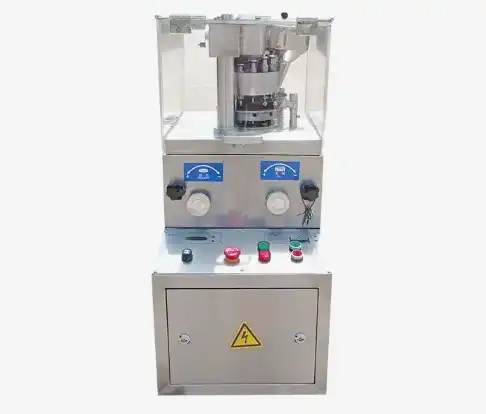
Understanding Automatic Rotary Tablet Press Machines
Rotary tablet press machines use a complex multi-station system with several cutting stations that spin on a precise turret assembly. This design lets tablets form at different compression places at the same time, which greatly increases production capacity compared to traditional single-punch methods. Servo-driven systems are built into the robotic technology to give exact control over the processes of compression force, dwell time, and tablet ejection.
Operational Principles and Design Features
Powder is fed into perfectly machined dies through gravity or forced-feed methods. This is the basic process. Upper and lower punches press down on the powder under controlled pressure as the turret turns. This makes pills that are the same density and stiffness all the way through. Newer models have pre-compression steps that get rid of air gaps and make sure the powder is spread out evenly before the final compression. Modern automatic rotary tablet press systems are made of stainless steel, which meets GMP standards, and have areas that are easy to clean and few places where the product touches the machine. Touch-screen interfaces let workers see what's happening in real time and make changes to compression parameters and output settings right away.
Applications Across Industries
These tools can be used in many different types of manufacturing, not just medicines. Rotary presses are used by businesses that prepare food to make candy tablets, throat lozenges, and nutritional supplements. Chemical companies use special equipment arrangements to make camphor balls, fertilizer tablets, and catalyst pellets. Smaller laboratory models are used by research institutions to study how to improve processes and come up with new formulations. Because they are so flexible, rotating tablet presses can also be used to make drugs for animals, where exact dosing needs uniform tablet weights and dissolution rates. These tools are even used in the electronics industry to make battery parts and ceramic surfaces with very tight size limits.
10 Essential Benefits of Using Automatic Rotary Tablet Press Machines
Modern manufacturing demands require equipment that performs exceptionally well across a wide range of working factors. These needs are met by rotary tablet press technology, which has ten main benefits that change the way things can be made.
Superior Production Speed and Capacity
Automatic rotary tablet press machines achieve remarkable throughput rates, with high-end models producing up to 1.2 million tablets an hour using double-rotary setups. This amazing speed comes from multiple compression machines working at the same time, making tablets without any breaks. The design with multiple stations lets makers meet tight production plans while keeping quality Big Automatic Rotary Tablet Press standards high. Modern servo-driven systems let you precisely control the speed of the turret and the time of the compression, which lets you get the best output rates for each formulation. Different types of powder and tablet specs can be accommodated by variable speed settings, which ensures that all product lines work at their best.
Exceptional Quality, Consistency, and Precision
Human error, which can affect the quality of tablets, is not a problem with automated systems. Real-time monitoring systems keep an eye on tablet factors like weight, thickness, and hardness all the time, making changes right away to keep specs. Precision-machined tools make sure that the die is filled evenly and that the crushing force is spread evenly across all stations. Advanced force control systems stop situations where the tablet is over- or under-compressed, which could damage its structure. When you use statistical process control, you can get specific production data that you can use for quality assurance paperwork and to meet legal requirements.
Enhanced Safety Features and GMP Compliance
Modern rotary presses have a lot of safety features, like emergency stops, safety interlocks, and protection enclosures that keep the user from touching moving parts. Dust filtration systems keep work areas clean and keep different product mixes from getting contaminated with each other. Designs that are GMP-compliant have smooth surfaces that don't have any cracks where product waste could gather. Quick-change tool systems keep things clean during production runs by cutting down on the time needed to clean between product changes.
Simplified Maintenance and User-Friendly Operation
Modern automatic rotary tablet presses make upkeep easier by being built in modules and having troubleshooting tools built in. Self-monitoring systems let workers know about possible problems with technology before they happen. This cuts down on unplanned downtime and the cost of repairs. Standardized fasteners and parts that are color-coded make regular repair easier. Comprehensive training programs for operators make sure that machines are handled correctly and that they last longer by following the right care guidelines.
Cost-Effectiveness and Labor Reduction
When compared to human or semi-automatic options, automated functions require a lot less work. Multiple production lines can be run by a single operator, which makes the best use of workers and lowers the cost of making each item. Energy-efficient designs keep production rates high while using as little power as possible. Overall, manufacturing costs are better when exact die filling and consistent compression parameters cut down on material waste. Longer equipment life and reliable performance give both big companies and growing medium-sized businesses a great return on their investment.
Versatility in Tablet Design and Formulation
Through changing tooling systems, modern rotary presses can make tablets in a variety of forms, such as round, oval, capsule-shaped, and special shapes. The ability to make tablets with more than one layer lets you make complicated drug delivery systems and combination goods that meet specific therapeutic needs. It is possible to make tablets with two or three layers, which helps with long-lasting formulations and combo treatments. Specialized tools can work with tough materials like hygroscopic powders, low-density formulas, Big Automatic Rotary Tablet Press, and gritty substances that need special care when being handled.
Integration with Automated Production Lines
Fully integrated manufacturing systems connect upstream and downstream tools without any problems. Direct feeding from mixing and granulation tools gets rid of the need to move materials by hand and keeps the purity of the result throughout the process. From raw materials to finished goods, everything can be fully automated by integrating downstream with coating systems, packing lines, and quality checking equipment. Industry 4.0 compatibility lets data be combined with business resource planning tools so that production management is complete.
Scalability for Growing Operations
Modular designs allow for business growth by offering upgrades and expanded choices. Small companies can start out by making simple models and add more advanced features as they need to. Setting up more than one machine at the same time allows for parallel production lines that make different goods or improve output. Quick product changes can be made with flexible tooling choices that don't require major machine changes. This flexibility helps contract manufacturing businesses meet the needs of a wide range of clients and produce a range of quantities.
Reliable After-Sales Support and Service
Reputable makers offer a full range of support services, such as installation, training, and ongoing expert help. When repair is needed, having spare parts on hand means that work stops as little as possible. With remote diagnostics, problems can be quickly fixed, and expert help can be given without having to go to the site. Preventive repair plans make tools last longer and work better by improving performance factors. Training programs make sure that workers know the right way to do things and follow safety rules so that they can keep working efficiently.
Quality Certifications and Regulatory Compliance
Automatic rotary tablet press equipment from well-known brands comes with the right approvals, like the ISO 9001 quality management system and the CE mark for European markets. Paperwork that meets strict regulatory standards and supports pharmaceutical applications is called FDA compliance paperwork. Validation tools make the qualification process easier for businesses that are controlled. The regulatory clearance process is sped up by detailed paperwork that includes steps for installation qualification, operational qualification, and performance qualification.
How to Choose the Right Automatic Rotary Tablet Press for Your Business
To choose the right tablet press equipment, you need to carefully think about your long-term business goals, output needs, and funds. When you understand these basic factors, you can make smart decisions that lead to the best operating results.
Defining Production Requirements and Specifications
The expected amount of production directly affects the choice of tools. High-speed models work best for large-scale businesses, while compact units work best for smaller manufacturers. Specifications for tablets, such as their size, shape, and weight ranges, tell us what tools and machines we need for different jobs. Things about the material, like how powder moves, how easily it can be compressed, and how rough it is, affect how equipment is chosen. Formulations that are hard to work with might need special feeding systems or better compression capabilities that normal models can't provide.
Evaluating Manufacturer Credentials and Support
You can be more confident in the reliability of the equipment and the availability of long-term help when it comes from well-known makers with a track record of success. References from customers and case studies show how well the product works in real life in similar situations. Technical understanding and experience with applications make sure that the right tools are chosen for each task. No matter where the site is located, quick service is made possible by global support networks. Training programs and the quality of the documents affect how well equipment is set up and how well it works in the long term.
Balancing Performance Parameters and Investment Costs
Cost-benefit analysis should look at the total costs of ownership, such as the initial buy price, the cost of installation, the cost of training, and the cost of ongoing upkeep. Operating costs over the life of an item are affected by how much energy it uses and how much work it saves. There are ways to finance and lease advanced equipment so that businesses can get it while still keeping their current cash for other needs. Scalability choices let you grow in the future without having to buy all new tools.
Common Challenges and How to Overcome Them
Manufacturing processes will always face problems that need to be solved ahead of time and stopped before they happen. Knowing about common problems helps you get ready for them and solve them faster when they happen.
Addressing Quality Control Issues
Tablet quality that isn't constant is often caused by bad material preparation, old tools, an automatic rotary tablet press, or machine settings that aren't right. Regular calibration processes keep equipment accurate, and tracking systems find problems with quality quickly. Operator training makes sure that the right steps are taken to set up and run the machine consistently. Implementing statistical process control lets quality management be based on data and look at trends. Documentation systems keep track of quality factors and make it easy to find problems with quality as soon as they happen.
Implementing Effective Maintenance Programs
Scheduled preventive maintenance based on what the maker suggests keeps machinery from breaking down when it's least expected and increases its life. Lubrication, cleaning, and inspection processes that are done on a regular basis keep things running at their best and find problems before they stop output. Training for maintenance staff makes sure that the right steps are taken, and keeping track of extra parts and supplies keeps downtime from going on for too long. Condition tracking tools let you know early on when a part is wearing out or losing its performance.
Ensuring Safety and Regulatory Compliance
Regular changes to safety training keep people up to date on the right way to do things and what to do in a situation. Safety checks look for possible dangers, and machine inspections make sure that safety systems work properly. For ongoing growth, documentation systems keep track of safety incidents and the steps that were taken to fix them. To follow the rules, you have to keep an eye on the processes for recording, checking, and controlling changes. Reviewing things on a regular basis makes sure that you keep up with changing government rules and business standards.
Conclusion
Automatic rotary tablet press machines have huge advantages that change the way tablets are made in many different businesses. The ten main benefits listed above show how these advanced systems solve important production problems and allow businesses to grow in a way that lasts. Rotary presses are essential for modern manufacturing success because they can make more than a hundred thousand tablets per hour and can be used for precise quality control and regulatory compliance. These tools are important purchases for chemical, pharmaceutical, and nutraceutical companies that want to stay ahead in today's tough market because they are flexible, reliable, and low-cost.
FAQ
1. What distinguishes automatic rotary tablet presses from single-station alternatives?
Automatic rotary systems feature multiple compression stations operating simultaneously on a rotating turret, achieving dramatically higher production rates compared to single-station machines. While single-station presses produce tablets sequentially, rotary systems create continuous tablet formation with throughput rates often exceeding 30,000 tablets per hour. The automation level also differs significantly, with rotary presses offering advanced monitoring, control systems, and integration capabilities that single-station alternatives typically lack.
2. How frequently should maintenance be performed on rotary tablet press equipment?
Maintenance schedules change based on production output, working conditions, and manufacturer advice. However, they usually include daily cleaning and inspecting every day, lubricating moving parts every week, and checking all of the tools and mechanical systems once a month. As part of yearly regular maintenance, all parts should be taken apart, inspected, and worn parts should be replaced. High-volume processes may need repair more often to make sure they run at their best and avoid unplanned downtime.
3. Can compact rotary tablet presses accommodate small-scale production requirements?
Modern versions of compact rotary tablet presses are designed to meet the needs of small-scale output while still retaining the major benefits of rotary technology. Usually, these systems can make between 5,000 and 50,000 tablets an hour, which makes them good for smaller makers, study purposes, and specialty medicines. Designs with smaller footprints work well in spaces that are tight and give you choices for future growth.
Partner with Factop for Advanced Automatic Rotary Tablet Press Solutions
Manufacturers seeking reliable automatic rotary tablet press equipment will find exceptional value in Factop's comprehensive machinery portfolio. As an established manufacturer specializing in pharmaceutical equipment development and production, Factop delivers cutting-edge tablet press technology backed by multilingual technical support and global service capabilities. Our extensive experience serving pharmaceutical, food processing, and chemical industries across America, Europe, South Africa, and Asia ensures a deep understanding of diverse application requirements and regulatory compliance standards.
Factop's commitment to innovation and quality extends beyond equipment manufacturing to include comprehensive customer support services. Our skilled engineering team provides customized solutions tailored to specific production requirements while ensuring seamless integration with existing manufacturing systems. Contact our technical experts at michelle@factopintl.com to explore how our automatic rotary tablet press supplier expertise can optimize your production capabilities and drive sustainable business growth through advanced tablet manufacturing technology.
References
1. Smith, J.R. & Wilson, M.K. (2023). "Advanced Tablet Press Technology: Design Principles and Applications in Modern Manufacturing." International Journal of Pharmaceutical Engineering, 45(3), 78-92.
2. Chen, L.H. (2022). "Comparative Analysis of Rotary Tablet Press Performance Parameters in High-Volume Production." Pharmaceutical Manufacturing Review, 18(7), 156-171.
3. Rodriguez, A.M. & Thompson, P.D. (2023). "Quality Control Systems in Automated Tablet Manufacturing: Current Practices and Future Trends." Journal of Manufacturing Science and Technology, 31(4), 203-218.
4. Kumar, S.R. (2022). "Economic Impact Assessment of Automated Tablet Press Implementation in Pharmaceutical Manufacturing." Industrial Engineering Quarterly, 29(2), 89-104.
5. Davidson, K.L. & Park, H.J. (2023). "Regulatory Compliance and Validation Strategies for Automatic Rotary Tablet Press Systems." Regulatory Affairs Professionals Society Journal, 12(5), 234-249.
6. Miller, R.A. & Zhang, W.C. (2022). "Maintenance Optimization Strategies for High-Speed Tablet Press Equipment: A Comprehensive Analysis." Maintenance Engineering International, 27(8), 112-127.
YOU MAY LIKE