
Flower basket tablet press expertise for pharmaceutical contract manufacturers
2026-04-20 11:00:00
When evaluating a flower basket tablet press machine for pharmaceutical contract manufacturing, the key considerations are whether it produces stable tablets, is easy to maintain, and delivers a good return on investment for daily-use products. These are the practical concerns that buyers typically have when reviewing this topic. Many contract manufacturers are not solely interested in theoretical aspects; they require clear guidance on machine setup, maximum capacity, technical support from the supplier, and compatibility with batch sizes. For a facility that needs reliable compression, straightforward operation, a compact footprint, and consistent output for custom tablets, trial runs, or moderate-volume production, a flower basket press can be a suitable option.
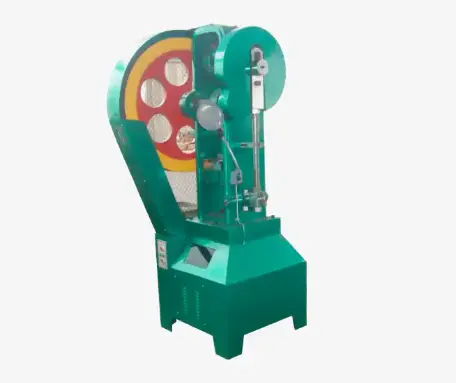
Understanding Flower Basket Tablet Press Machines
A flower basket tablet press is a one-station machine that uses controlled mechanical pressure to push ready-made powders or granules into tablets. In pharmaceutical contract manufacturing contexts, this equipment is selected when accuracy, adaptability, and control over smaller volumes take priority over very high output speeds.
How the machine works?
The operational steps are clearly defined and verifiable by production and quality teams:
- Raw material preparation: Materials are weighed, ground, milled, and mixed until powder flow and density meet the target specifications defined by the formulation. Material does not enter the hopper until contamination and moisture risks are controlled. This step is critical because poor granule quality directly affects weight variation, die filling consistency, and punch wear during compression.
- Compression cycle: The feeder transfers material into the die hole. Fill amount remains consistent from tablet to tablet as excess material is levelled off. The punches then apply pressure to the die to form the tablet. The lower punch ejects the finished tablet for collection and inspection. When the granule mixture is properly prepared, this simple compression cycle supports stable output.
Key components buyers should assess
When evaluating a machine, production managers and procurement leads examine the hopper, feeder, die, upper and lower punches, pressure system, motor drive, and lubrication points. Each component influences tablet strength, dimensional consistency, and potential downtime risk. A compact footprint is often advantageous in contract manufacturing sites with limited floor space and frequent line changeovers.
The THP-6T model serves as an example, featuring 1 set of punches and dies, 60 kN pressure, a maximum tablet diameter of 30 mm, a maximum tablet thickness of 13 mm, and a production capacity of 3000 pieces per hour. These specifications suit companies that require moderate output rather than high-volume rotary production.
Operational Best Practices and Maintenance Tips
Reliable results require disciplined procedures. Many quality problems attributed to the press actually originate in material preparation, setup errors, or neglected maintenance.
Daily operating guide
Before production, inspect the die for cracks, broken edges, or warping. Verify that granules meet process specifications, particularly regarding fine powder content. Excessive fines can shorten machine life and reduce compression efficiency. Before starting a run, rotate the machine by hand or perform a controlled trial run to confirm that pressure and tablet shape meet batch standards.
During production, monitor for unusual noises, sticking, lamination, and thickness variations. If the machine has a reverse jog function, use it only briefly to clear sticking or check the punch condition. Excessive use can damage the system.
Preventive maintenance that protects uptime
Long-term ownership costs of the Flower Basket Tablet Press Machine are reflected in maintenance practices. Proper lubrication through oil cups before startup, regular inspection for wear and movement flexibility, and thorough cleaning after each use are essential. If production stops for an extended period, remove the die, clean and dry it, apply rust preventative treatment, and store it to prevent impact damage.
A maintenance routine should include:
- At the beginning of each shift: lubricate according to oil cup type, check punch and die condition, and verify that all working parts operate without issues. This practice takes little time but reduces the likelihood of unplanned stoppages, premature component wear, and uneven compression force that could cause batch deviations later in the shift.
- After each production run: Clean any residual powder from accessible surfaces, wipe down non-polished metal, and apply appropriate anti-rust treatment to exposed equipment if needed. This cleaning approach meets GMP standards, reduces cross-contamination risk, and extends die set life—helping contract manufacturers manage multiple SKUs cost-effectively.
Comparing Flower Basket Tablet Press Machines with Other Types
Procurement teams frequently compare flower basket presses against rotary, flat, or other single-station tablet presses. The optimal choice depends on desired output volume, tablet geometry, and budget constraints.
Flower basket vs rotary tablet press
Flower basket presses are generally better suited for small-batch work, unique shapes, and simpler mechanical control. Rotary presses are preferable for continuous high-speed output and high-volume production. A flower basket design may be more appropriate for a contract manufacturing organisation handling frequent batch changes, proof lots, or speciality products, as it offers greater flexibility while reducing capital expenditure.
Pharmaceutical vs. nutraceutical needs
Pharmaceutical applications typically require tighter control over compression uniformity, documentation, cleaning procedures, and process repeatability. Nutraceutical lines may prioritise faster changeovers and broader product variety. This distinction matters when selecting equipment. Buyers should verify that the machine meets the intended application's requirements for tooling, material behaviour, and cleaning validation.
From a price-performance perspective, flower basket machines fit these scenarios well:
- Facilities needing reliable compression for small production runs, R&D scale-up, or products that do not justify a full rotary system. In these conditions, the machine helps meet quality targets while keeping complexity and operator training requirements manageable.
- Buyers are seeking a compact tablet press with simple mechanics, easy maintenance access, and a lower upfront cost. This serves both large and small businesses, balancing immediate production needs against future scalability—particularly when purchasing teams must justify expenditures based on total cost of ownership rather than purchase price alone.
Procurement and Supplier Selection Guide for Pharmaceutical Contract Manufacturers
For contract manufacturers, acquiring the machine (e.g., flower basket tablet press) is only one consideration. Post-installation project success often depends on supplier capability.
What to check before issuing a purchase decision?
Machine specifications should be compared against target tablet size, hardness requirements, batch volume, and available tooling. Supplier expertise, documentation quality, after-sales service response time, training scope, and spare parts support are also critical. These factors matter because downtime on a contract manufacturing line affects client commitments and revenue.
Why does supplier credibility matter?
Jining Factop Pharmacy Machinery Company designs and manufactures pharmaceutical equipment including grinders, mixers, granulators, packing lines, tablet presses, and capsule filling machines. With bilingual staff experienced in international business, the company has established long-term relationships in Asia, the Americas, Europe, and South Africa. Factop states its commitment to global cooperation and client value based on reliability, innovation, and mutual benefit.
This profile aligns with typical B2B buyer requirements: technical support, export experience, clear communication, and dependable post-delivery follow-up.
Maximising Efficiency and ROI with Flower Basket Tablet Press Machines
A machine delivers value only when it simultaneously supports quality, volume, and line stability. That defines return on investment.
Practical ways to improve performance
Performance gains are typically greatest when granulation is consistent, dies are well maintained, and operators follow standardised setup procedures. The upstream process must supply regular feed material for compression tools to operate optimally. Proper training also reduces avoidable errors such as excessive compression force, sticking, or incorrect fill depth adjustments.
Where does ROI becomes clear?
For a contract manufacturer, return on investment increases when the machine reduces setup time, tool damage, and repair interruptions and maintains uniform tablet quality. For applications requiring 60KN pressure, handling tablets up to 30mm diameter and 13mm thickness, and producing approximately 3000 pieces per hour without the complexity of a large rotary line, a model such as the THP-6T may be a suitable choice.
Search behaviour on this topic typically seeks machine specifications, comparison data, maintenance guidance, and supplier evaluation criteria for flower basket tablet presses. Effective information, therefore, describes not only machine capabilities but also how the equipment improves plant operations.
Conclusion
For pharmaceutical contract manufacturers needing stable tablet quality, controlled output, and compact equipment, a flower basket tablet press can be an appropriate choice. The greatest value appears when batch flexibility, easy maintenance, and cost control are as important as throughput. The purchase decision depends on formulation behaviour, output requirements, tooling needs, and supplier support. When these factors align, a model such as the THP-6T provides moderate output capacity and a clear path to stable production.
FAQ
1. Is a flower basket tablet press better than a rotary press?
Flower basket presses are better suited for small to medium runs, custom tablets, trial production, and buyers seeking simpler operation and lower initial investment. Rotary presses are better for high-volume continuous production.
2. How to know if the THP-6T fits a production plan?
Compare its specifications against product requirements: 60KN pressure, 30mm maximum tablet diameter, 13mm maximum thickness, and 3000 pieces per hour output. If production volumes fall within that range, the model may perform well.
3. What maintenance practice matters most?
Regular lubrication, punch and die inspection, thorough cleaning after each run, and anti-rust protection during tool storage have the greatest impact on efficiency and tooling life.
4. Can this type of machine support pharmaceutical compliance expectations?
Yes, when used with appropriate material control, cleaning procedures, documentation, preventive maintenance, and trained tool inspections aligned with the company's quality system.
Partner with Factop for Flower Basket Tablet Press Solutions
If you are looking for a trusted Flower Basket Tablet Press Machine manufacturer, supplier, or model for sale, Factop is ready to help. Based on your production needs, I can put you in touch with someone who can give you a personalised suggestion, quote, and plan for after-sales help. Contact Factop at michelle@factopintl.com to talk about finding the right machine for your pharmaceutical contract manufacturing project.
References
1. United States Pharmacopeia, General Chapter <1217> Tablet Breaking Force
2. European Medicines Agency, EU Guidelines for Good Manufacturing Practice for Medicinal Products
3. U.S. Food and Drug Administration, Guidance for Industry: PAT — A Framework for Innovative Pharmaceutical Development, Manufacturing, and Quality Assurance
4. World Health Organization, WHO Good Manufacturing Practices for Pharmaceutical Products
5. Encyclopedia of Pharmaceutical Technology, tablet compression and tablet press equipment entries
6. Capplus Technologies, educational material on single-station tablet pressing process
YOU MAY LIKE