
Flower basket style tablet press machines suitable for herbal supplements
2026-04-20 11:00:00
Herbal supplements are compatible with flower basket-style tablet presses, as this design applies a gentle compression force suitable for delicate plant powders, offering more control compared to many high-speed systems. When selecting a tablet compression machine, the flower basket type is appropriate for applications requiring stable tablet weight, clean compression, easy operation, and reliable output for small to medium-sized batches. In the production of plant-based products, powder flow may be inconsistent, recipes can contain fibrous materials, and product quality is often influenced by moisture sensitivity. A flower basket design addresses these challenges by facilitating cleaning, preserving tablet integrity, and maintaining cost efficiency for B2B production teams.
Introduction Summary
In the US, the market for plant supplements continues to grow, which raises the bar for manufacturing quality. Procurement decisions now extend beyond machine prices. Procurement teams are asking more in-depth questions about compression security, cleaning access, user safety, dust control, and service response times.
Three main types of buyers search for this topic: those wanting to understand what a flower basket press is, teams comparing it to rotary tablet press tools, and procurement managers ready to evaluate sellers. The most helpful answer is straightforward: flower basket-style presses work best for plant tablets that require gentle compression, small batch production, and stable quality without the complexity of a full rotary line.
For many supplement companies, this machine type suits small batches, research and development, contract manufacturing, and medium-variety production runs.
Understanding Flower Basket Style Tablet Press Machines
One distinguishing feature of flower basket-style presses is the simpler and more controlled compression process. This is important for herbal goods because powder mixes may contain plant fibres, extracts, and natural ingredients that behave differently from standard medicinal granules.
What makes the flower basket design different?
The main difference lies in the turret structure and the single-station compression design. Instead of running many stations at high speed, the focus is on precise filling and pressing. This allows closer monitoring when a formula does not flow well or requires more careful pressure adjustments.
Core components typically include:
- Flower basket turret and die system: This holds the material in place during pressing. For herb processing, a setting that prevents mix disruption and produces uniformly shaped tablets is beneficial. This is particularly helpful for larger herbal tablets, chewables, or standard botanical tablets, where both quality teams and end users care about tablet appearance.
- Punches and compression mechanism: Upper and lower punches apply force to shape the tablet, and a compression device holds it together. Precise pressure control is important because plant powders can trap air, leading to weak edges, lamination, or capping. A well-built press helps maintain consistent thickness, hardness, and weight without over-compressing sensitive ingredients.
Why do buyers compare them with rotary presses?
For output volume, rotary presses are superior. However, not all tasks require high-speed production. A flower basket machine often makes more sense when flexibility is needed, investment risk needs to be lower, or changeovers must be easy. Cross-contamination concerns may also be reduced, as the simpler structure allows easier cleaning between runs.
This approach provides a better balance of control and cost for SMEs, labs, or speciality supplement lines using a tablet compression machine.
How Flower Basket Style Tablet Press Machines Work in Herbal Supplement Manufacturing?
The working principle of a flower basket press is straightforward, which is one reason many production managers prefer it for plant-based recipes.
Compression workflow from powder feed to tablet ejection
The prepared powder or granule mix is first fed into the die area. The lower punch sets the fill level, which determines tablet weight. The upper punch then applies controlled force to compress the material, and the lower punch ejects the finished tablet for collection.
Stable filling, air release, and precise pressure are all critical to tablet quality. In the industry, defects such as capping and lamination can result from trapped air and poor force control. Herbal mixes, with their variable particle sizes and natural fibres, tend to experience these problems more frequently.
Automation and throughput expectations
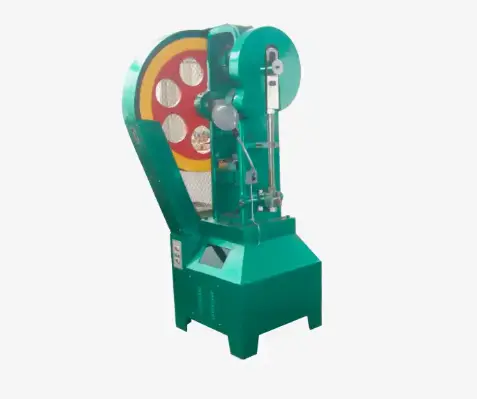
Not every plant line requires a high-output, fully automated machine. Throughput should match actual order volumes, labour availability, and growth plans. The THP-6T from Factop is an example of this product category:
- Model: THP-6T
- Number of punch dies: 1 set
- Pressure: 60 KN
- Maximum tablet diameter: 30 mm
- Maximum tablet thickness: 13 mm
- Production capacity: 3000 pcs/hour
This specification suits herbal supplement manufacturers that need to control the output of larger tablets or special shapes. A single-punch style machine also offers high accuracy, versatility, and manageable maintenance, which benefits buyers and R&D teams focused on cost efficiency.
Selecting the Best Tablet Compression Machine for Herbal Products
Selecting the right machine requires matching technical specifications with business objectives. The application should be assessed before reviewing specifications.
Key factors to assess before purchase
Formulation behaviour, target output, compliance expectations, and supplier support are often the most important decision factors. Herbal powders vary significantly, including when using a flower basket tablet press. After grinding, some flow well while others remain sticky or coarse. This affects punch wear, compression uniformity, and cleaning frequency.
Key purchasing considerations include:
- Production scale and formulation fit: A flower basket-style tablet compression machine often provides the best value for custom tablets, test batches, or niche herbal SKUs. The process can be better controlled, helping to validate recipes before scaling up. If output demand increases substantially, rotary equipment can be added later while retaining the flower basket unit for R&D or small-batch work.
- Supplier reliability and total ownership cost: Purchase price matters, but downtime costs more. Production should align with ISO standards, with access to spare parts, training support, and prompt service. Warranty terms, setup assistance, and documentation quality all affect ROI. A cheaper machine with poor after-sales support can lead to greater losses from delays, inconsistent performance, and unclear maintenance schedules.
Manual vs. automatic models
For small labs and producers, manual and semi-automatic units often serve as a practical starting point. Automatic systems work best in established companies that need consistent throughput and reduced manual labour dependence. The optimal choice depends on product changeover frequency, operator skill levels, and output control requirements.
Maintenance Tips and Troubleshooting for Optimal Performance
Even a well-functioning machine requires regular upkeep. Herbal dust can accumulate quickly, reducing tablet quality and shortening machine life.
Daily care that protects output
Cleaning after each batch is essential, especially when working with strong-smelling herbs or coloured plant mixes. Dust buildup can disrupt die filling, punch movement, and weight consistency. The manufacturer should specify lubrication intervals, and wear parts should be inspected before they cause production stoppages.
A regular checklist includes punch condition, die cleanliness, compression pressure stability, and any unusual noises or vibrations. This process helps quality teams reduce batch variation and improve operational safety.
Common issues and practical fixes
Tablet weight variation often indicates non-uniform feeding, inconsistent granule size, or worn punches. Jamming can occur due to sticky material, inadequate cleaning, or excessive fines. Weak tablets may result from low pressure or poor formulation flow.
Systematic checking of raw material preparation, force settings, tooling, and operator retraining is the best response. Proper troubleshooting not only supports maintenance but also maintains buyer satisfaction and on-time delivery.
Future Trends and Innovation in Tablet Compression for Herbal Supplements
Tablet compression equipment, including the flower basket tablet press, is becoming smarter, cleaner, and more flexible. In the US market, buyers are increasingly asking about technology, data collection, and sustainability.
Newer machines may include features such as pressure regulation, production tracking, and easy integration with upstream mixers or downstream packing lines. These tools facilitate traceability, reduce manual errors, and support validation work.
Sustainability is also more important. Lower waste, shorter changeover times, and more efficient motors can all reduce energy consumption. For herbal products, where brands often market themselves as natural and health-oriented, cleaner production methods can benefit both operations and market positioning.
Jining Factop Pharmacy Machinery Company is a professional manufacturer of pharmacy equipment, including grinders, mixers, granulators, packing lines, tablet presses, and capsule filling machines. With skilled bilingual staff experienced in international business, the company has built long-term relationships in Asia, America, Europe, and South Africa. Based on principles of honesty, innovation, and mutual benefit, Factop focuses on enhancing global cooperation and delivering value to clients worldwide.
For B2B buyers, this broader range of capabilities is important. Discussions can cover not just a single machine but an integrated production system that can scale as needed.
Conclusion
Flower basket-style tablet presses work well for herbal supplement production when gentle compression, stable quality, variable batch control, and manageable investment are required. They are especially useful for trial runs, speciality products, medium-volume output, and formulations that perform poorly on high-speed rotary systems. A model such as the THP-6T offers practical capacity and robust compression for many herbal tablet applications. When evaluating suppliers, attention should be paid to technical fit, customer service, spare parts availability, and long-term value. The best purchase is not just a machine but a reliable business partner.
FAQ
1. Can a flower basket tablet press handle different herbal powders?
Yes, provided the powder or granule properties are properly characterised before production. Flowability, moisture level, fibre content, and compressibility should be assessed. Some plant materials may require granulation or blending with other excipients to improve performance. The machine can accommodate different formulations, but process settings and tooling conditions must be appropriate for the material.
2. How often should the machine be maintained?
Daily cleaning after each batch is recommended, along with regular lubrication based on the usage schedule, and frequent inspection of tooling, dies, and moving parts. For herbal production, dust and residue build up quickly, making preventative maintenance essential. A planned maintenance practice helps prevent jamming, weight variation, and unexpected downtime.
3. How can tablet uniformity be ensured in herbal supplement production?
Uniformity is achieved through careful raw material preparation, consistent fill level, appropriate compression force, and well-maintained tooling. Controlled moisture content and consistent particle size are critical factors. Even a good machine will produce inconsistent results if feeding, cleaning, or setup procedures are not standardised. Operator training is therefore important.
Partner with Factop for Flower basket tablet press Solutions
Need a trustworthy Tablet Compression Machine manufacturer or supplier for herbal supplement production? Factop can help you compare models, look at what you need from a tablet, and suggest the best option, which could include the THP-6T. Contact Michelle at michelle@factopintl.com to request specifications, pricing, a live demo, or a virtual walkthrough of tablet press equipment for sale.
References
1. U.S. Food and Drug Administration. Current Good Manufacturing Practice in Manufacturing, Packaging, Labeling, or Holding Operations for Dietary Supplements.
2. World Health Organization. WHO Good Manufacturing Practices for Pharmaceutical Products: Main Principles.
3. United States Pharmacopeia. General Chapters: Tablet Friability and Uniformity of Dosage Units.
4. Lieberman, Lachman, and Schwartz. Pharmaceutical Dosage Forms: Tablets.
5. Aulton, M. E., and Taylor, K. Pharmaceutics: The Design and Manufacture of Medicines.
6. The International Journal of Pharmaceutics. Research articles on powder compression, tablet defects, and compaction behavior.
YOU MAY LIKE