
Flower basket tablet press for high-volume tablet production
2026-04-17 11:00:00
When Solid Compression, Stable Tablet Quality, and Fast Output Are Needed for Making Large or Odd-Shaped Tablets, a Flower Basket Tablet Press Is a Suitable Choice. In business-to-business production, it works best when buyers require more control over pressure than a small lab press offers, along with the flexibility to produce tablets for food, medicine, supplements, or chemicals. When Buying Teams Compare Equipment for High-Volume Tablet Production, Speed Is Not the Only Consideration. Other factors include uptime, die stability, ease of maintenance, compliance readiness, and long-term operating costs. In Such Cases, the Right Flower Basket Press Can Provide a Noticeable Difference.
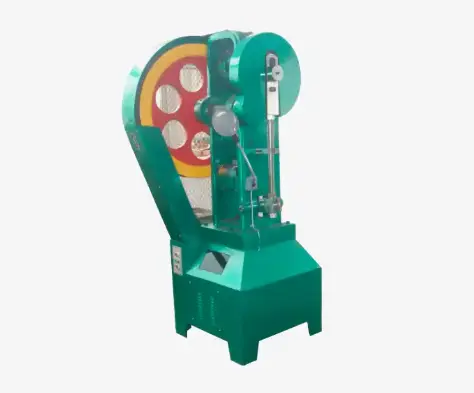
Understanding the Flower Basket Tablet Press Technology
With a robust punch-and-die setup and a single compression station, the Flower Basket Tablet Press is capable of producing larger tablets, odd-shaped tablets, and speciality items with consistent force. It is often selected for applications requiring higher pressure, harder surface finish, or unique forms that are not well-suited to standard multi-station rotary systems.
How does the compression process work?
The operational process is straightforward, and production teams can manage it easily:
Raw powder or granules are prepared and placed into the hopper. The feed system moves material into the die cavity, supporting fill uniformity. The punch then compresses the tablet to shape it, and the finished tablet is ejected for inspection and collection. This direct method supports reliable operation in environments such as chemical production lines, food processing plants, supplement factories, and pharmaceutical facilities where repeatability is prioritised over excessive mechanical complexity.
Key technical points buyers should assess
When evaluating a machine’s suitability for B2B purchasing, production data that can be verified is more useful than brochure claims. The THP-6T is a representative model for medium-duty production or speciality applications:
Model: THP-6T
- Number of punch dies: 1 set
- Pressure: 60 kN
- Maximum tablet diameter: 30 mm
- Maximum tablet thickness: 13 mm
- Production capacity: 3000 pcs/hour
These specifications make the machine suitable for larger tablets, lozenges, milk tablets, camphor tablets, cleaning tablets, and other products that require high crushing strength and a wide range of tablet dimensions.
Maintenance and troubleshooting basics
A flower basket press performs well only when properly maintained. Before use, oil cups should be adequately filled, moving parts checked for wear, and any residual powder cleaned after each run. When storing punch dies, they should be kept clean, dry, and protected from rust. Before every shift, operators should also listen for unusual noises, stuck punches, lamination, and damaged dies. These practices reduce downtime and extend tool life.
Performance and Efficiency Advantages Over Alternatives
Buyers often compare a flower basket machine with a rotary tablet press or a basic single-punch press. The appropriate choice depends on product type, output requirements, and capital budget.
Where it outperform a single punch press?
For testing and small batches, a basic single punch press is useful. It is simple to operate and low in cost, but its output is limited. A flower basket tablet press provides stronger compression and handles larger or more complex tablet shapes more effectively. For steady commercial batches rather than R&D applications, a Flower Basket Tablet Press is typically a better value.
Where does it differ from a rotary tablet press?
A rotary press is designed for high-volume production, with multiple stations operating continuously. It is the best choice when a very high output of uniformly sized and shaped tablets is required. A Flower Basket Tablet Press serves a different purpose. It offers greater flexibility for larger tablets, custom shapes, and products needing higher single-station pressure. Cleanup and die changeover can also be simpler in certain production settings.
Why can the investment still be efficient?
The machine with the highest hourly output is not always the best purchase. Efficiency can be measured by the number of saleable finished tablets, the labour required for maintenance, and energy consumption over time. A flower basket machine can reduce waste and simplify setup for unique shapes. That is important for plants producing a wide variety of products, niche items, or regulated batches where stability and easy documentation are business requirements.
Key Considerations for Procurement and Investment
Purchasing managers, plant directors, and quality leaders typically ask: Will it meet product specifications? How long will it operate reliably? How quickly can service issues be resolved?
Total cost of ownership matters more than purchase price.
A lower initial quote does not always mean lower overall cost. To determine total ownership, factors such as tooling life, availability of spare parts, training requirements, cleaning time, downtime risk, and required operator skill levels should be evaluated. Over three to five years, a machine that runs consistently and receives prompt service often saves significantly more than a cheaper unit without good service support.
Supplier screening for B2B buyers
Evaluating a supplier requires more than a machine list. Production knowledge, documentation support, responsive communication, and consistent parts availability are necessary. Jining Factop Pharmacy Machinery Company is a professional manufacturer that designs and produces pharmaceutical equipment, including grinders, mixers, granulators, packaging lines, tablet presses, and capsule filling machines. With skilled bilingual staff experienced in international business, the company has established long-term relationships in Asia, America, Europe, and South Africa. Based on integrity, innovation, and mutually beneficial cooperation, Factop aims to deliver practical benefits to customers worldwide.
Customisation and spare parts planning
For B2B buyers, customisation is often a deciding factor. To make a flower basket tablet press work with a specific product, the shape, thickness, embossing, tooling steel grade, feeding style, and safety features may need adjustment. Buyers should also enquire about additional punch sets, wear parts, lead times, and whether emergency replacements can be shipped quickly. This is often more critical than buyers initially realise for maintaining production continuity.
Industry Applications and Compliance Standards
The Flower Basket Tablet Press is useful across many industries where powders or pellets need to be compressed into stable solid forms.
Applications across industries
These presses are commonly used in:
- Pharmaceuticals: For manufacturing prescription tablets, over-the-counter medicines, and certain specialised dosage forms where hardness and shape control are important.
- Nutraceuticals: For producing calcium tablets, lozenges, and other nutritional products.
- Food processing: For holding candy tablets, coffee tablets, spice tablets, and milk tablets.
- Chemicals: for camphor balls, disinfectant tablets, catalysts, mosquito coil tablets, and fertiliser tablets.
Because of this range, many buying teams keep the flower basket type under consideration.
Compliance and validation priorities
In regulated environments, machine performance alone is insufficient. Buyers need equipment that meets GMP standards for safety, cleanliness, and traceable documentation. Quality management practices such as ISO 9001 from the manufacturer are also important, as they help maintain production quality and facilitate the acceptance process. Before approval, quality heads and validation teams should review material contact parts, operating instructions, FAT or SAT support, and maintenance records.
Optimising Your Tablet Production Workflow
Purchasing the machine is not enough. Achieving a real return on investment requires proper integration into the workflow.
Integration with upstream and downstream equipment
The tablet press performs best when granulating, mixing, feeding, dedusting, inspecting, and packing are coordinated. Before installation, material flow, hopper loading frequency, operator access, and finished tablet handling should be reviewed. This reduces stoppages and maintains consistent output across shifts.
Future-proofing production capacity
Many companies start with one product and later develop variations. A scalable equipment plan should consider tooling flexibility, training requirements, and compatibility with future technology. If there are plans to add larger tablets, veterinary tablets, or speciality chemical tablets, selecting a Flower basket tablet press that can be adapted helps protect the investment and reduces new product launch times in the future.
Conclusion
A Flower Basket Tablet Press is a strong B2B option when reliable compression, the ability to make larger tablets, and flexible production for chemical, food, nutritional, or pharmaceutical applications are needed. To select the best machine, output capacity, tool life, service support, compliance readiness, and total cost of ownership should be evaluated. The THP-6T offers practical specifications and a clear application range for those seeking to balance speed with long-term value. When purchased from a qualified supplier and supported by a good maintenance plan, this equipment can improve uptime, product stability, and buyer confidence.
FAQ
1. How often should a flower basket tablet press be maintained?
Daily cleaning after production is important. Before startup, lubrication should be checked, and operators should regularly inspect punches, dies, bearings, and moving parts. Establishing a maintenance schedule based on machine usage is the best way to avoid unplanned downtime.
2. Can it produce different tablet shapes?
Yes. With appropriate dies and tooling, a Flower Basket Tablet Press can handle tablets of various sizes and shapes. Before purchasing tooling, buyers should confirm the maximum diameter, thickness, embossing requirements, and material properties.
3. Is the THP-6T suitable for high-volume production?
The THP-6T produces 3000 pieces per hour, which is sufficient for stable batch production, custom tablet making, and medium-scale output requirements. For very high continuous volume, a rotary press may also need to be considered.
4. What should be asked of a supplier before purchasing?
Key questions include compression force, compatible tooling types, spare parts lead time, training, installation support, documentation, warranty coverage, and post-sale response time. These factors directly affect production reliability.
Partner with Factop for Flower Basket Tablet Press Solutions
Need a trusted Flower Basket Tablet Press manufacturer or supplier for your next project? Factop can help you compare models, confirm technical fit, and plan a reliable solution for your production line. Contact michelle@factopintl.com today to request a quote, discuss the THP-6T, or explore a Flower Basket Tablet Press for sale that matches your tablet size, output, and compliance needs.
References
1. United States Pharmacopoeia, General Chapter on Tablet Compression
2. FDA, Guidance for Industry: PAT — A Framework for Innovative Pharmaceutical Development, Manufacturing, and Quality Assurance
3. World Health Organisation, WHO Good Manufacturing Practices for Pharmaceutical Products
4. International Organisation for Standardisation, ISO 9001 Quality Management Systems Requirements
5. Handbook of Pharmaceutical Granulation Technology, Third Edition
6. Encyclopedia of Pharmaceutical Technology, Tablet Press and Compression Equipment Sections
YOU MAY LIKE