
Best practices for calibration of laboratory tablet press machines
2026-04-17 11:00:00
When labs calibrate tablet presses, the starting goal is to get every tablet as close as possible to the target weight, thickness, hardness, and content uniformity. In a laboratory tablet press machine for business-to-business use, key calibration factors include the compression force, fill level control, tooling condition, sensor accuracy, and written verification routines. Repeatable R&D trials, easier scale-up, less material waste, and better audit readiness are benefits of a well-calibrated laboratory tablet press machine. For buying teams, calibration is more than maintenance. The choice of equipment directly affects quality risk, operating costs, and long-term return on investment for tooling.
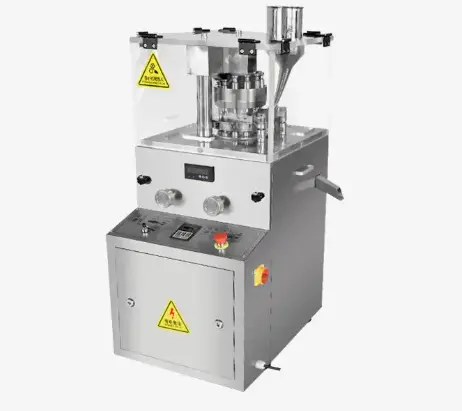
Understanding Laboratory Tablet Press Machine Calibration
When a machine is calibrated, its settings are carefully changed and checked to ensure that the tablets it produces meet specified standards. This is especially important in a laboratory setting where small batches, recipe trials, and frequent switchovers can quickly reveal equipment limitations.
What calibration really controls?
A laboratory tablet press machine needs to maintain stability in the following factors:
- Compression force, which affects hardness, friability, and sometimes disintegration
- Fill depth, which changes tablet weight and uniformity
- Punch penetration and dwell options, which affect tablet appearance and depth
- Accuracy in thickness measurement and feedback
- Tooling alignment, which helps maintain a consistent tablet shape and enables clean release
A shift in any single factor can cause the entire batch to drift. That can slow formulation decisions and waste expensive active ingredients in research and development and test production.
Why procurement teams should care?
From a buyer’s perspective, calibration capability is not a technical detail but a primary selection criterion. A machine should have a clear display of parameters, stable force sensors, easy access to settings, and well-written documentation. Modern human-machine interface (HMI) and programmable logic controller (PLC) control systems often reduce user variation and make data traceability easier. That is important for companies making pharmaceuticals and health products, conducting research, or processing food that need to produce tablets repeatedly.
Step-by-Step Calibration Process for Laboratory Tablet Press Machines
A proper calibration procedure should be consistent, practical, and easy for operators to follow repeatedly. Buyers are advised to ask suppliers to demonstrate this process during factory acceptance or a remote demonstration.
Preparation before calibration
Before any settings are changed, the machine and its environment should be prepared. This includes cleaning the contact parts, checking the condition of punches and dies, ensuring the work area is dry and stable, and reviewing the target tablet specifications again. Tool wear, powder buildup, and unstable room conditions can affect results even before calibration begins.
A solid pre-check should include:
- Ensuring that punches and dies match the required standard and size, because mismatched tools can alter tablet depth and tightness in ways that resemble sensor errors
- Checking the feed frame, hopper flow, and punch movement, because material flow problems and stuck punches can cause false weight changes during setup
- Verifying that the measuring instruments used for weight, thickness, and hardness are calibrated so that machine adjustments are not based on inaccurate numbers
Core calibration steps
After all preparation is completed, the following sequence is typically followed:
- Start with the fill depth because tablet weight begins in the die cavity. Run several tablets, weigh each one, and make small adjustments as needed. If powder flow is uneven, correct that first before making other changes. Flow problems are often caused by feed speed, particle behaviour, or misalignment.
- Set pre-compression and main compression according to the formulation requirements once the weight is stable. The compression force should match the hardness target and preserve tablet shape. For this step to be faster and more reliable, the machine needs accurate force sensors and responsive settings.
- Examine tablet thickness, edge quality, capping, lamination risk, and surface finish. If tablets change in unexpected ways, check the tools for wear and punch depth uniformity. Calibration problems can appear similar to tooling problems.
- Record the accepted settings, batch information, operator name, tooling set, laboratory tablet press machine, and measured results. This baseline is useful for future equipment studies, repeat trials, and validation work.
Common calibration issues and practical fixes
Several recurring issues affect tablet press performance:
- Tablets with inconsistent weight often have problems with powder flow, feed settings, or fill depth shift rather than a simple force problem.
- Sticking punches generally require cleaning of the tooling tip, removal of excess residue, or adjustment of the formulation.
- Varying tablet thickness is often caused by worn or mismatched punches and dies, which should be repaired or replaced as a set.
- Overflow (excess material around the frame) can happen when feed settings are too aggressive or the feed frame is misaligned.
These details matter during purchasing because good training and troubleshooting support from suppliers can reduce start-up time and maintain batch quality.
Types of Laboratory Tablet Press Machines and Their Calibration Differences
Not every machine can be calibrated the same way. The press type affects how it is adjusted, how much manual work is required, and how consistent the results can be.
Single station vs rotary presses
A single-station press is straightforward to use and understand during formulation studies. With one set of tools, it makes one tablet at a time. Calibration must be done manually, but it gives research and development teams more control over each variable.
A rotary press has multiple stations on a moving turret, which can improve throughput and consistency. Calibration is more complex because multiple stations must stay synchronised. Buyers planning for pilot-scale output or process transfer should pay close attention to sensor quality, turret stability, and control system responsiveness.
Manual vs automatic calibration support
In early-stage laboratories with low throughput and skilled operators, manual tools can work effectively. Automatic or semi-automatic systems improve repeatability by reducing human error in adjustments and providing digital feedback on force, thickness, and tablet count.
When evaluating, buyers typically compare these aspects:
- Manual calibration has a lower upfront cost and can work for labs with low throughput, but it relies heavily on operator skill, training time, and accurate record-keeping at every batch change.
- Automatic calibration support helps quality teams maintain higher repeatability, reduces setup time for repeated product trials, and often simplifies traceability through stored recipes, alarms, and real-time data displays.
When floor space is limited, compact benchtop units are appealing; however, buyers should still ensure that maintenance access and cleaning are easy and that the small size does not affect support during compression testing.
Maintaining Calibration Accuracy for Long-Term Performance
Calibration is not a one-time activity. Regular maintenance, systematic checks, and careful tracking of the laboratory tablet press machine are essential for long-term accuracy.
Build a realistic calibration schedule
A two-step process is recommended:
- Daily checks: cleanliness, punch movement, display readings, and basic output accuracy
- Weekly checks: tool wear, lubrication level, feeder operation, and weight and thickness trends
- Monthly reviews: maintenance logs, sensor drift, component wear, and alignment
Wear parts should be replaced before they cause quality variation. This schedule reduces downtime and supports process scale-up.
Use digital tracking where possible.
Many modern laboratory tablet press machines have automatic control systems that continuously monitor force, feed rate, and thickness. Some platforms include built-in quality control and historical records. For business-to-business use, digital tracking improves audit readiness and helps teams detect performance drift before it leads to a rejected batch.
Safety and compliance matter during calibration.
Buyers in pharmaceutical and controlled health product markets should ensure that the machine design is cGMP-friendly, that materials are cleanable, and that cleaning is easy. Many well-designed machines have stainless steel contact parts and are built to support controlled cleaning and dust management. Depending on the market and project scale, CE certification may also be important.
Choosing the Right Laboratory Tablet Press Machine for Calibration Efficiency
When comparing suppliers, the evaluation should focus not only on speed but also on how well the machine stays calibrated over time and how much support the supplier provides after installation.
What to look for in a calibration-friendly machine?
A good choice should include:
- Clear and stable force control with accurate sensors
- Easy adjustment of fill width, depth, and pressure
- Long-lasting compatibility with tools based on accepted standards
- Low noise and low vibration operation for laboratory environments
- Easy access for cleaning and maintenance
- Responsive after-sales support, availability of spare parts, and operator training
Brand and supplier comparison factors
Buyers often evaluate different brands, including Bosch, IMA, Cadmach, and suppliers from Zhengzhou and other equipment hubs. Instead of looking only at price, comparison should be based on each supplier’s calibration interface, sensor reliability, validation support, lead time, warranty, and training depth.
Jining Factop Pharmacy Machinery Company is a professional manufacturer integrating the development and production of tablet presses, capsule filling machines, and related pharmaceutical equipment such as grinders, mixers, granulators, and packaging lines. With a skilled multilingual team experienced in global trade, the company has built long-term partnerships across America, Europe, South Africa, and Asia. Guided by integrity, innovation, and win-win cooperation, Factop is committed to advancing international collaboration and creating greater value for global clients.
For purchasing teams, a capable supplier of laboratory tablet press machines can provide support beyond the press itself, including assistance with the entire solid dosage process.
Conclusion
Effective calibration depends on correct setup, verified tools, repeated measurements, and regular maintenance. The laboratory presses that make adjustment easy, transparent, and well-documented are the ones buyers select most often. This approach leads to better tablet quality, shorter development timelines, and lower operational risk. Purchasing decisions are improved when quality control, sourcing, and production teams agree on calibration requirements before purchase. That also protects long-term return on investment (ROI).
FAQ
1. How often should a laboratory tablet press machine be calibrated?
Practical checks are recommended daily, key settings should be verified weekly, and sensors, machine wear, and alignment should be examined more thoroughly monthly. The exact frequency depends on usage frequency, formulation type, and the company’s own quality control processes.
2. What is the most important parameter during calibration?
Fill depth is typically where weight stability begins, while compression force is a major factor in hardness and tablet structure. In practice, both must be managed simultaneously along with tool condition and powder flow.
3. Is automatic calibration better for B2B buyers?
Generally, yes. Automatic support improves repeatability, reduces setup time, and simplifies documentation. Laboratories with tighter quality standards or frequent changeovers benefit the most.
4. What should be asked of a supplier before buying?
Questions should cover force sensor accuracy, calibration procedures, recipe storage, training provision, spare parts, tool compatibility, warranty terms, and after-sales responsiveness. A live demonstration with sample tablets provides useful information.
Partner with Factop for Laboratory tablet press machine Solutions
Need a reliable Laboratory tablet press machine manufacturer or supplier that understands calibration efficiency, operator training, and long-term B2B support? Factop can help you compare options for lab-scale and pilot-scale tablet production. Contact Michelle at michelle@factopintl.com to discuss a Laboratory tablet press machine for sale, request technical details, or get a tailored quotation for your project.
References
1. United States Pharmacopeia, General Chapter <1062> Tablet Compression Characterization
2. United States Pharmacopeia, General Chapter <1217> Tablet Breaking Force
3. FDA, Guidance for Industry: PAT — A Framework for Innovative Pharmaceutical Development, Manufacturing, and Quality Assurance
4. FDA, Guidance for Industry: Process Validation: General Principles and Practices
5. European Commission, EudraLex Volume 4, EU Guidelines for Good Manufacturing Practice for Medicinal Products for Human and Veterinary Use
6. Encyclopedia of Pharmaceutical Technology, entries on tablet compression and process instrumentation
YOU MAY LIKE