
What is a Pharmaceutical Tablet Press Machine?
2026-04-16 11:00:00
Pills made from powders or grains that are all the same size, weight, hardness, and thickness can be made on a tablet press machine for pharmaceuticals at work. It is an important piece of equipment for making solid amounts because it lets you control how fast and how hard the mixed ingredients are pressed into smooth pills. This machine is used in drug plants, study labs, and supplement companies to make sure that doses are correct, quality is uniform, and output can be raised or lowered. Getting the right tablet press machine for pharmaceuticals is important for following the rules, staying efficient, and keeping the quality of the product. This is true whether the customer needs a small single-station model for study or a high-speed rotary press for mass production.
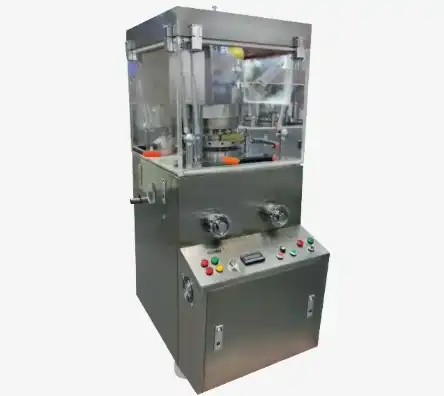
Understanding Pharmaceutical Tablet Press Machines
People who search for this subject are usually looking for useful information like what a machine is, how it works, what its main parts are, and how to choose one. Because of this, the material that follows is more focused on buying and running things than on academic ideas.
What does the machine do in pharmaceutical production?
Powder or grains can be turned into solid tablets with the help of a medicinal tablet press machine. Not only does the goal include making tablets, but the machine also has to keep each pill within very tight limits to ensure quality and dosage regularity. This consistency helps follow Good Manufacturing Practice (GMP) rules in controlled settings and lowers the chance of rejecting the product.
Some common uses for this equipment are:
- Making medicines and medicines
- Making vitamins for health and diet
- Creating formulas in a laboratory
- Putting together medicines for animals
Core parts that drive tablet compression
Several key components must work together for the compression cycle to occur:
The form and size of tablets are set by punches and dies. The paper is held in the die hole, and a tablet is made by pressing it down with the upper and lower holes. Weight regularity, tablet finish, and wear life are all directly affected by the quality of the tool.
The feeding system and feed frame decide how fast powder or grains go into the die hole. During long production runs, constant feeding helps keep dies from being underfilled, material loss from happening, and tablet weights from being all over the place.
In rotating presses, turret and compression rolls are used most of the time. During the loading, compression, and release stages, the crank turns several compression stations. Compression rolls apply the necessary force, which lets high-speed production go on all the time.
How does a tablet press work step by step?
The working concept is easy to understand. A controlled amount of the mixture is fed into the die by the machine. It is then pressed down with punches, and the final tablet is ejected. Each turn, a single-punch machine makes one tablet. The moving wheel in a rotary press lets it repeat the same cycle at different places, making tens of thousands to hundreds of thousands of tablets an hour.
Types of Tablet Press Machines for Pharmaceuticals
Tablet press selection typically depends on budget, output requirements, and formulation behaviour. Output volume often helps determine the appropriate type.
Single punch vs rotary tablet press
A single-punch tablet press uses one set of tooling and dies. It is suitable for research and development, small-scale production, trial batches, and laboratory use. This type is often chosen for cost savings, operational simplicity, and rapid formulation testing.
A rotary tablet press features multiple stations arranged on a rotating turret. It is designed for continuous operation and high-volume production. This type is preferred for pharmaceutical companies requiring mass production, high efficiency, and tighter process monitoring over extended shifts for tablet press machines for pharmaceuticals.
Manual, semi-automatic, and fully automatic options
Automation level affects labour needs, accuracy, and total operating costs.
Manual and semi-automatic presses can serve small workshops or development teams prioritising flexibility over speed. They suit environments with frequent product changes and limited capital, though they require skilled operators for process and quality control.
Fully automatic presses are intended for larger operations demanding high throughput, reduced labour, real-time monitoring, and consistent operation. Many modern systems include touch-screen HMIs, PLC controls, pressure adjustment, and automated rejection of substandard tablets, thereby supporting quality teams and production managers.
Specialised tablet press options
Some buyers require more than standard round tablets. Compact presses are useful for facilities with limited floor space. Multi-tooling and speciality presses can produce different tablet sizes, shapes, and even layered products. These options are relevant when a company manufactures many SKUs, seeks product differentiation, or needs to scale without expanding facility footprint.
Advantages & Quality Control in Pharmaceutical Tablet Production
In pharmaceutical purchasing, machine value is based on more than speed. An appropriate press must protect quality, support compliance, and reduce hidden costs over the years of operation.
Why tablet press machines create strong production value?
Key benefits include high output, consistent tablet quality, improved operator safety, and lower unit cost at larger scales. Rotary presses can achieve very high efficiency in tablet manufacturing. Accurate control of pressure and fill depth helps maintain tablet weight and hardness within specified ranges. For production heads and quality control managers, this consistency is important because variation leads to rejection, downtime, and extensive documentation.
A modern machine also improves energy efficiency and streamlines workflows. It is not a standalone asset; when integrated with upstream granulation and downstream packaging, it forms a stable production line.
Quality control features buyers should evaluate
Attention should focus on tools that support day-to-day process control, not only maximum speed, such as a pharma tablet press machine.
Process consistency tools should include a stable feeder design, accurate compression control, and compatibility with a wide range of tooling. These features help maintain tablet uniformity during long production runs and reduce risks such as weight variation, lamination, and hardness drift. Consistency protects product release timelines and customer confidence in regulated environments.
Compliance and hygienic design should include cGMP-compatible construction, stainless steel contact parts, dust control, and easy cleaning access. Buyers in regulated markets often examine machine finish, contamination prevention features, and documentation readiness, as these details affect validation work, operator safety, and audit preparation throughout the equipment lifecycle.
Common production issues and practical maintenance tips
Most tablet press issues stem from filling inconsistencies, tool wear, alignment problems, and blocked dies. Overflowing material, stuck lower punches, and uneven die filling can interrupt output. Routine cleaning, inspecting tools and dies, adjusting the feed system, and timely replacement of worn parts help protect long-term reliability.
Maintenance is not an ancillary activity—it is a productivity measure. When buyers compare suppliers, service and spare parts support are often more important than the machine price alone.
How to Choose the Best Pharmaceutical Tablet Press Machine in 2026?
Procurement teams typically weigh technical fit, total cost, certification requirements, and supplier support. The machine should be evaluated as part of a production system rather than as a standalone purchase.
Match machine capacity to your business stage.
Small and medium-sized businesses generally require presses that offer flexibility, cost-effectiveness, and room for expansion. Large businesses typically prioritise high output, automation, safety features, and service guarantees. The optimal choice of a pharma tablet press machine depends on expected batch size, operating hours, product portfolio, and growth targets.
Why supplier partnership matters in B2B purchasing?
Jining Factop Pharmacy Machinery Company is a professional manufacturer and designer of pharmaceutical equipment, including grinders, mixers, granulators, packaging lines, tablet presses, and capsule filling machines. With skilled bilingual staff experienced in international business, the company has established long-term relationships in Asia, America, Europe, and South Africa. Based on integrity, innovation, and mutual benefit, Factop is committed to enhancing global cooperation and delivering value to customers worldwide.
From a buyer’s perspective, equipment purchasing does not end at shipment, especially for a pharma tablet press machine. Reliable suppliers assist with model selection, layout planning, installation, commissioning, training, and ongoing service support.
Conclusion
A pharmaceutical tablet press machine is the primary equipment for producing tablets from powders or granules. The appropriate model improves production speed, tablet consistency, and process control while supporting regulatory compliance and long-term cost performance. The best choice depends on output goals, product requirements, automation level, and supplier support. A single-punch press suits development applications, while a rotary system is better for high-volume production. Buyers should evaluate not only specifications but also tooling quality, maintenance protocols, training provisions, and post-sale responsiveness.
FAQ
1. What is the difference between a single punch and a rotary tablet press?
A single-punch press produces one tablet per cycle and is suitable for labs, trials, and small batches. A rotary press features multiple compression stations on a turret and enables high-speed, continuous operation for commercial manufacturing.
2. How often should a pharmaceutical tablet press machine be maintained?
Cleaning and inspection should be performed daily or after each production run. The supplier’s recommended maintenance schedule should be followed for tooling, feeder systems, compression components, and lubrication points. Preventive maintenance preserves tablet quality and reduces downtime.
3. Can a tablet press be customised for different tablet shapes and sizes?
Yes. Most machines accept different punch and die sets, allowing manufacturers to produce tablets with various shapes, sizes, and embossing levels. Buyers should verify tooling standards, changeover time, and application limits before purchase.
4. What should I check before buying a tablet press machine for Pharmaceuticals?
Key considerations include production capacity, automation level, tooling compatibility, compression force range, cleaning design, certification readiness, spare parts support, and supplier service. These factors affect efficiency, compliance, and total cost of ownership.
Partner with Factop for Pharma tablet press machine Solutions
Need a reliable Tablet Press Machine for Pharmaceuticals manufacturer, supplier, or for sale option? Contact Factop for tailored recommendations, technical support, and quotation assistance. Reach out to michelle@factopintl.com to discuss production targets, tablet specifications, installation planning, and after-sales service. Our team is ready to help you choose the right solution for your business.
References
1. United States Pharmacopoeia, General Chapters: Tablet Dosage Forms
2. FDA, Current Good Manufacturing Practice Regulations for Finished Pharmaceuticals
3. European Medicines Agency, Good Manufacturing Practice Guidelines
4. Remington: The Science and Practice of Pharmacy
5. Lachman, Lieberman, and Kanig, The Theory and Practice of Industrial Pharmacy
6. Encyclopedia of Pharmaceutical Technology
YOU MAY LIKE