
How Does a Bilayer Tablet Press Work?
2026-04-07 23:02:07
A bilayer tablet press operates through a sophisticated dual-compression mechanism that sequentially processes two different powder formulations into a single cohesive tablet. The machine begins by feeding the first layer material into the die cavity, where it undergoes pre-compression to form a stable foundation. Subsequently, the second layer powder is deposited on top and also pre-compressed. The final compression stage consolidates both layers under precise pressure control, creating a unified tablet with distinct layers while maintaining proper bonding and preventing delamination issues.
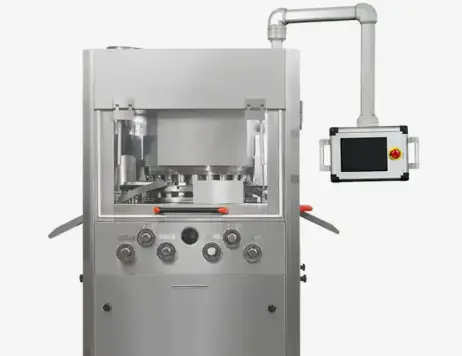
Understanding Bilayer Tablet Press Technology
The innovative design of dual-layer compression tools is a big step forward in the technology used to make medicines. Manufacturers can use these specialized tools to mix active ingredients that don't work well together, make formulations with extended release, and come up with new ways to deliver drugs that single-layer equipment just can't do.
Core Components and Working Mechanism
The basic structure of these high-tech compression systems is made up of several important parts that work together. The turret assembly holds many sets of dies and punches that spin during the compression cycle, and the dual feeding system makes sure that the material is evenly spread across each layer. Before the final consolidation, the pre-compression units use controlled pressure to get rid of air spaces and make sure the layers form correctly. These days, rotating tablet presses have complex control systems that keep real-time records of crushing forces, tablet weights, and layer thickness. The punch entry depth can be fine-tuned to keep tablet sizes consistent, and the feed frame system makes sure that powder is spread evenly across the die hole. With these new technologies, producers can make products of the highest quality and most efficiently.
Automation Levels and Production Capacity
Manufacturing sites can pick from different levels of technology based on how much they need to produce and their budget. For research and development tasks, manual systems are more flexible, Bilayer Tablet Press Machinewhile semi-automatic models can handle more work at a middle level. Fully automatic bilayer tablet press systems are the most efficient way to make a lot of pharmaceuticals. They have advanced features like quality control systems that are built in and automatic weight change. The amount of work that can be done depends a lot on the level of technology and the specs of the machine. High-speed rotary presses can make tens of thousands of tablets an hour, while laboratory-scale presses are more concerned with accuracy and adaptability than with output number. Knowing about these differences in ability helps buying teams choose equipment that fits their manufacturing goals and growth plans.
Advantages and Applications of Bilayer Tablet Presses
Using dual-layer compression technology has big advantages that go far beyond what is possible with single-layer manufacturing (see below). These benefits directly lead to better product quality, more recipe options, and bigger market possibilities for companies that make medicines and supplements.
Enhanced Formulation Flexibility
The main benefit is that it's possible to mix drugs that don't work well together in one dose form. With these new compression methods, drug companies can now make combination treatments that would not be possible with the old ways. The active ingredients are split up into separate layers. This keeps chemicals from reacting with each other and keeps the pill's shape convenient. Combinations of immediate-release and sustained-release drugs can be made with this technology. This makes it possible for complicated pharmacokinetic patterns that help patients follow their treatment plans. Precise control over the make-up and compression factors of each layer guarantees consistent drug release and the best possible treatment results.
Industry Applications and Market Opportunities
These tools are useful in many fields, not just pharmaceuticals, where they have specific needs. Companies that work with food use dual-layer technology to make nutritional supplements and candy pills. Companies that work with chemicals use it to make specialized goods like effervescent tablets and catalyst formulations. Veterinary drug firms are using this technology to make dosage forms that are special to animals and mix different active ingredients or have therapeutic effects that work in two ways. Veterinary medicine obedience has changed a lot since it became possible to add taste-masking layers with active pharmaceutical ingredients. Lab-scale bilayer tablet press devices are useful for research institutions because they are flexible and can be used to make new formulations and improve the process. These uses show that this technology has a lot of market promise and a good return on investment across many businesses.
Operation, Maintenance, and Troubleshooting Essentials
To successfully adopt dual-layer compression technology, you need to know a lot about best practices for operations and maintenance. The best service and steady product quality are guaranteed by setting up machines correctly, keeping them in good shape, and fixing problems before they happen.
Operational Best Practices
Setting up and calibrating the machine correctly is the first step to making it work well. It is important to carefully change the pre-compression force to make sure that the layers form properly without affecting the connection between the layers. To keep tablet thickness regular, the punch penetration depth needs to be precisely controlled. Turret speed optimization combines production output with compression quality. Feed frame tuning is a key part of getting uniform tablet weights and keeping layers from getting dirty from one another. To get the most out of their machines, operators need to know how the flow properties of the material, the compression settings, the Bilayer Tablet Press Machine, and the end product's properties all affect each other.
Preventive Maintenance and Troubleshooting
Regular maintenance plans help keep machines running smoothly for a long time and save money on repairs. Checking the lubricating system, inspecting the punch and die, and calibrating the compression force are all important upkeep tasks. These proactive steps increase the life of machines and keep quality standards high during output. Problems like layer delamination, weight changes, and closing issues are often caused by wrong compression settings or formulations that don't work well together. When workers understand these connections, they can quickly find and fix production problems. When complicated issues arise, it's important to have access to professional technical support to keep quality standards high and production running smoothly.
Comparative Analysis to Support Procurement Decisions
To make smart decisions about buying tools, you need to know a lot about the different choices you have and what they can do. When procurement teams compare different compression methods and levels of automation, it helps them choose the best options for their needs.
Technology Comparison and Selection Criteria
There are significant functional and practical changes between single-layer, bilayer tablet presses, and multilayer systems. One-layer presses are easy to use and cheaper, but they don't give you as much freedom when it comes to recipes. Multi-layer systems are the most flexible, but they cost more and need more operating knowledge. Another important choice is whether to operate something by hand or automatically. For study and small-batch production, manual systems are more flexible, while automatic systems are better for business manufacturing because they have higher throughput and more consistent results. The decision is based on the amount of production needed, the knowledge that is accessible, and the company's long-term growth goals.
Market Overview and Manufacturer Analysis
Leading makers, such as Fette, Korsch, and other well-known suppliers, offer varying levels of value based on their technology skills and where they stand in the market. Some focus on being able to make things quickly, while others stress accuracy and adaptability for specific uses. Pricing factors include more than just the original cost of the technology. They also include ongoing costs, the need for upkeep, and the provision of long-term assistance. A full cost-benefit study should look at the total cost of ownership over the equipment's projected lifetime. This should include things like training costs, the availability of spare parts, and how quickly technical help can respond.
How to Choose and Procure the Right Bilayer Tablet Press
A clear definition of production needs and careful review of possible providers are the first steps in making a good procurement strategy. This methodical approach guarantees the best choice of tools and long-term success in manufacturing.
Defining Production Requirements
To do good procurement, you must first do a full study of your present and future output needs. Expected tablet output numbers, formulation complexity, quality standards, and legal compliance needs are some of the most important things to think about. Figuring out these factors helps narrow down the choices to machines that can meet current and future production needs. Technical details like the range of compression forces, the speed limits of the turret, and the automatic features must match the needs of the product. Companies that are making more than one type of product may need more freedom, bilayer tablet press, while companies that are focused on specific formulations can make the most of their strengths.
Supplier Evaluation and Selection Process
Evaluation of a supplier includes more than just the specs and price of the tools. Long-term success depends a lot on the image of the manufacturer, their technical help skills, and how well they've followed the rules in the past. References from past customers are a great way to learn about performance and quality in the real world. Because of how important work equipment is, after-sales care should get extra attention. Suppliers should show that they offer full help, which should include installation, training, upkeep, and access to spare parts. Response times for technical help and service calls have a direct effect on the ability of devices to keep working and on how well they work generally. When choosing between new, modified, or used tools, you need to weigh the costs up front against the value they will bring in the long run. New equipment has the newest technology and comes with a full guarantee. On the other hand, old equipment may be cheaper for businesses that are on a tight budget. Custom changes can make tools work better for certain tasks, but they might affect standardization and the availability of assistance.
Conclusion
Bilayer tablet press technology is a big step forward in pharmaceutical and industrial manufacturing. It gives manufacturers more freedom than ever before to make complex formulations and goods with multiple layers. With the dual-compression mechanism, producers can get around traditional problems while still meeting high standards for production speed and product quality. Understanding how this advanced technology works, what it needs to be maintained, and how to buy it will ensure that it is put to use successfully. The purchase of dual-layer compression tools creates new market possibilities and makes the company more competitive in many fields. Picking the right suppliers and following the right procedures will help you get the best return on your investment and ensure long-term success in manufacturing.
FAQ
1. What formulations work best with bilayer tablet presses?
Bilayer compression systems can handle a lot of different formulations, such as immediate-release mixes, sustained-release formulations, and active ingredients that don't work well together. The most important thing is that each layer has the right flow and compression qualities. Formulation scientists should think about how well the layers work together and how they need to be bonded while the product is being made.
2. How long does changeover take between different products?
Changeover times depend on how complicated the machine is and how different the products are. It might take two to four hours to make simple changes to the recipe, but it could take six to eight hours to make major changes to the product that require new tools. These times can be cut down by a lot with automated systems that have quick-change features.
3. Can existing tablet presses be upgraded to bilayer capability?
Due to basic changes in design, most single-layer presses can't be cost-effectively changed to work with two layers. Because of the two feeding methods, changed compression cycles, and control needs, custom-built equipment is usually needed. But some makers do offer retrofit choices for certain types of machines.
Ready to Upgrade Your Production Capabilities with Factop?
Factop's advanced bilayer tablet press solutions deliver the precision, reliability, and efficiency your pharmaceutical manufacturing operation demands. Our comprehensive product line serves diverse industries from pharmaceuticals to food processing, backed by experienced multilingual support teams and proven international partnerships across America, Europe, and Asia.
We understand the critical importance of equipment reliability and responsive technical support in your production environment. Our commitment to integrity, innovation, and win-win cooperation ensures you receive not just superior machinery, but a true manufacturing partnership. Whether you're expanding existing capabilities or entering new product markets, our bilayer tablet press manufacturer expertise guides you through every step of the procurement and implementation process.
Contact michelle@factopintl.com right away to talk about your unique production needs and find out how our custom solutions can help you make your manufacturing more efficient while still ensuring the highest quality products.
References
1. Smith, J.K., Anderson, M.P., "Advanced Tablet Compression Technologies in Modern Pharmaceutical Manufacturing," Journal of Pharmaceutical Engineering, 2023.
2. Chen, L.W., Rodriguez, A.M., "Bilayer Tablet Formulation Strategies and Processing Parameters," International Pharmaceutical Technology Review, 2023.
3. Thompson, R.D., Kumar, S.V., "Quality Control and Validation Approaches for Dual-Layer Tablet Production," Pharmaceutical Manufacturing International, 2022.
4. Williams, P.J., Zhang, Y.H., "Comparative Analysis of Multi-Layer Compression Equipment in Industrial Applications," Tablet and Capsule Manufacturing Quarterly, 2023.
5. Brown, K.L., Lee, S.M., "Troubleshooting Common Issues in Bilayer Tablet Press Operations," Manufacturing Pharmaceuticals Technical Guide, 2022.
6. Davis, N.R., Patel, A.K., "Economic Considerations in Bilayer Tablet Press Procurement for B2B Manufacturing," Industrial Pharmacy Economics Review, 2023.
YOU MAY LIKE