
The Ultimate Guide to Rotary Tablet Press Machines: How They Work, Key Features, and Common Questions
2026-04-09 11:00:00
Choosing the right tablet compression tools is very important when it comes to pharmaceutical and industrial manufacturing, where competition is high. When it comes to making a lot of tablets, the high-speed rotary tablet press has become the standard. It is faster, more accurate, and more reliable than regular single-punch options. This complete guide covers everything you need to know about rotary tablet press machines, from how they work to important things you should think about before buying one. Whether you're a buying worker looking at different pieces of equipment or a production manager trying to make the best use of manufacturing processes, you need to know a lot about these complex machines to make smart investment decisions that will lead to long-term business success.
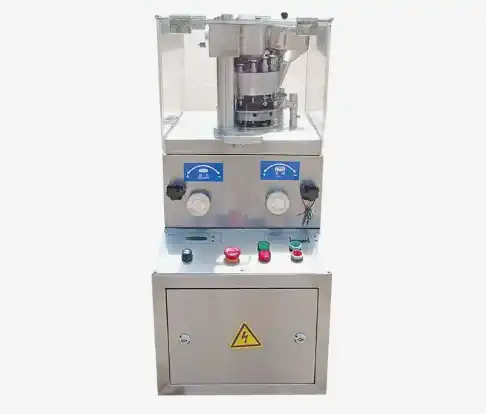
Understanding How a High-Speed Rotary Tablet Press Works
Operational Principles and Core Mechanisms
A rotary tablet press works by using a complex turret system with many circular punches and die stations. Single-punch presses only make one tablet per cycle, but these tools can make a huge number of tablets very quickly because they rotate all the time. The turret turns at set speeds, and the upper and lower punches move through carefully planned rounds of compression. Granulated powder runs from the hopper into the feed frame during operation. The feed frame then evenly spreads the material across several die holes at the same time. Each die hole goes through its own set of steps as the turret turns: filling, pre-compression, main compression, and release. Depending on the machine and the complexity of the tablet, this constant process can make anywhere from 30,000 to over 500,000 tablets per hour. For the compression process to work, upper and lower punches must be used to carefully apply force. Pre-compression takes the air out of the powder bed and makes sure that the density is spread out evenly. Main compression uses the final force needed to reach the goal tablet hardness and size specifications. When compared to single-compression systems, this dual-compression method greatly improves the regularity of tablet quality.
Essential Components and Their Functions
Understanding the important parts helps people who buy things do a better job of evaluating equipment specs. The main compression station has the main compression rollers, which are what put most of the force on the tablets to make them. The exact adjustability of these rollers lets them work with a wide range of materials and tension needs. The feed frame is another important part that is in charge of distributing the powder. Modern systems have forced filling devices that keep fill weights constant, even when production speeds are high. Weight control devices keep an eye on fill depths and make changes in real time to keep tablet weights regular within very tight ranges. Finished tablets are taken out of the die cavities by ejection devices, which then send them to collection systems. Modern machines have release forces that can be changed to keep tablets from getting damaged and to make sure they are completely removed from dies. Dust extraction devices keep work areas clean and keep tools and people working in them safe from airborne particles.
Speed Impact on Production Quality
The relationship between press speed and tablet quality requires careful consideration during equipment selection. Higher speeds usually make people more productive, but if they aren't handled properly, they can hurt the tablet's features. Modern high-speed rotary tablet press machines have complex control systems that find the best speed choices based on the properties of the mixture and the quality standards. Tablet weight changes more often when speeds are higher because there is less time for filling, and powder flow can be uneven. Modern food systems and weight tracking technologies, on the other hand, can keep weights evenly distributed even at full production rates. In the same way, speed changes can affect the consistency of tablet hardness, which means that exact pressure control and tracking systems are needed.
Key Features and Advantages of High-Speed Rotary Tablet Press Machines
Automation and Control Systems
These days, rotating tablet presses have a lot of automation features that make them more productive and help with quality control. These complex systems are a big step up from human and semi-automatic options. They make it possible to make tablets with unmatched accuracy and consistency.
Here are the main benefits of these machines for automation:
- Programmable Logic Controllers (PLCs): These are advanced control systems Big Automatic Rotary Tablet Press that let operators save different product recipes. For each recipe, the PLCs automatically change the compression forces, speeds, and fill levels, so operators don't have to.
- Real-time Monitoring: Built-in sensors constantly check important factors like tablet weight, thickness, hardness, and compression forces, giving instant feedback for improving the process.
- Touchscreen Interfaces: Control panels that are easy for anyone to use make machines easier to use and show a lot of info at once, which cuts down on the need for user training and mistakes.
- Automated Changeover Systems: Quick-change gear systems and automated setup processes cut down on downtime between product runs by a large amount, making the equipment work better overall.
Together, these automation features help makers make sure that the quality of their products is always the same, while also cutting down on labor costs and the chance of differences caused by operators. The advanced control systems create a lot of information about the production process that helps with quality control paperwork and meeting government rules.
Productivity and Quality Benefits
There are more productivity benefits to rotating tablet tools than just faster work. These machines make tablets that are more regular by precisely controlling the compression settings and managing the powder flow. Multi-station compression lets you process multiple tablets at the same time, which greatly cuts cycle times compared to single-punch options. Another important benefit is quality uniformity. Because rotary presses have a controlled environment, tablets are not exposed to weather factors that might change their qualities. All stations use the same compression time and force, which ensures that the tablet properties stay the same throughout production runs. Overall output is also helped by how well maintenance is done. Modern rotary presses are made up of separate parts that fit together easily, making regular upkeep easier. Standardized parts and quick-access panels cut down on repair time and the need to keep extra parts on hand. Predictive maintenance systems keep an eye on how parts wear out and how well they work, which lets you plan maintenance ahead of time and avoid unplanned downtime.
Safety Features and Compliance Standards
When making medicines or food, safety is the most important thing to think about. Modern high-speed rotary tablet press machines have a lot of safety features that keep both the workers and the machines safe. When safety risks are found, emergency stop devices stop the machine right away. Interlocking safety guards keep people from getting to moving parts while the machine is running, but they can still be reached for regular cleaning and repair. Too much compression force can damage tools or put people in danger, but pressure release methods keep that from happening. Dust containment devices keep workers from coming into contact with possibly dangerous powders. Regulatory compliance features make sure that Good Manufacturing Practices (GMP) and other business norms are followed. Validation packages provide written proof of how well technology works and that it meets legal standards. Pharmaceutical-grade materials that meet FDA and foreign safety standards are used on material contact areas.
Comparative Insights: Choosing the Right Rotary Tablet Press for Your Business
Rotary vs. Single-Punch Press Analysis
The decision between rotating and single-punch tablet presses relies on a number of factors, such as the number of tablets that need to be made, how complicated the products are, and how flexible the business needs to be. In research and development, where small batches are common and formulas are changed often, single-punch presses work best. Their low output, on the other hand, means they can't handle large amounts of business production. There are clear benefits to using rotary presses in business manufacturing settings. Their setup with multiple stations lets them make things faster than single-punch methods can. The continuous operation feature gets rid of the start-up and stop-up processes that come with single-punch presses. This makes the properties of the tablets more uniform and the machine more efficient overall. For mid to large amounts of work, rotating presses are also more cost-effective. There is a higher original investment, but the return on investment is usually better because of lower labor costs and higher output. The economic benefits of rotating systems are even greater when quality control tasks can be automated.
Evaluation Criteria for Equipment Selection
To choose the right equipment, you need to carefully consider a number of factors that are related to the unique needs of the activity. The main thing to think about is production ability, and tools should be the right size for both current and expected future demand. When equipment is too big or too small, it wastefully raises the cost of capital, such as the Big Automatic Rotary Tablet Press, and when it's too small, it causes production problems that stop growth. The types of goods that can be made on a single machine depend on how flexible the tools are. Quick-change tooling methods on machines make it easy to make tablets of different forms and sizes without having to go through a lot of setup steps. As companies offer more products and market needs change, this flexibility becomes more valuable. The quality of after-sales service has a big effect on how well a business does in the long run. Manufacturers with extensive service networks and extra parts that are easy to get reduce the risk of downtime and keep production going. Operators can get the most out of their tools and fix problems quickly with the help of training programs and expert support services.
Cost-Effectiveness and ROI Considerations
Total cost of ownership research is a better way to figure out how much something is worth than just comparing the buying price. Long-term success is greatly affected by operating costs such as energy use, repairs, and staff requirements. Designs that use less energy and the ability to run things automatically lower ongoing operating costs. The costs of maintenance are very different for machines of different types and brands. Even though they might cost more at first, equipment that has a history of being reliable and that comes with a full preventative maintenance program usually has lower total costs. The price and availability of spare parts also affect ongoing running costs. Being able to quickly adapt to changes in the market and customer needs increases the value of production. Machines that can make different types of tablets and different sizes give businesses the flexibility they need to stay ahead in competitive markets. When you can use the same tools for both standard and specialized goods, you get the most out of your assets and your money back.
Procurement and After-Sales: How to Buy and Maintain Your Rotary Tablet Press
Sourcing and Supplier Selection
Finding trustworthy makers and wholesalers with a history of making tablet presses is the first step to successful procurement. Established businesses with a footprint around the world usually provide better technical help and customer service than smaller area providers. Manufacturing standards, such as ISO 9001 quality control systems, give you even more peace of mind about the quality of your products and how well they work. When evaluating a supplier, you should look at both their professional skills and their ability to make money. The technical evaluations are mostly about the machine's specs, how well it works, and whether it meets industry standards. Commercial reviews look at how competitive the prices are, how long the shipping times are, and what kind of terms are in the deal that will help the business grow over time. Global supply chain issues affect both the arrival of new tools and the ongoing need for assistance. When it comes to reaction time and service quality, suppliers with foreign service networks and technical help in the area are better. A local store of spare parts and professional know-how lowers the risk of downtime and keeps operations running smoothly.
Customization and Order Specifications
These days, companies that make tablet presses give customers a lot of ways to change the way their machines work so that they meet their specific needs. Customization options include different tooling arrangements, better automation features, and changed safety systems to fit specific production settings or government rules. Order specs must carefully cover both present needs and needs that are expected to come up in the future. While oversizing equipment allows for growth, it also raises the cost of the initial investment, and undersizing equipment creates practical constraints that limit production flexibility. Talking in depth with makers helps find the best specs for a high-speed rotary tablet press that balances the need for efficiency with cost concerns. When negotiating a contract, important issues like guarantee terms, service level agreements, and the cost of extra parts should be brought up. Full warranty security against mistakes in manufacturing and poor performance, and clear service agreements make sure that you get expert help quickly when you need it. A clear price for spare parts lets you make accurate budget and lifetime cost estimates.
Maintenance and Long-term Support
For high-speed rotary tablet press machines to keep working well and last as long as possible, preventative maintenance plans are important. Scheduled cleaning, wear component checkups, and calibration checks are all part of regular maintenance that keeps things accurate and reliable. Maintenance intervals suggested by the manufacturer help you figure out the best time to schedule services. Managing spare parts has a big effect on keeping operations going and on the cost of upkeep. Strategic inventory planning finds the most important parts that need to be available right away, while reducing the amount of money spent on less important things. Parts programs for manufacturers that ensure supply and offer better prices for things that are used a lot are common in partnerships between manufacturers. Technical training programs improve operators' skills and lower the risk of problems caused by operators. Comprehensive training includes basic troubleshooting skills, regular operation processes, and preventative maintenance tasks that plant staff can do. Maintenance technicians can do more complicated service processes and changes to equipment with the help of advanced training tools.
Conclusion
Choosing and using rotary tablet press technology is a big financial choice that affects how well products are made, how competitive the company will be in the long run, and how efficient the production process is. Modern machines have advanced automation features, higher output, and better safety features that support their status as the standard for making business tablets. By reading this guide and understanding its operational principles, key features, and procurement considerations, you can make smart decisions that match the capabilities of the tools you need with your unique manufacturing needs. A successful application relies on carefully choosing the provider, fully training the operators, and putting in place preventative maintenance programs that keep the equipment running at its best for as long as it lasts.
FAQ
1. What maintenance schedule should I follow for optimal performance?
Daily cleaning and inspections, weekly lubrication jobs, and monthly calibration checks are all common parts of regular maintenance plans. Based on production output and working conditions, manufacturers suggest certain intervals. Important parts that wear out need to be checked regularly and replaced based on how they are used, not on set plans. Preventive repair plans greatly cut down on unplanned downtime and increase the life of equipment.
2. How do I optimize tablet weight uniformity at high speeds?
To get the best weight distribution, you need to pay close attention to how the powder flows, how the feed frame is adjusted, and how the fill depth is calibrated. For even filling, you need to make sure that the powder qualities stay the same by granulating and mixing it correctly. Changes to the feed frame and forced feeding methods make it easier to spread the powder at higher speeds. Real-time weight tracking tools let changes be made right away when differences get too big.
3. What are the key differences between various rotary press manufacturers?
Different manufacturers have different ideas about how to build, how much to automate, how to provide service, and how to set prices. European manufacturers tend to focus on precise engineering and full automation, while makers in other areas may focus on saving money and making things easier to use. Different makers have very different levels of service networks and spare parts available. A careful look at the total cost of ownership can help you find the best provider for your needs.
4. Can rotary presses handle different tablet shapes and sizes efficiently?
Modern rotary presses have quick-change gear systems and flexible compression patterns that let them work with a wide range of tablet shapes. Shape complexity slows down production and may require custom machine designs. Changing the size usually means making changes to the tools and the machine's parameters, which can be done quickly and easily with some planning. Multi-tip tools let many smaller screens be made at the same time, which increases productivity.
Partner with Factop for Your High-Speed Rotary Tablet Press Needs
Jining Factop Pharmacy Machinery Company stands as your trusted high-speed rotary tablet press manufacturer, combining decades of engineering expertise with comprehensive global support services. Our advanced manufacturing skills and multilingual expert team make sure that the whole project goes smoothly, from the first meeting to long-term upkeep support. Factop's dedication to quality excellence and customer happiness has led to long-lasting relationships in the chemical, food processing, and pharmaceutical industries around the world. Email our skilled staff at michelle@factopintl.com to talk about your specific requirements and find out how our cutting-edge tablet press options can help you make more things faster.
References
1. Smith, J.R., "Industrial Tablet Manufacturing: Principles and Applications," Pharmaceutical Technology Press, 2023.
2. Chen, L., "Modern Tablet Press Design and Operation," Manufacturing Engineering Journal, Vol. 45, 2023.
3. Rodriguez, M.A., "Automation in Pharmaceutical Manufacturing Equipment," International Pharma Review, 2022.
4. Thompson, K., "Quality Control in High-Speed Tablet Production," Drug Manufacturing Today, 2023.
5. Williams, D., "Maintenance Strategies for Rotary Tablet Presses," Industrial Equipment Quarterly, 2022.
6. Anderson, P., "Economic Analysis of Tablet Press Technologies," Manufacturing Cost Management, 2023.
YOU MAY LIKE