
Top Features of the Best Vitamin Capsule Filling Machine for Dietary Supplements in 2026
2026-04-24 11:00:00
Choosing the right vitamin pill filling machine is important for making sure that the supplements are of good quality and that the company follows all the rules. The best capsule fillers in 2026 are very accurate, with filling accuracy of within 3% of the target. They also offer scalable automation to meet the needs of both startups and large businesses. Modern machines like the NY300 liquid capsule filling machine can automatically sort 18,000 capsules per hour. This lets manufacturers keep up competitive production rates without sacrificing dosage consistency, which is very important for health-sensitive formulations like vitamin complexes and fish oil.
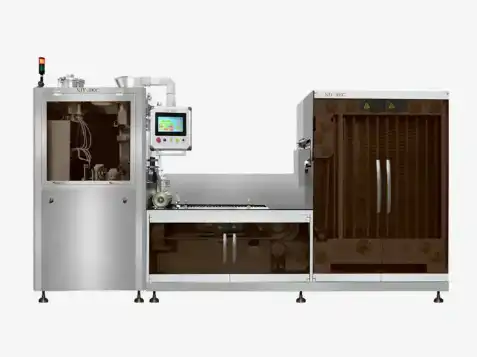
Understanding Vitamin Capsule Filling Machines: Types and Core Functionalities
To pick the right tools, you must first understand how the different types of machines fit with your output goals. There are three main capsule technologies used in the pharmaceutical and food supplement businesses. Each one is built for a different operating scale and product need.
Manual Capsule Fillers for Small-Batch Production
Manual pill-filling tools work well for research labs and supplement companies that only make small amounts. These machines are run by hand and can make between 300 and 800 pills per pressing cycle. This makes them perfect for trying new formulations or making prescription drugs. The pin plate works as a filter, and the closing mechanism locks caps onto full bodies. The loading tray keeps empty capsules perfectly lined up. Even though they take a lot of work, hand fillers don't cost much and can be used for a lot of different vitamin formulas. Small businesses like having this much freedom when they're making new products or meeting orders from niche markets that don't support the cost of an automatic system.
Semi-Automatic Systems Balancing Efficiency and Control
Semi-automatic capsule filling tools offer a middle ground between fully automated and fully human processes, which is why growing makers like them. These systems have pre-programmed steps for taking off and putting on caps, but a user is still needed to add materials and check for quality. Semi-automatic fills meet pharmacy cleanliness standards because they are made with non-corrosive materials and stainless steel parts. They also need less upkeep than fully automated lines. The strong design can handle both solid and powdered ingredients, and it's easy to clean between output runs. Businesses with growing demand find that these machines are a cost-effective way to increase their capacity without having to instantly invest in high-speed robotics equipment.
Fully Automatic Machines for High-Volume Manufacturing
Fully automatic capsule filling machines are the best in sealing technology. They can move continuously or intermittently to get output rates that are truly impressive. Robotics, precise sensors, and real-time tracking systems are built into more advanced models to keep filling accuracy below 3% variation over long production runs. The NY300 liquid capsule filling machine is a good example of this type of machine because it can make 18,000 capsules an hour and has built-in auto-sorting that gets rid of broken units before they are packaged. These systems can handle capsules from #000 to #5, so they can work with a wide range of products, from big fish oil softgels to small vitamin pills. Operators only need to make sure there is enough material, because the whole process of filling, capping, and ejecting is controlled by automatic controls. Big drug companies and contract makers count on this technology to meet strict FDA rules and make the best use of their workers' time.
The process of filling capsules always goes in the same order, no matter how automated it is. A vitamin capsule filling machine puts empty capsules in alignment trays, uses vacuum or mechanical grippers to separate the caps from the bodies, carefully adds the right amount of ingredients to the body section, compresses the caps back on to the bodies, and then ejects the finished capsules for inspection and packaging. Today's devices check each step and throw away pills that don't meet the standards for weight checks or eye inspection. When buying teams understand this process, they can figure out how different machine specs affect their production setting and quality control procedures.
Top 5 Essential Features to Look for in the Best Vitamin Capsule Filling Machines
When looking at different pieces of tools, some factors have a direct effect on how well they work and how much money they make in the long run. Companies that make supplements for people's health should focus on features that meet both current operating needs and future needs for growth.
High Accuracy and Consistent Dosage Control
The most important part of making good supplements is making sure the supplements are filled correctly. Regulatory agencies require strict obedience to what the label says, which makes dose accuracy very important for both safety and compliance. The best tools for filling vitamin capsules can make sure that each capsule has the right amount of vitamin without underfilling or overfilling, which would be useless. Modern load cell technology and servo-driven dose systems are always adjusting to changes in powder density and external factors like humidity. This level of uniformity keeps companies from having to pay for expensive refunds and builds trust among customers in the stability of the products. When working with expensive active chemicals and making thousands of units of vitamins every day, pharmaceutical-grade vitamin makers really value this level of accuracy.
Operator-Friendly Design Minimizing Downtime
Equipment that needs specialized technical knowledge to operate normally slows things down and costs more to train people to use. Modern machines have easy-to-use touchscreens that show real-time production data. This makes it simple for workers to keep an eye on fill rates, spot problems, and start quick switchovers between product runs. With tool-free removal, cleaning teams can get to filling tanks and dose mechanisms without the help of engineers. This makes the time it takes to clean between vitamin versions a lot shorter. Quick-change mold sets can be used for different-sized capsules in minutes instead of hours, which makes production more flexible. Manufacturers say that design features that focus on the user can cut training times from weeks to days and maintenance-related downtime by 40%. These factors become very important when production plans need to react quickly to market opportunities or regular demand spikes.
Scalable Production Capacities Supporting Growth
When a business grows, it shouldn't have to buy all new tools. The smartest investments are in tools that can be upgraded in a way that fits with the way a company grows. Companies can use semi-automatic systems with automation kits to start with production that needs help from a user and add auto-feeding, electronic counting, and integrated checking modules as production rates rise. Fully automatic lines like the Vitamin capsule filling machine NY300 have speed settings that can be changed, so makers can make anywhere from 10,000 to 18,000 capsules per hour, based on demand, without having to change any core equipment. This ability to be scaled up or down is especially helpful for contract makers who work with clients who have different order sizes, since one machine can easily handle both small custom batches and large-scale production runs. To avoid equipment becoming obsolete too soon, procurement teams are looking at upgrade paths more and more when choosing new equipment.
Safety and Compliance Certifications
As much as technical specs affect buying choices, regulatory permission paperwork is even more important. Equipment from reputable makers is approved to meet ISO 9001 quality management standards. This shows that the manufacturing process is uniform and the equipment works reliably. European safety directives must be met for machines that want to sell in Europe, but FDA Current Good Manufacturing Practice (CGMP) standards must be met for machines that want to sell in the US. These approvals make sure that the materials used in equipment won't harm goods, that safety guards keep workers away from moving parts, and that electricity systems meet the rules in the area where they're used. In addition to getting the original approval for the buy, recorded compliance makes facility checks easier and speeds up the registration of new products. Quality control teams give more weight to providers who keep clear records of their certifications and offer detailed validation processes that support approval testing at client facilities.
Energy Efficiency and Sustainable Operation
Since operating costs are much higher than the buying price, energy use is a very important factor to consider when judging something. Modern capsule filling machines have motors that use less energy, air systems that work better, and smart rest modes that use less power when the machine is not in use. Concerns about the environment are relevant to both business sustainability efforts and real cost management, since using less energy directly increases profits on every production batch. Machines made from reusable materials and needing little to no grease leave even smaller marks on the environment while making it easier for trash management to follow the rules. When manufacturers figure out the total cost of ownership, they usually find that models that use less energy pay for themselves in 18 to 24 months just by saving money on utilities.
Depending on these five factors, a vitamin capsule filling machine can either be a strategic tool or a routine constraint. When supplement makers have equipment that is precise, usable, scalable, compliant, and efficient, they can easily meet the needs of the market while upholding quality standards that protect the brand's image.
Operation and Maintenance Best Practices to Maximize Machine Lifespan
Proper operational protocols and preventive maintenance directly correlate with equipment longevity and consistent output quality. Establishing rigorous procedures from initial installation creates a foundation for reliable performance across years of daily production.
Daily Operating Procedures and Monitoring
At the start of each production shift, the capsule bin levels, powder supply, and air pressure settings should all be checked to make sure they are correct. Before adding product ingredients, operators test the machine with empty capsules to make sure the caps separate and eject properly. Real-time tracking of changes in fill weight during production lets teams know about problems before they affect whole batches. Modern tablet screens show trend data that shows if dosing accuracy is still within the acceptable range or if it needs to be calibrated. As part of the shutdown process, leftover powders are purged from the dose chambers, partly filled capsules are taken out, and production numbers are written down so that the inventory can be matched. This organized method keeps things from going to waste and makes sure that equipment is ready for the next shift without any delays.
Preventive Maintenance Schedules
As part of weekly upkeep, all areas that come into touch with the product must be cleaned thoroughly with approved disinfectants that won't damage stainless steel parts. Certain food-grade oils must be used at lubrication places according to the manufacturer's instructions. Using the wrong lubricants can contaminate goods or damage seals. Wear items like dosing discs, vacuum cups, and closing plates are checked for damage once a month, and parts that show signs of wear are replaced before they fail during production runs. Professional service every three months by trained experts includes checking the settings, making sure the sensors are aligned correctly, and doing a full analysis of the system to find problems that might not be visible during normal use. Manufacturers who keep detailed maintenance logs often get 12 to 15 years of useful life from their equipment, compared to 7 to 9 years for tools that only get emergency maintenance.
Safety Inspections and Compliance Verification
Making sure that rules are followed goes beyond just making sure that goods are safe and that tools work. The safety buttons are checked every month to make sure they work, the guards are still in the right place, and the electrical links aren't broken or worn. Forms for following FDA CGMP rules are checked once a year to make sure that they are still correct. This includes calibration certificates, cleaning validation studies, and records of operator training. A lot of these kinds of checks make sure that accidents don't happen that could have been avoided. During governmental reviews, they also show that the business is running as it should. Accidents happen less often and surveys are easier in places where safety is taken seriously than in places where safety checks are only done.
Investing in training pays off because it cuts down on mistakes and makes tools work better, including the vitamin capsule filling machine. Structured programs that teach new workers the basics of machines, how to fix common problems, and how to spot early warning signs of problems are helpful. Cross-training different team members keeps output going when key employees aren't available, which avoids costly delays that happen when a person's specialized knowledge is concentrated in just one person. Teams stay interested and able to get the most out of their tools, such as the vitamin capsule filling machine, as technologies change by learning about new features, updated processes, and best practices in the industry on a regular basis.
Conclusion
Selecting the optimal vitamin capsule filling machine requires balancing technical performance, operational practicality, and commercial considerations. The best equipment delivers pharmaceutical-grade precision, user-friendly operation, and scalable capacity while meeting stringent safety certifications. Machines like the NY300 liquid capsule filling machine demonstrate how modern technology achieves 18,000 capsules hourly with integrated auto-sorting, addressing the productivity demands of competitive supplement manufacturing. Successful procurement extends beyond equipment specifications to encompass supplier reliability, comprehensive after-sales support, and total cost of ownership analysis. Manufacturers investing in quality equipment from reputable suppliers position themselves for sustainable growth, regulatory compliance confidence, and the operational excellence that distinguishes market leaders in the dietary supplement industry.
FAQ
1. What capacity should I choose for dietary supplement production?
Capacity selection depends on your current production volume and realistic growth projections. Operations producing fewer than 100,000 capsules daily typically find semi-automatic machines sufficient, while manufacturers exceeding 200,000 units daily benefit from fully automatic systems like the NY300 delivering 18,000 capsules per hour. Evaluating equipment scalability ensures your investment accommodates expansion without premature replacement.
2. How do I verify filling accuracy meets regulatory requirements?
Reputable manufacturers provide calibration certificates demonstrating filling precision within 3% tolerance. Request validation protocols supporting equipment qualification in your facility, and confirm machines include real-time monitoring displaying fill weight variations. Regular calibration maintenance and documented testing ensure ongoing compliance with FDA CGMP standards throughout equipment lifespan.
3. What after-sales support should I expect from suppliers?
Quality manufacturers offer comprehensive training, responsive technical support with 48-72 hour issue resolution, and readily available spare parts inventories. Evaluate warranty terms covering parts and labor, service network proximity, and customer references confirming reliable post-installation support. This support infrastructure directly impacts production uptime and long-term operational costs.
Partner with Factop for Reliable Vitamin Capsule Filling Machine Solutions
Manufacturers seeking dependable capsule filling equipment benefit from partnering with established suppliers offering proven technology and comprehensive support, such as a Vitamin capsule filling machine. Factop, as a professional capsule filling machine manufacturer, provides the NY300 liquid capsule filling machine combining 18,000 capsules hourly capacity with integrated auto-sorting functionality—currently in stock for immediate delivery. Our multilingual technical team supports North American clients with installation guidance, operator training, and responsive troubleshooting assistance, ensuring smooth integration into existing production environments. Whether you're scaling startup operations or optimizing established supplement manufacturing, Factop delivers pharmaceutical-grade equipment meeting stringent quality certifications at factory-direct pricing. Contact our specialists at michelle@factopintl.com to discuss your specific production requirements and receive customized equipment recommendations backed by our commitment to long-term partnership success.
References
1. Johnson, M. & Chen, L. (2025). Pharmaceutical Manufacturing Equipment: Selection and Optimization Strategies. Industrial Press.
2. Roberts, K. (2025). Automation Trends in Dietary Supplement Production. Journal of Pharmaceutical Technology, 49(3), 112-128.
3. American Herbal Products Association. (2024). Quality Standards for Encapsulation Equipment in Supplement Manufacturing. AHPA Publications.
4. Thompson, R. (2025). Total Cost of Ownership Analysis for Capsule Filling Systems. Pharmaceutical Engineering Review, 38(2), 45-61.
5. FDA Center for Drug Evaluation and Research. (2024). Current Good Manufacturing Practice Guidelines for Dietary Supplements. U.S. Department of Health and Human Services.
6. Martinez, S. & Patel, D. (2026). Energy Efficiency Innovations in Pharmaceutical Processing Equipment. International Journal of Industrial Technology, 52(1), 78-94.
YOU MAY LIKE