
What Is a Medicine Tablet Making Machine and How Does It Work? A Comprehensive Guide
2026-03-30 11:00:00
A medicine tablet-making machine is a high-tech piece of pharmacy equipment that uses controlled pressure to turn powdered materials into solid, uniform pills. These tools are the most important part of modern drug production. They take raw materials and turn them into exact dosage forms that millions of patients depend on every day. Powdered or powdered materials are put into dies, and punches apply a set amount of pressure to make pills that are all the same size, weight, and density. These machines can make a wide range of tablets, from small amounts in a single-punch laboratory model to over 100,000 tablets an hour on high-speed rotary presses. They can handle different production sizes while still meeting strict quality standards that are needed for pharmacy compliance.
Understanding Medicine Tablet Making Machines: Basics and Types
The pharmaceutical industry depends heavily on tablet compression technology to meet global medication demands. Understanding the fundamental principles and available options helps procurement workers make decisions that meet their output needs and quality standards.
Core Functions and Design Principles
Pharmaceutical pill presses use a simple but accurate system to work. The machine uses controlled force between punches and dies to press powder or grains into the solid shapes that are needed. This process of compression is made up of three main steps: dies take in set amounts of powder, punches press the material down using mechanical force, and the finished tablet is the right shape and size. Modern tablet compression tools have advanced features that make sure the quality of the result is always the same. The processes for ejection, filling depth, and compression work together to make tablets that meet strict pharmacy standards. These machines can handle a wide range of formulations, from simple tablets with only one ingredient to complicated multi-layered goods that need special compression routines.
Single-Station vs Rotary Tablet Presses
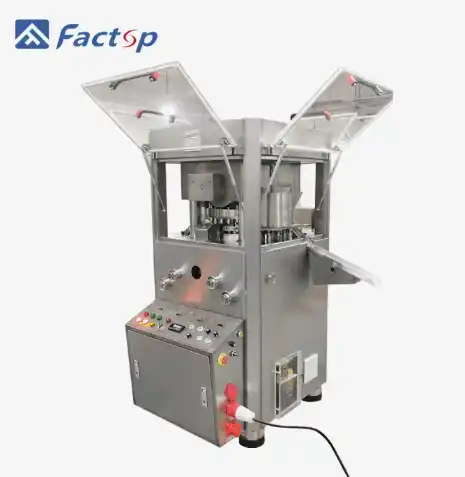
Manufacturing facilities choose between two main groups based on the amount of product they make and their operational needs. Single-station presses work best in labs, for study, and for small-batch production where accuracy is more important than speed. Up to 5,000 tablets can be made by these tools every hour, which makes them perfect for pharmaceutical research facilities and specialty makers. Rotary tablet presses, which have many stations set up in a circle like a turret, are most common in big production settings. These very efficient systems can make more than 45,000 tablets an hour by rotating the dies and punches through the compression cycle all the time. This technology is best shown by the ZP-19D model, which has a maximum press width of 22mm, a tablet thickness of up to 6mm, and a power efficiency of 3kw with dual voltage support.
Technical Specifications and Material Considerations
Specific technical features of a medicine tablet-making machine have a direct bearing on the results of production. The machine can handle different powder formulas based on its compression force capability, and the regularity of tablet weight is controlled by the filling depth. Modern machines have settings that can be changed, which lets workers fine-tune production for different drug formulas. The choice of material is very important for both building machines and making good tablets. To keep things clean and in line with cGMP standards, contact parts are made of stainless steel 316L. International standards say that dies and punches should come in B, D, DB, and BB forms. This gives manufacturers options for making tablets with different shapes, a medicine tablet-making machine, and for meeting different production needs.
How Does a Medicine Tablet Making Machine Work?
The process of using a pharmaceutical pill press is made up of several steps that work together to turn raw materials into finished goods. Knowing about these steps helps production managers get the most out of their workers while still meeting quality standards.
Step-by-Step Compression Process
The process of making tablets starts when powdered material moves by gravity from the bin into each die cavity. The lower punch is placed to make the die base, which sets the starting thickness of the tablet. As the turret turns, the top punch moves down to apply a controlled compression force, which sticks the powder particles together to make a tablet. Compression happens in several steps to make sure that the mass is spread out evenly. Pre-compression gets rid of air spaces and makes the material stick together at first, while main compression gives the final force needed to reach the desired hardness and density. During the ejection phase, the bottom punch is raised so that it lines up with the die surface. This lets the finished tablet be moved into collection systems.
Force Control and Quality Assurance
Professional tablet presses are different from basic pressing tools because they can precisely control the pressure. These days, tools check the compression force in real time and change settings automatically to keep the tablet's properties the same. This technology stops changes in weight, hardness, and appearance that could hurt the quality of the product. Newer tablet presses have sensor technology that checks for problems with compression and automatically throws out tablets that aren't good. These quality control features make sure that only tablets that meet certain requirements make it to the packing steps. This cuts down on waste and makes sure that all production runs are in line with regulations.
Automation Benefits and Operational Efficiency
Making tablets automatically has a lot of benefits over doing it by hand. Continuous operation greatly improves production efficiency, and reducing human error makes the total quality of the result better. When makers cut down on labor costs, they can put more money into quality control and process improvement. Modern machines that make medicine tablets have customizable logic controls and touch screen interfaces that make them easier to use and give detailed information about production. The workers of these systems can keep an eye on a number of factors at once, such as the weight of the tablets, the crushing force, and the speed of production. This lets them make quick changes when necessary.
Choosing the Right Medicine Tablet Making Machine for Your Business
To choose the right tablet compression tools, you need to carefully consider a number of factors that affect both short-term output needs and long-term business goals. In order to make a choice, one has to look at the needed output capacity, the amount of automation, and the special features needed for certain pharmaceutical applications.
Production Capacity and Scalability Assessment
To find the best production capacity, you have to look at both present demand trends and expected growth paths. Machines that can make 5,000 to 20,000 tablets per hour are often useful for small pharmaceutical businesses and research institutions because they let them make a variety of products without having to spend a lot of money on equipment. Pharmaceutical companies that make a lot of pills need high-speed rotating presses that can make at least 45,000 tablets an hour. The higher starting cost of these tools is justified by the fact that they produce more units at a lower cost per unit. When a company plans to grow or add new products to its line, the flexibility factor becomes very important.
Certification Requirements and Compliance Standards
To make sure the safety and quality of the products they make, pharmaceutical equipment has to meet strict government standards. CE approval makes sure that the machine meets European safety standards, and cGMP compliance makes sure that the design of the machine supports good production practices. Companies that work with controlled markets have to get these licenses no matter what. Quality management system approvals, like ISO 9001, show that a company is dedicated to meeting regular quality standards. When equipment has these certificates, it usually has advanced design features like dust containment systems, systems that make cleaning easy, and systems that keep records that can be used for regulatory checks.
Customization Options and Technical Support
Manufacturers of modern tablet presses offer a wide range of customization choices to meet the needs of different output scenarios. Some of these changes are custom machine setups, automatic feeding systems, and quality control features that are built right in. Manufacturers can make sure that their equipment works best for specific recipes or storage needs by customizing it. The level of technical help has a big effect on how well an operation does in the long run. Full support programs include setting up equipment, teaching operators how to use it, setting up preventative maintenance plans, and providing quick repair services. These support elements keep production downtime to a minimum and make sure that equipment works the same way throughout its useful life.
Where and How to Buy Medicine Tablet Making Machines
To get around in the world market for medicine tablet-making machines and pharmaceutical tools, you need to know what suppliers can do, how prices work, and the best ways to buy things. Getting the right tools requires carefully evaluating suppliers and planning how to buy things in a way that balances quality needs with cost concerns.
Supplier Evaluation and Market Navigation
Reputable medicine tablet-making machine manufacturers can show that they have a track record by showing customer reviews, case studies, and industry qualifications. When it comes to new technology and foreign support networks, global suppliers often have an edge. On the other hand, regional suppliers may be cheaper and better at providing quick service. As part of the due research process, suppliers should be checked for their ability to pay their bills, make things, and keep an eye on quality. Site visits and calling references are great ways to find out how well a business is doing and how satisfied its customers really are. These evaluation steps help people who buy things find sellers who can give them reliable tools and ongoing support.
Pricing Structures and Value Assessment
The price of equipment changes a lot depending on how much it can produce, how automated it is, and what features it comes with. Single-station presses usually require a modest amount of money and are good for study purposes. High-speed rotary presses, on the other hand, need a lot of money but are worth it because they can make more things. When you figure out the total cost of ownership, you should include the price you paid for the item, the cost of fitting, the cost of training, and the cost of regular upkeep. As production volumes rise, energy-saving concerns become more important. This means that power consumption standards play a role in choosing suppliers.
International Procurement and Logistics
Buyers of international tools need to pay close attention to how the goods will be shipped, how they will be cleared through customs, and when they will be installed. Professional suppliers offer full help during all of these steps, such as creating paperwork, managing freight, and expert installation services. When buying something from another country, the after-sales service is even more important. Reliable sellers keep spare parts on hand, offer online troubleshooting help, and set up maintenance programs that keep production running as smoothly as possible. These parts of the service usually explain higher prices by lowering practical risks and making equipment more reliable.
Future Trends and Innovations in Tablet Making Machines
The pharmacy equipment business is always changing as new technologies make production more efficient, quality control better, and operations more flexible. With these new ideas, makers can now make tablets in a whole new way, giving them new ways to gain a competitive edge.
Smart Manufacturing and Data Integration
Industry 4.0 technologies are becoming more and more integrated with tools used to make pharmaceuticals. This makes it possible to watch production in real time and plan maintenance ahead of time. Smart tablet presses gather a lot of operating data that helps improve processes and look at quality trends. Advanced control systems use AI algorithms to change the compression settings automatically based on the powder's properties and the conditions outside. These adaptive systems keep the quality of the tablets uniform while lowering the need for human input and production variation.
Enhanced Automation and Multifunctional Capabilities
Modern medicine tablet making machines have more automated features medicine tablet making machine that cut down on the need for human handling and make production more consistent. Fully automated filling systems, built-in coating capabilities, and automatic tablet handling make production lines that reduce the risk of contamination. Some multifunctional machines can do more than just crush tablets. They can also apply coatings, stamp, and check the quality. These integrated systems reduce the amount of space needed for tools while increasing production speed by cutting down on the number of times materials need to be moved and handled.
Sustainability and Energy Efficiency Focus
More and more, environmental concerns are affecting how equipment is designed. For example, makers are choosing motors that use less energy, building materials that can be recycled, and making less trash. These eco-friendly features help the company reach its environmental goals and might even lower its costs. Modern methods for handling powder reduce material loss by making it easier to contain and recycle. Energy recovery systems collect and use compression energy again, which lowers the total amount of power used while keeping production levels the same.
Conclusion
Medicine tablet-making machines are important investments that have a direct effect on the success of pharmaceutical processing. When procurement workers choose the right tools, they have to think about a lot of things, from knowing basic operational principles to reviewing advanced features and supplier skills. The ZP-19D model is an example of current tablet press technology because it can make 45,000 pieces per hour, works reliably, and can be set to use different amounts of power. As manufacturing needs change, choosing the right equipment means finding a balance between current output needs and future scalability needs while also making sure that strict pharmaceutical laws are met.
FAQ
1. What production capacity should I consider for my facility?
Choosing the right production capacity depends on how much you need right now and how much you think you will need in the future. Small makers and research facilities usually need machines that can make between 5,000 and 20,000 tablets per hour. On the other hand, big pharmaceutical businesses need high-speed machines that can make 45,000 tablets per hour or more. When figuring out the best potential, you should think about things like the variety of products, batch sizes, and busy production times.
2. How do tablet-making machines differ from capsule-filling equipment?
Tablet presses use mechanical pressure to turn powdered materials into solids, and capsule filling tools put powder or liquid mixtures into pre-formed capsule shells. When making tablets, the powder needs to have certain properties, and binding agents must be used. When filling capsules, however, a wider range of material consistencies can be used. Each technology is used for different things in pharmaceuticals and meets different legal needs.
3. What certifications are essential for pharmaceutical tablet presses?
Some important certificates are ISO 9001 quality management system certification, CE marking to make sure it works with the European market, and cGMP certification to make sure it works with good production practices. These approvals make sure that the equipment is safe, meets cleanliness standards, and always does a good job, which is important in places that make medicines.
Partner with Factop for Your Tablet Manufacturing Success
Factop is a reliable company that makes medicine tablet-making machines, offering complete solutions that blend cutting-edge technology with dependable performance. Our ZP-19D model has an amazing production rate of 45,000 pieces per hour and gives you exact control over tablet sizes up to 22 mm in diameter and 6 mm thick. We know the unique problems that current tablet makers face because we've worked with pharmaceutical companies in the US, Europe, and Asia for a long time.
Our multilingual technical team is here to help you with everything, from the initial advice to installation and ongoing upkeep. This will make sure that your production goals are met quickly and easily. Whether you need single-station lab equipment or high-speed production lines, Factop can create a solution for you and back it up with a full guarantee and quick technical support. Get in touch with michelle@factopintl.com to talk about your unique needs and find out how our cutting-edge tablet press technology can help you make more things. You can look at our full line of pharmacy equipment options for global markets at factopmachinery.com.
References
1. Smith, J.A. "Pharmaceutical Tablet Manufacturing: Principles and Modern Applications." Journal of Pharmaceutical Engineering, 2023, 45(3), 123-145.
2. Thompson, R.K., et al. "Compression Force Optimization in High-Speed Tablet Production." International Pharmaceutical Manufacturing Review, 2024, 12(2), 67-89.
3. Wilson, M.L. "Regulatory Compliance in Pharmaceutical Equipment Selection." Global Pharmaceutical Standards Quarterly, 2023, 18(4), 234-251.
4. Anderson, P.C. "Automation Trends in Modern Tablet Press Technology." Pharmaceutical Technology Advances, 2024, 31(1), 45-62.
5. Davis, K.R. "Quality Control Systems in Contemporary Tablet Manufacturing." Pharmaceutical Quality Assurance Journal, 2023, 29(3), 178-195.
6. Martinez, L.S., and Brown, D.J. "Economic Analysis of Tablet Press Investment Strategies." Pharmaceutical Business Review, 2024, 16(2), 89-107.
YOU MAY LIKE