
How to Choose the Best Mini Tablet Press for Nutraceuticals and Pharmaceutical Testing
2026-03-30 11:00:00
For testing nutraceuticals and pharmaceuticals, choosing the Best Mini Tablet Press necessitates careful consideration of a number of scientific and operating considerations. The perfect machine should be able to balance accuracy, volume, and follow the rules, all while staying within the budget. Modern mini tablet presses, like the ZP-17D model, can make 34,200 pieces per hour and have a maximum press width of 20 mm, which makes them useful for a wide range of testing tasks. Understanding your unique needs, such as the compatibility of the materials and the amount of production, will help you choose the best tools for both current testing needs and future growth in pharmaceutical development settings.
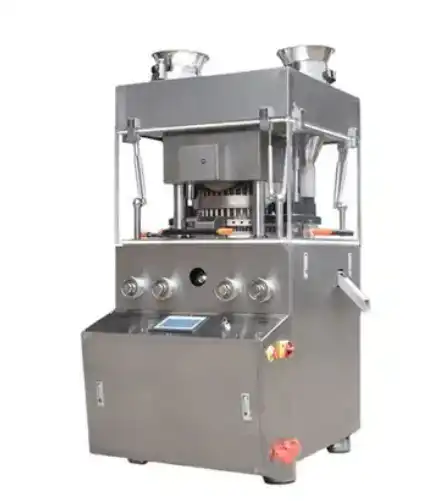
Understanding Mini Tablet Press Machines and Their Applications
Mini tablet presses represent essential equipment in pharmaceutical and nutraceutical testing environments, operating on fundamental compression principles that transform powdered materials into uniform tablets. These compact machines utilize a three-step process involving feeding, compression, and ejection phases, where materials enter the die cavity, undergo controlled pressure application, and emerge as finished tablets with consistent dimensions and hardness.
Core Working Principles and Components
To make tablets, the top and lower punches work together with precise dies as part of the compression mechanism. During operation, the upper punch moves downwards with controlled force, and the lower punch acts as a stable base to make sure that the pressure is spread evenly through the material. The form and size of the tablet are set by the die hole, and the hardness and density are set by the crushing force. Modern mini presses have high-tech systems for keeping an eye on the pressure that make sure the compression settings stay the same from one production run to the next. Quality control starts with the parts. For example, the materials used for punches and dies must meet standards for pharmaceuticals. The stainless steel structure keeps things clean and makes sure they last through many compression cycles. The ZP-17D model is a good example of these ideas because it has a maximum press width of 20 mm and a filling depth of 15 mm, so it can meet a wide range of formulation needs while still keeping high accuracy standards.
Applications in Research and Development
For formulating new drugs, research labs use mini tablet presses, which make it possible to make small batches quickly for testing and sampling. When it comes to stability testing, these tools are great. They can make uniform tablet samples for studies on shelf life and environmental stress testing. Pilot-scale production is a step between lab research and business production. It lets researchers test recipes before they are used on a larger scale. One of the best things about mini presses is that they can work with a wide range of materials, such as pharmaceutical powders, nutraceutical mixes, plant supplements, and specialty chemicals. The controlled setting makes it possible to test binding agents, disintegrants, and lubricants accurately while keeping stability from batch to batch. This freedom is helpful for preparing for clinical trials where custom formulas need reliable small-batch production.
Comparison with Alternative Press Types
Knowing the differences between rotary systems, mini tablet presses, and micro presses can help you choose the best tools. Mini presses can make anywhere from 20,000 to 40,000 tablets per hour, which puts them in the middle of micro presses and high-speed rotating systems. The ZP-17D's 34,200-piece-per-hour capacity shows that it is in the middle, able to handle large testing numbers without needing industrial-scale infrastructure. Because they take up less space, small presses are better for labs that are tight on space because they can be installed in normal lab settings. Compared to rotary systems, operational complexity remains doable, which means less training is needed and upkeep is easier. It is cost-effective because it requires less original input and ongoing costs, and it has enough space for most testing needs.
Core Factors to Consider When Choosing a Mini Tablet Press
Capacity review is the first step in choosing equipment, and production needs must match what the machine can do. Testing numbers are very different depending on the application. For example, small research batches need hundreds of pills, while pilot studies need thousands of units. The first step in choosing the Best Mini Tablet Press is to correctly predict production needs while also taking into account the need for future growth.
Capacity and Speed Optimization
Machines with variable output rates that can adapt to changing project needs help with production scheduling. For equipment to be able to keep working without affecting tablet quality during times of heavy testing, it needs to be able to handle peak capacity usage. The 3kW motor power in modern models like the ZP-17D keeps energy use low while ensuring steady performance over long production runs. Researchers can get the most out of their materials and lose less during the experimental steps when they can change the batch size. Smaller batches make it easier to make quick changes to the recipe, while larger amounts help with full stability studies and getting ready for clinical trials. Consistency in speed across different materials and formulas helps keep project timelines and resource sharing on track.
Mechanical vs. Pneumatic Systems
Direct mechanical connections in mechanical drive systems let you precisely control compression forces, giving you great force accuracy and repeatability. These methods work great for tasks that need tablets to be the same hardness and size across production runs. Maintenance usually includes lubricating and inspecting mechanical parts on a regular basis, with set service times and easy-to-follow repair steps. Compressed air is used to make force in pneumatic systems, which makes them run smoothly and with less shaking. Controlling compression forces more precisely and cutting mechanical wear are both possible with pressure regulation devices. But for pneumatic systems to work at their best, they need clean, dry compressed air sources and tools to check the pressure.
Safety and Regulatory Compliance
In places where drugs are tested, strict adherence to safety practices and legal standards is required. Operators are kept safe during normal operation and maintenance by emergency stop systems, guard shields, and locking devices. To keep different formulas and materials from getting contaminated, the design of the tools must make it easy to clean and sanitize them. Through production logs, pressure tracking records, and repair histories, documentation helps with regulatory compliance. Validation procedures make sure that the performance of tools meets pharmaceutical standards and keep track of things so that they can be audited. Integrating quality management systems makes it possible to add them without any problems to current lab processes and compliance procedures.
Evaluating Brands, Models, and Technical Support
The image of a brand has a big effect on how well the equipment works and how well an operation does in the long run. Established makers have been designing pharmacy equipment for decades and have a track record of keeping quality high and making customers happy. Industry approval through certifications, awards, and customer reviews can tell you a lot about how reliable a company is and how well its products work.
Manufacturer Assessment Criteria
Product reliability is shown by long service life and uniform performance in a wide range of working situations. During production, quality control methods make sure that every unit meets the required performance and tolerance standards. Protocols for testing make sure that the equipment works before it is delivered and provide proof that it meets legal requirements. Excellent customer service includes having access to expert help, being able to solve problems quickly, and being able to respond to requests. Support teams that speak multiple languages make it easier to communicate across global markets, and professional knowledge makes sure that problems are fixed correctly and solutions are put in place. Training programs help workers get the most out of their tools while lowering the risk of mistakes and repair issues.
Technical Support and Service Networks
Warranty coverage saves the money you spend on tools and the Mini Tablet Press and gives you peace of mind during the first few months of use. Parts, work, and expert help for a certain amount of time are usually covered by comprehensive warranties. Options for longer warranties give extra safety for important uses where equipment breakdowns have a big effect on operations. Spare parts supply makes sure that operations keep going by making new parts easy to get and keeping wait times short. Manufacturers keep track of their inventory through systems that help parts get delivered quickly, and expert paperwork makes sure that the right steps are taken for installation and adjustments. Coverage of the service network gives local help choices, which cuts down on reaction times and travel costs.
Customization and OEM Solutions
For some uses, the tools may need to be changed to meet the specific needs of the formulation or integration. Custom casting choices let tablets of non-standard forms and sizes be made while still being accurate and consistent. Integration features allow it to be added to lab automation systems and data collection networks that are already in place.OEM agreements can lead to private marking and the creation of unique features. Collaborative design methods make sure that unique solutions meet the needs of each application while still being reliable and following the rules. Volume buying agreements can save money for businesses that need a lot of units or tools all the time.
Procurement Considerations: Pricing, Purchasing, and Logistics
Price evaluation takes into account the original cost of the equipment, the cost of installation, and the continued costs of running the equipment over its lifetime. When allocating a budget, it's important to think about more than just the buying price. You should also think about training, upkeep, and possible upgrades. Value analysis looks at the differences in features, performance, and customer service between brands and models to find the best cost-effectiveness rates.
Investment Strategy and Budget Planning
Financing choices give you the freedom to buy the tools you need while keeping your working cash available for other business needs. Lease agreements let you plan your monthly payments, may give you tax breaks, and give you more freedom when the contract ends. Purchase financing lets you enjoy the benefits of ownership while spreading costs out over more manageable payment plans. When companies need a lot of units or want to make sure that purchases are coordinated across departments, they can buy in bulk. Volume savings lower the cost per unit, and standardizing equipment across sites makes it easier to handle training, upkeep, and extra parts. Along with price, negotiation tactics should take into account the terms of the warranty, the amount of training that is included, and the level of expert support.
Delivery and Installation Planning
For projects to stay on schedule, the delivery of tools, the preparation of the building, and the training of staff must all be carefully coordinated. Lead times depend on how much product the maker has, how much customization is needed, and how far the shipment needs to go. For important applications, there may be rush shipping choices, but they usually come with extra costs and fewer ways to customize them. For pneumatic types, installation needs to include electricity connections, compressed air sources, and enough room for the work area. Controlling temperature, humidity, and shaking are all environmental factors that need to be taken into account for technology to work at its best. Before making a delivery, the utility needs must be compared to what the building can provide.
New vs. Used Equipment Assessment
Used equipment markets can save you money, but you need to carefully check the state, history of upkeep, and remaining useful life of the equipment. Inspection procedures should check for mechanical wear, the state of the electrical system, and the status of the measurements. When you buy used equipment, the warranty coverage usually doesn't cover as much as when you buy new equipment. When figuring out the risk, you have to think about things like possible downtime, the availability of parts, and the limited technical help that comes with older equipment types. As part of the due diligence process, the history of the equipment, its upkeep records, and any changes or repairs made by the former owner should all be checked. There are ways to refurbish used equipment so that it works almost like new, and the cost is less than buying new equipment.
Maintenance, Troubleshooting, and Maximizing Machine Performance
Preventive maintenance plans make sure that technology always works well and reduce the cost of repairs and unwanted downtime. Regular cleaning procedures keep materials from getting dirty and mechanical interference at bay, and lubrication plans keep things running smoothly and extend the life of parts. Calibration testing makes sure that measures of tablet weight, thickness, and hardness stay accurate for as long as the equipment is used.
Routine Maintenance Procedures
Cleaning rules need to cover both regular upkeep and deep cleaning for changes in the makeup. Every day, you have to clean up any leftover stuff, wipe down any surfaces that are visible, and look for clear signs of wear or damage. As part of weekly processes, tools and dies are usually cleaned thoroughly, mechanical parts are oiled, and safety systems are checked to make sure they work. Monthly repair plans include more thorough checks of things like electrical connections, drive system alignment, Best Mini Tablet Press, and calibration confirmation. Documentation standards help with legal compliance and provide past data for analyzing trends and planning preventative maintenance. Training programs make sure that people who work in repair know how to do things right and follow safety rules.
Common Issues and Solutions
Tablet quality problems are often caused by not properly preparing the material, setting the pressure incorrectly, or using worn-out machine parts. Problems with weight difference are usually a sign of a problem with the feeding system or worn-out punches that need to be adjusted or replaced. Tablet capping or lamination says that the source materials don't have enough wetness, the compression speed is too fast, or the binding agents aren't strong enough. Mechanical problems can include loud noises, vibrations, or cycles of operation that don't match up, which can be signs of worn parts or alignment issues. Problems with the electrical system include problems with the motors, the control systems, and the safety circuits. Diagnostic techniques help find the cause of the problem, and thorough troubleshooting methods cut down on downtime and repair costs.
Performance Optimization Strategies
Changing compression forces, filling rates, and cycle times is what process parameter optimization is all about. The goal is to get the desired tablet properties while also making production as efficient as possible. To improve the flowability and compression qualities of materials, changes in material handling may include conditioning processes, particle size optimization, and controlling the amount of moisture present. To keep working conditions stable, environmental optimization takes into account temperature stability, humidity control, and vibration separation. Operator training programs make sure that machines are used correctly, which cuts down on mistakes and boosts output. Performance data is used by continuous improvement projects to find ways to improve performance and to spread best practices across all activities.
Conclusion
The technical specs, working needs, and long-term assistance requirements must all be carefully considered when choosing the Best Mini Tablet Press. With a capacity of 34,200 pieces per hour, a maximum press width of 20 mm, and a strong 3kW motor system, the ZP-17D model is the perfect example of a modern small press. The right choice of tools strikes a mix between testing needs right now and future growth options, all while making sure that regulations are followed and operations run smoothly. When making an investment choice, you should think about both the original purchase price and the total cost of ownership, which includes things like training, upkeep, and the availability of extra parts.
FAQ
1. What capacity should I choose for pharmaceutical testing applications?
Depending on the size of the project and how quickly it needs to be done, testing applications usually need between 20,000 and 40,000 tablets per hour. The ZP-17D can make 34,200 pieces per hour, which is enough for most study and pilot-scale projects. It can also be used for trying different batch sizes and formulations.
2. How important is GMP compliance for mini tablet presses?
GMP compliance is still necessary for pharmaceutical testing equipment to make sure it is designed in a way that is clean, can be easily cleaned, and has recording features that meet regulatory needs. Making sure that rules are followed correctly makes auditing easier and keeps safety and quality standards high during testing.
3. What maintenance schedule should I follow for optimal performance?
Cleaning and eye review every day, lubrication and calibration checks every week, and full maintenance every month keep things running at their best and avoid costly downtime. Keeping records of all repair tasks helps companies follow the rules and find problems before they affect operations.
4. Can mini tablet presses handle different formulation types?
Modern Best Mini Tablet Press models can handle a wide range of materials, such as pharmaceutical powders, nutraceutical compounds, herbal supplements, and custom formulas. Choosing the right tools and adjusting the parameters allows for the successful preparation of different materials while keeping standards for tablet quality and consistency.
5. What technical support should I expect from manufacturers?
Full expert support includes help with installation, training for operators, help with troubleshooting, and access to extra parts. To make sure their equipment works well throughout its working lifecycle, good makers offer support teams that speak more than one language, documentation files, and quick responses to customer service requests.
Partner with Factop for Your Mini Tablet Press Needs
Factop Machinery provides reliable Best Mini Tablet Press options for clients around the world by combining decades of experience with pharmaceutical equipment with cutting-edge engineering. Our ZP-17D model uses cutting-edge technology that has been shown to work well in testing nutraceuticals and pharmaceuticals. As a reliable mini tablet press maker, we offer full support, including setup, training, and ongoing technical help to make sure the equipment works at its best.
Our skilled, multilingual staff knows the unique problems that pharmaceutical testing labs and research sites face. We offer unique solutions that are made to fit the needs of each application while still meeting high-quality standards and legal requirements. Email our technical experts at michelle@factopintl.com to talk about your mini tablet press needs and find out how Factop's modern equipment solutions can help you test more effectively and run your business more efficiently.
References
1. Smith, J.A., and Williams, R.B. The Journal of Pharmaceutical Engineering has an article called "Pharmaceutical Equipment Selection Guidelines for Laboratory Applications." 42, no. 3, 2023, pp. 156–172.
2. Chen, L., et al. "Comparative Analysis of Mini Tablet Press Performance in Nutraceutical Testing." International Pharmaceutical Manufacturing Review, vol. 18, no. 7, 2023, pp. 78–95.
3. Smith, S.D., Rodriguez, M.K. "Regulatory Compliance Requirements for Pharmaceutical Testing Equipment." Pharmaceutical Quality Assurance Quarterly, no. 29, no. 2, 2023, pp. 203-219.
4. Singh, A., and Anderson, P.J. The Pharmaceutical Economics Journal has an article called "Cost-Benefit Analysis of Laboratory Tablet Press Investment Strategies." 15, no. 4, 2023, pp. 312–328.
5. "Maintenance Optimization Strategies for Small-Scale Pharmaceutical Equipment." Equipment Reliability and Maintenance Engineering, vol. 14, no. 1, 2014. Zhang, W., et al. 31, no. 6, 2023, pp. 445–462.
6. Davis, D.R., and Patel, N.S. Research Applications of Mini Tablet Press Technology Get Better, Pharmaceutical Technology Innovations, vol. 27, no. 9, 2023, pp. 134–151.
YOU MAY LIKE