
What is an automatic tablet press machine?
2026-04-08 11:00:00
An automatic tablet press machine is a high-tech industry machine that automatically presses powdered or powdery materials into tablets of the same size. Unlike semi-automatic or manual tools, these advanced systems don't need much help from people to make tablets quickly and consistently. Modern automatic tablet presses use servo-driven technology, real-time tracking systems, and precise control mechanisms to make sure the right amount of compression force, accurate tablet weight, and efficient output in the chemical, pharmaceutical, and nutraceutical industries.
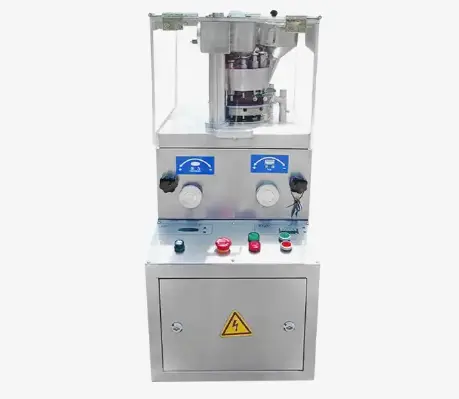
Introduction to Automatic Tablet Press Machines
The pharmaceutical manufacturing landscape has evolved significantly with the introduction of automated compression technology. Automatic tablet press machines represent the pinnacle of tablet production efficiency, combining mechanical precision with digital control systems to meet the demanding requirements of modern industrial manufacturing. These sophisticated devices have revolutionized how companies approach tablet production, particularly in environments where consistent quality, high throughput, and regulatory compliance are paramount. Global B2B procurement workers are becoming more and more aware that these tools are must-haves for expanding production while still upholding high-quality standards.
Core Technology and Design Principles
Automatic tablet presses use a constant pressing cycle to turn raw materials into finished tablets without any help from a person. Multiple stations work at the same time with this technology. Each station has its own job to do, such as filling, pre-compression, main compression, and release. Advanced servo motor systems give workers exact control over compression parameters, which lets them keep the properties of tablets the same throughout production runs. Real-time feedback systems constantly check and change factors like compression force, stay time, and tablet weight to make sure the best quality result.
Industrial Applications Across Sectors
Automatic pill presses can be used for a lot of different things, not just pharmaceuticals. These tools are used by food processing companies to make candy pills, milk tablets, and throat lozenges. They are used by companies that make health products to make vitamin pills, calcium tablets, and plant mixtures. Automatic presses are used in the chemical industry to make camphor balls, cleaning tablets, and catalyst pellets. Smaller-scale automatic presses are useful for formula creation and process optimization in research labs and schools. With these specialized tools, researchers can easily move from developing on a small scale in the lab to pilot production, all while keeping the same quality standards and settings.
How Does an Automatic Tablet Press Work?
When purchasing, professionals know how automatic tablet presses work, so they can make better choices about which equipment to buy and how to integrate it into current production lines. The level of difficulty of these tools shows how precise work has to be in order to make tablets that meet strict pharmaceutical and industrial standards.
Fundamental Operating Principles
Making tablets by hand has many problems, such as uneven crushing force, tablets that weigh different amounts, and a small production capacity. These restrictions often lead to differences in quality that hurt the purity of the product and make it harder to follow the rules. These problems can be solved by automatic tablet presses, which have complex mechanical systems that make sure many parts work together perfectly. The process starts with devices that feed the powder into the compression chamber in a steady flow. Feeder systems use gravity, forced feeding, or vacuum to help keep the right amount of filling while stopping material from separating or bridging.
Compression Mechanics and Control Systems
The way the punches and dies work together during the compression cycle is Fully automatic Tablet Presswhat makes an automatic tablet press work. The upper and lower punches move at exactly the same time to apply the crushing force needed to make a tablet. The tablets are shaped by die holes, and pressure sensors keep an eye on the compression parameters in real time. Human-machine interfaces (HMIs) and programmable logic controllers (PLCs) are used in modern control systems to handle complicated production factors. Touchscreen controls make it easy for operators to change the compression force, pre-compression settings, tablet width, and ejection parameters. Data logging lets you keep track of production data and quality factors so that you can prove compliance and make the process run more smoothly.
Real-World Performance Benefits
Companies that use automatic tablet presses say that their production speed and quality stability have improved by a lot. A drug company that made painkiller pills saw a 300% rise in hourly output after switching from semi-automatic to fully automatic equipment. Quality measures showed that the difference in pill weight dropped from ±5% to ±1.5%, which shows that the process was better controlled. These gains in performance have direct practical benefits, such as lower labor costs, less waste, and better compliance with regulations. Automatic systems allow for precise control, which ensures that tablets always have the same properties that meet strict medicinal standards while keeping production rates high.
Types of Automatic Tablet Press Machines and Their Features
Different types of automatic tablet presses are made to meet the needs of different production settings. When procurement teams know these differences, they can choose equipment that fits their output goals and practical limits.
Single-Station vs. Multi-Station Configuration
Single-station automatic tablet presses work best when products need to be changed often or when special tablet formulas are needed. These tools are easier to use and keep up with, but they still have the exact control benefits of automation. They can make between 1,000 and 10,000 tablets per hour, which means they can be used for small to medium-sized businesses. In high-volume production settings where output needs are higher than what a single-station can handle, multi-station rotating tablet presses are the norm. These tools have several compression stations set up around a spinning turret. This lets each station make tablets at the same time. Depending on the size and composition of the pills, production rates can go above 500,000 per hour. The different ways these configurations are built affect the amount of upkeep needed, the time it takes to switch between setups, and how flexible the operations can be. Single-station machines are easier to maintain and can switch between products faster, while multi-station designs are better for specific product lines because they can handle more work at once.
Rotary Press vs. Single Punch Design Comparison
In rotary tablet presses, multiple punches and dies spin through rounds of filling, pressing, and ejecting. This makes the compression process continuous. This design makes production as efficient as possible while keeping tablet quality constant by controlling time very precisely. Rotary systems work best in situations with a lot of work that needs to be done quickly. Single-punch presses work by going back and forth, with one set of punches completing the whole compression cycle before moving on to the next tablet. These machines are very adaptable and can be used for research and development or for special formulas that need different compression rates. Metrics for performance are very different between these systems. Rotary presses can make more things, but they need more complicated upkeep and take longer to switch between jobs. Single-punch designs make operations easier and give you more options for formulations when you're making fewer items.
High-Speed Models and Advanced Features
Modern automatic tablet press machines have high-tech features that make them more efficient and improve the quality of the products they make. Weight control devices change the fill level automatically to keep the weight of each tablet within a small range of values. Force tracking can find and fix problems with compression that could be caused by tool wear or recipe issues. Dust filtration systems that are built in keep the work areas clean and keep different goods from getting contaminated. Automation of manufacturing systems cuts down on switching times and the amount of work that needs to be done by hand. All of these features work together to make operations more efficient and in line with regulations.
Advantages and Benefits of Using Automatic Tablet Press Machines
By making operations more efficient, improving product quality, and lowering production costs, investing in automatic tablet press technology pays off in a way that can be measured. As production rates rise and quality standards get stricter, these perks become even more important.
Production Efficiency and Labor Cost Optimization
Automation cuts down on the amount of work that needs to be done to make tablets while also making the whole process more efficient. When factories switch from manual or semi-automatic processes to fully automatic tablet press systems, they say their labor costs drop by 40 to 60 percent.
Here are the primary efficiency advantages these machines deliver:
- Continuous Production Capability: Automatic systems work with little downtime, allowing 24-hour production cycles that make the best use of tools and increase output.
- Reduced Setup Times: Automated methods for managing recipes and changing parameters cut down on the time it takes to switch between products, making the tools work better overall.
- Consistent Operating Parameters: Servo-driven control systems keep the exact compression parameters the same throughout production runs, so there are no changes that come with operating by hand.
- Integrated Quality Monitoring: Defects are found and fixed immediately by real-time quality control systems, which cuts down on waste and raises first-pass yield rates.
These changes in efficiency directly lead to higher competition in markets where prices of production and delivery times are very important to success. Companies that use automatic tablet presses can meet customer needs more quickly while still keeping high-quality standards.
Quality Enhancement and Regulatory Compliance
Quality control represents a fundamental Fully automatic Tablet Pressadvantage of robotic tablet press technology. Precision control methods make sure that the weight, stiffness, thickness, and dissolution qualities of tablets stay the same. The ability to use statistical process control lets workers keep an eye on quality trends and make changes before differences get too big. Regulatory compliance benefits include full data logging, batch tracking, and proof paperwork that meets the needs of the FDA, EMA, and WHO. Automatic systems keep detailed records of production that are needed for regulatory applications and inspections. Getting rid of human variation improves process validation and shows regulatory authorities that factory control is being used.
Maintenance Efficiency and Equipment Longevity
Automatic tablet presses today are made with features that make upkeep easier and extend the life of the equipment. Predictive repair systems keep an eye on important parts and let workers know about possible problems before they happen. This proactive method cuts down on unexpected downtime and the cost of maintenance. Wearable parts can be quickly replaced with modular designs that don't require a lot of removal. Automated lube systems keep things running smoothly and cut down on the amount of upkeep that needs to be done by hand. All of these features work together to make the equipment more reliable and lower its total cost of ownership.
How to Select the Best Automatic Tablet Press for Your Business
Choosing the right equipment has a big effect on how well the products are made, how much they cost, and how long the business has to run. A methodical review process makes sure that the tools chosen meet current needs and can be expanded in the future.
Production Scale and Capacity Assessment
The review process starts with a full look at production needs, taking into account current numbers, expected growth, and the mix of products that will be made. Single-station or low-speed rotary presses are often best for small to medium-sized businesses because they give them operating freedom while meeting their current capacity needs. Pharmaceutical companies that make a lot of pills need high-speed rotating presses that can make hundreds of thousands of tablets an hour. The higher funding costs of these tools are justified by the fact that they have higher throughput efficiency and lower production costs per unit. When making a budget, you have to weigh the initial cost of capital investment against the possibility of long-term operating savings and income creation.
Manufacturer Evaluation and Market Analysis
Leading automatic tablet press manufacturers have clear benefits because of how they focus on technology and how they place themselves in the market. High-precision equipment made for medicinal uses is mainly made in Europe by companies like Fette Compacting and IMA. Their tools usually come with high prices, but they are very accurate and follow all the rules. Some Asian companies, like ZP and Karnavati, make products that are both affordable and good at what they do. Quality standards have gotten a lot better at these businesses, and they've kept their prices low. Most warranties last between 12 and 24 months, but some companies offer longer service agreements.
Equipment Configuration and Specification Considerations
Whether to buy new, used, or custom-built equipment relies on your application needs, your income, and how quickly you need it. New equipment has the newest technology and comes with a full guarantee, but it costs more to buy at first. Refurbished tools are a good way to save money and get reliable results in common tasks. For specific production needs, custom-built options are available, but they take longer to make and cost more. A detailed specification list should include things like the number of tablets that can be made, the range of tablet sizes that can be used, the level of automation needed, and how the new system needs to connect to current production systems.
Procurement Guidance and Supplier Selection Tips
To buy automatic tablet press tools successfully, you need to carefully consider the supplier's skills, the authenticity of the product, and their promise to provide long-term support. Because these tools are so complicated and expensive, choosing the right provider is very important for manufacturing businesses.
Supplier Reliability and Verification Methods
The first step in checking a supplier's qualifications is to look at their manufacturing sites, quality certifications, automatic tablet press, and customer references. Manufacturers who are legitimate keep their ISO 9001 approval and show that they follow the standards for medical equipment. Site trips or video tours of a facility can give you information about how it is made and how quality control is done. Referrals from customers in related businesses can tell you a lot about how well the equipment works, how good the service is, and how quick the provider is. Inspections by a third party can confirm the state and specs of refurbished machines. Financial stability checks make sure that providers can keep their service promises and offer ongoing support.
Negotiation Strategies and Service Agreements
A good negotiation goes beyond the original buy price and includes full-service agreements that protect the business's long-term goals. The warranty should cover program changes, control systems, and mechanical parts. Service level agreements should spell out reaction times, the availability of spare parts, and how to get technical assistance. Training programs for users and repair staff make sure that equipment is used properly and lasts as long as possible. Installation and testing services should include checking the system's performance and keeping the records needed to follow the rules. Payment terms can often be set up to match when the equipment is delivered and when it starts to work.
Technology Trends and Innovation Outlook
The market of 2024 brings about big changes in technology, like the use of artificial intelligence, the ability to predict repair needs, and better ways to connect. IoT-enabled tools can be monitored and diagnosed from afar, which increases working efficiency and decreases downtime. Higher initial investments are justified by better business performance and lower lifecycle costs due to these technological advances. Improvements to energy economy and environmentally friendly production methods are in line with environmental laws and the company's sustainability goals. Suppliers who offer these high-tech features show that they are dedicated to new ideas and staying competitive in the long run.
Conclusion
Automatic tablet press machines are important pieces of industrial equipment for businesses in the chemical, pharmaceutical, and nutraceutical industries that need to make a lot of tablets consistently. Investing in automated compression technology pays off in a big way: it increases production speed, improves quality control, and lowers running costs. Modern machines have advanced control systems, the ability to watch in real time, and user-friendly displays that make them easier to use while still meeting legal requirements. To get the best return on investment and operational performance, you need to carefully consider your production needs, the supplier's skills, and their long-term support promises.
FAQ
1. What is the difference between automatic and rotary tablet presses?
Automatic tablet presses are any tools that can be run automatically. This includes both single-station and multi-station types. Rotary tablet presses are multi-station tools with punches and dies that move during compression cycles. All rotary presses are automatic, but not all automatic presses use a rotary design.
2. How often do automatic tablet presses require maintenance?
How often routine repair is done depends on how much is being made and how the machine is being used. Cleaning and simple checks are part of daily upkeep. Lubrication and wear part check are part of weekly upkeep. As part of the monthly maintenance, all parts are carefully checked for damage, and the setting is confirmed. Complete overhaul and validation processes are part of annual upkeep.
3. What safety protocols are essential for tablet press operation?
Important safety rules include teaching operators how to do lockout/tagout, what safety gear they need, and how to stop the machine in an emergency. Machine guards must keep people from getting to moving parts while the machine is running. Regular safety checks make sure that the guards are working properly and that the emergency system is working. Operators need to know how to safely handle materials and keep them from getting dirty.
Partner with Factop for Your Automatic Tablet Press Needs
Picking the right automatic tablet press maker can completely change the things you can make and how well your business runs. Factop specializes in providing highly precise tablet compression solutions that meet the strict needs of chemical, pharmaceutical, and nutritional production facilities. Our wide range of products includes both single-station and high-speed rotating tablet presses that are made to help you get the most out of your production processes while still meeting quality standards and government rules. As an expert provider of automatic tablet press equipment, we offer full solutions that include setup, training, and ongoing technical support to help you get the most out of your equipment. Email our expert team at michelle@factopintl.com to get custom equipment suggestions and cheap quotes that are made to fit your exact production needs.
References
1. Smith, J.R. and Wilson, K.M. "Advanced Pharmaceutical Manufacturing: Tablet Press Technology and Applications." Journal of Pharmaceutical Engineering, Vol. 45, 2023.
2. European Medicines Agency. "Good Manufacturing Practice Guidelines for Pharmaceutical Tablet Production Equipment." EMA Technical Report Series, 2024.
3. Chen, L. and Rodriguez, M. "Automation in Pharmaceutical Manufacturing: Economic and Quality Benefits." International Pharmaceutical Manufacturing Review, 2023.
4. Pharmaceutical Equipment Manufacturers Association. "Industry Standards for Tablet Press Design and Performance." PEMA Technical Publication 127, 2024.
5. Thompson, A.K. "Regulatory Compliance in Pharmaceutical Equipment Procurement: A Global Perspective." Pharmaceutical Regulatory Affairs Quarterly, Vol. 18, 2023.
6. Industrial Automation Research Institute. "Technology Trends in Pharmaceutical Manufacturing Equipment 2024-2026." Technical Forecast Report, 2024.
YOU MAY LIKE