How Does a Hand Held Tablet Press Work? A Complete Guide to Portable and Manual Tablet Presses
2026-02-03 11:00:24
Compressing powdered materials into solid tablets is done by a simple but efficient process in a hand-held tablet press. A punch and die device is the main part of this compact equipment. They work together to compress raw materials under controlled pressure. The hand held tablet press uses physical force applied through a lever device to achieve uniform compression. This makes it perfect for small-batch production, research, and pilot testing in the chemical, pharmaceutical, and nutritional industries.

Understanding Handheld Tablet Presses: Working Principles and Key Features
Handheld tablet presses are a major step forward in compact industrial technology. They are designed to quickly and evenly crush powder into tablets. These small machines work great both manually and partially automatically. This makes them especially useful for small- to medium-sized production runs where accuracy and freedom are key.
Core Components and Compression System Architecture
Tablet presses that are compact are made up of three main parts that work well together. It took a lot of care to make the die hole so that it can fit tablets of different sizes and shapes. When this machine is set up, the upper and lower punches provide the compression force needed to make tablets. The compression mechanism, which is usually a lever-based system, lets even pressure be applied.
These days, small tablet presses are made of strong steel that lasts a long time and does its job correctly. In order to make the tablet fit different sizes, from 3 mm to 25 mm in diameter, the punch and die sets are easy to switch out. Weight is very important when you work with your hands. Many good units weigh between 25 and 30 kg, so they are light and strong at the same time.
Step-by-Step Tablet Formation Process
The process of making tablets starts with carefully preparing the materials. Powdered ingredients are mixed and granulated in the right way to make sure they are evenly distributed. During the filling stage, the prepared powder mixture is carefully dosed into the die hole to get rid of any air spaces that might weaken the tablet.
When the powder particles are compressed, which is the most important step of change, physical pressure through the handle system pushes them to stick together and get stronger. The amount of pressure has a direct effect on how hard the tablet is, how it dissolves, and other quality factors. These days, handheld presses can apply compression forces between 5 and 50 kN, which are strong enough for most pharmaceutical and nutritional uses.
During the release phase, the formed tablet comes out of the die hole thanks to the combined movement of the lower punch. This completes the cycle. This carefully planned process makes sure that the tablet's measurements stay the same and gets rid of common flaws like capping, coating, or weight differences.
Key Features for B2B Assessment
Professional-grade handheld tablet presses have a number of features that make them stand out, and buying teams should carefully consider these features. Adjustable pressure control lets users fine-tune compression forces based on the qualities of the material and the features of the tablet they want to make. This adaptability is very important when working with different formulas or making new goods.
Tablet size flexibility is another important thing to think about. Good units can handle different die setups without a lot of retooling. When it comes to diameters, the best handheld tablet presses can handle sizes from 6 mm to 20 mm and keep working well at all of those sizes.
Comparison with Automatic Tablet Press Systems
Automatic tablet presses are great for making a lot of things at once, but handheld options have clear practical benefits in some situations. Manual systems give workers more control over how each tablet is formed because they can change settings in real time based on how the material is behaving and how good the tablets are.
When it comes to setup time and switching processes, the operating differences stand out the most. Automatic systems need to be programmed and calibrated in great detail, while movable presses and hand held tablet press units can start making things right away with very little setup. Because they are so flexible, handheld units are great for R&D, custom recipes, and making small batches of unique goods.
Benefits and Practical Uses of Handheld Tablet Presses in Industry
Implementing handheld tablet presses has strategic benefits that go far beyond their small size and low budget needs. Because they are cost-effective, flexible, and can be used in a wide range of production settings, these gadgets are a great deal.
Strategic Operational Advantages
The main thing that helps many businesses grow is that it is flexible. Big automatic systems need their own assembly lines and a lot of tools. A portable tablet press, on the other hand, is fine to use in labs and small workshops. Firms can quickly respond to changes in the market, create samples of new recipes, and check their quality without having to stop their main production plans.
That it saves money is another big plus. This is especially helpful for small and medium-sized businesses that don't have a lot of cash on hand. Handheld tools of good quality usually cost between $2,000 and $8,000. This is not much compared to the price of a robotic system, but it makes tablets of the same quality and for the right amount of work.
The requirement for a limited size lets businesses make the most of their facilities and keep their production options open. A normal portable press takes up less than 2 square meters of floor space but can make full tablets. This makes it perfect for places with limited space or facilities that are used for more than one thing.
Diverse Industrial Applications
Pharmaceutical businesses are using hand-held pill presses more and more for developing new formulations, testing their stability, and making materials for clinical trials. For these uses, precise control over tablet factors is needed while still following the rules. Portable systems are able to do this well in controlled factory situations.
Dietary supplement companies like that they can make custom mixes and limited-edition items without having to commit to big production runs. Being able to change tablet makeup, size, and hardness lets companies make products that are sensitive to changing customer tastes and market trends.
In the chemistry business, it is used to make catalyst tablets, water treatment tablets, and specific chemicals that are compressed. Because hand-held presses are movable, they can be used to make things right where they are needed. This saves money on shipping costs and makes sure that fresh products are always available for uses that need them quickly.
For teaching reasons, study projects, and proof-of-concept studies, these gadgets are used in college and research labs. Manual tablet pressing is a great way to learn by doing, and it helps you understand how pharmaceuticals are made while also giving you useful skills for the workplace.
Value of Portability for On-Site Manufacturing
Because hand-held tablet presses are portable, they make it possible for manufacturing to happen in different places and for quick responses. Equipment that is easy to move and set up quickly without requiring a lot of infrastructure is very useful for field research, operations at rural facilities, and emergency production situations.
As part of quality assurance methods, tablets are often made right away so that they can be tested. This is especially true during activities to qualify raw materials or validate the process. A hand held tablet press allows quality checks to be done in real time, which cuts down on wait times and makes it easier for everyone in the supply chain to make decisions.
How to Choose the Best Handheld Tablet Press for Your Business?
To choose the best hand-held tablet press, you need to carefully consider a number of technical and practical factors that have a direct effect on how well the machine works, the quality of the products it makes, and its long-term success. Engineers and procurement managers have to find a mix between current needs and the need to be able to expand in the future, all while making sure that the new systems will work with the old ones.
Critical Technical Specifications
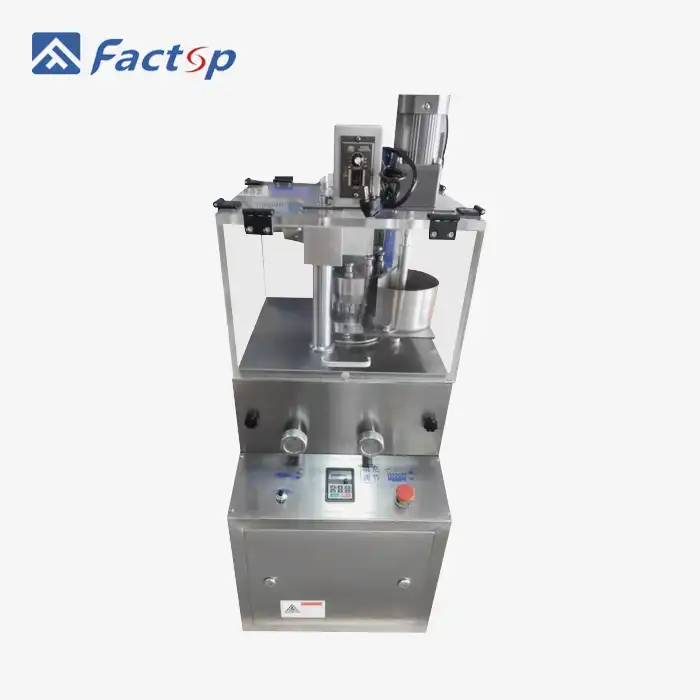
A production capacity study should match the output needs with the equipment's capabilities. Quality hand-held tablet presses can make anywhere from 60 to 180 tablets per hour, based on how skilled the user is, the material, and the tablet's specs. With a maximum press width of 12 mm and a thickness range of 1-6 mm, the Factop pill press machine is a great example of the high-precision engineering that can be found in current compact systems.
Pressure adjustment is a basic need for making tablets that can be used in different ways. Professional-level machines should let you precisely control the pressure over a wide range, usually between 5 and 50 kN. This lets you get the best results for a variety of powder mixes and pill hardness needs. The ability to change the pressure makes sure that the quality is the same across all product lines, even if the materials have different properties.
When it comes to long-term working efficiency, durability becomes very important. High-quality construction with hardened steel parts, precisely polished surfaces, and strong mechanical systems guarantees long service life in tough production environments. The fact that professional units like the Factop type weigh 28 kg shows that they are built to last without breaking.
Engineering and Safety Considerations
Rating the noise level affects both the happiness of workers and the rules that must be followed at work. This is especially true in labs where sound quality is important. Good hand-held presses make less than 70 decibels of noise, which makes them easy to use during long production runs.
For human safety and risk reduction, safety features must meet or go beyond industry norms. Important safety features include emergency stop systems, pressure release systems, and guards for parts that move. Integrating safety correctly keeps workers safe while keeping up with regulations and keeping output high.
It takes careful planning and measuring to make sure that the dimensions work with the way workspaces are already set up. Modern portable presses have a small 400x280x560 mm size that fits in most labs and small factories while still leaving enough space for safe operation and maintenance.
Supplier Evaluation and Support Capabilities
The standard of after-sales help has a direct effect on the long-term success of operations and the dependability of tools. Leading providers like Factop offer a wide range of support services, such as installation help, user training, and quick expert support. Having support teams that speak more than one language makes conversation easier and speeds up problem-solving across global processes.
Customization choices let tools be changed to fit specific production needs and work with current quality systems. Reliable makers offer die design, pressure system changes, and customized tools to meet the needs of different applications while keeping the dependability of standard equipment.
Having spare parts on hand for the hand held tablet press guarantees that there will be little downtime and that the equipment will continue to work throughout its lifecycle. Reliable providers keep a large stock of parts and send them quickly so that production stops and upkeep costs are kept to a minimum.
Maintaining and Troubleshooting Your Handheld Tablet Press
Effective maintenance protocols serve as the foundation for sustained equipment performance, optimal tablet quality, and extended operational lifespan. Implementing systematic maintenance practices prevents costly downtime while ensuring consistent production capability and regulatory compliance.
Preventive Maintenance Best Practices
Routine cleaning procedures must address both visible contamination and residual powder accumulation that can compromise tablet quality and equipment performance. Daily cleaning protocols should include thorough die cavity inspection, punch surface cleaning, and lubrication point verification to maintain optimal operating conditions.
The cleaning process begins with complete equipment disassembly according to manufacturer specifications, allowing access to all critical surfaces and components. Pharmaceutical-grade solvents and cleaning agents ensure complete residue removal while maintaining material compatibility with tablet formulations.
Lubrication schedules require precise attention to manufacturer recommendations and operating environment conditions. Critical lubrication points include pivot mechanisms, guide rails, and pressure system components that experience regular mechanical stress during operation. Proper lubrication reduces wear, maintains smooth operation, and prevents premature component failure.
Parts replacement timing depends on usage intensity, material characteristics, and operational environment factors. Punch and die components typically require replacement after 50,000-100,000 compression cycles, depending on material abrasiveness and maintenance quality. Proactive replacement scheduling prevents production disruptions and maintains consistent tablet quality.
Common Operational Issues and Solutions
Tablet formation problems often manifest as incomplete compression, weight variation, or dimensional inconsistencies. These issues typically result from improper material preparation, incorrect pressure settings, or worn tooling components. Systematic troubleshooting begins with material property verification, followed by pressure calibration and tooling inspection.
Inconsistent tablet weight or thickness indicates problems with powder flow characteristics, die cavity condition, or compression pressure uniformity. Resolution requires careful evaluation of material granulation, die cavity wear patterns, and pressure system calibration to identify and correct the root cause.
Tablet sticking issues occur when compressed material adheres to punch surfaces, preventing proper ejection and creating quality defects. Contributing factors include excessive moisture content, inadequate lubrication, or inappropriate pressure levels. Corrective measures involve material conditioning, lubrication optimization, and pressure adjustment according to formulation requirements.
Pressure fluctuation problems compromise tablet consistency and may indicate mechanical wear or calibration drift. Regular pressure system verification using calibrated load cells ensures accurate pressure delivery and enables early detection of performance degradation requiring professional service intervention.
Safety Guidelines and Operator Training
Comprehensive operator training encompasses equipment operation, safety protocols, and maintenance procedures essential for safe and effective equipment utilization. Training programs should address hazard recognition, emergency procedures, and proper personal protective equipment usage to ensure operator safety and regulatory compliance.
Built-in safety mechanisms require regular verification and functional testing to ensure reliable operation during emergency conditions. Safety system testing should occur monthly and include emergency stop verification, pressure relief testing, and guarding inspection to maintain protective capability throughout the operational lifecycle.
Procurement and Supply Chain Insights for Handheld Tablet Presses
Strategic procurement approaches for hand held tablet presses require comprehensive evaluation of supplier capabilities, total cost of ownership, and long-term operational support to maximize investment value and ensure sustained production capability.
Supplier Selection and Evaluation Criteria
Reliable supplier identification begins with a thorough assessment of manufacturing capabilities, quality certifications, and customer support infrastructure. Leading manufacturers like Factop demonstrate commitment to quality through ISO certification, comprehensive testing protocols, and global support networks that ensure consistent product delivery and responsive service.
The evaluation process should encompass technical capability assessment, financial stability verification, and customer reference validation to ensure supplier reliability throughout the equipment lifecycle. Established suppliers provide transparent documentation, competitive pricing, and reliable delivery schedules that support procurement objectives and operational requirements.
Online procurement channels offer convenience and broad supplier access, while local distributor relationships provide personalized service and rapid support response. Successful procurement strategies often combine both approaches to optimize cost, delivery time, and ongoing support capabilities according to specific operational priorities.
Cost Analysis and Return on Investment
Total cost of ownership extends beyond initial purchase price to include training, maintenance, spare parts, and operational costs throughout the equipment lifecycle. Comprehensive cost analysis enables accurate ROI calculation and supports informed investment decisions aligned with business objectives and financial constraints.
Bulk order discounts and strategic timing can significantly reduce procurement costs while ensuring adequate spare parts availability and supplier commitment to long-term support. Volume purchasing negotiations often yield favorable terms for warranties, training, and technical support that enhance the overall value proposition.
The ROI timeframe for quality handheld tablet presses typically ranges from 12 to 24 months, depending on production volume, labor costs, and alternative manufacturing options. Accurate ROI calculation considers productivity gains, quality improvements, and operational flexibility benefits alongside direct cost savings from internal tablet production capability.
Building Strong Supplier Partnerships
Long-term partnerships with reputable manufacturers create mutual benefits, including priority support, customization opportunities, and preferential pricing for future equipment needs. Factop exemplifies partnership commitment through comprehensive customer support, global service networks, and continuous product development aligned with evolving industry requirements.
Partnership development requires clear communication of operational requirements, quality expectations, and growth projections to enable suppliers to provide optimal solutions and support. Regular performance reviews and feedback facilitate continuous improvement and strengthen collaborative relationships that benefit both parties.
Global support capabilities become increasingly important as operations expand across multiple locations and time zones. Established manufacturers provide localized service, multilingual support, and regional parts distribution that ensure consistent support quality regardless of geographic location or operational scale.
Conclusion
Handheld tablet presses represent essential equipment for diverse industries requiring flexible, cost-effective tablet production capabilities. Understanding their working principles, operational benefits, and selection criteria enables informed procurement decisions that align with specific production requirements and business objectives. The combination of portability, precision, and affordability makes these devices invaluable for pharmaceutical research, small-batch production, and specialized applications where traditional automatic systems prove impractical. Successful implementation requires careful supplier selection, comprehensive operator training, and systematic maintenance protocols to maximize equipment performance and operational reliability throughout the service lifecycle.
FAQ
1. What is the typical production capacity of a handheld tablet press?
Most quality handheld tablet presses produce between 60 and 180 tablets per hour, depending on operator experience, material characteristics, and tablet specifications. Production rates vary significantly based on compression requirements and changeover frequency between different formulations.
2. How often should maintenance be performed on portable tablet presses?
Daily cleaning and inspection should occur after each production session, while comprehensive maintenance, including lubrication and component inspection, should be performed weekly. Major maintenance and calibration verification should occur monthly or after every 10,000 compression cycles.
3. Can handheld tablet presses produce pharmaceutical-grade tablets?
Yes, quality handheld tablet presses can produce pharmaceutical-grade tablets when operated in controlled environments with proper material handling, cleaning protocols, and quality verification procedures. Compliance with Good Manufacturing Practice guidelines ensures product quality and regulatory acceptability.
4. What tablet sizes can be produced with portable tablet presses?
Standard handheld tablet presses accommodate tablet diameters from 6 mm to 25 mm, with thickness capabilities ranging from 1 mm to 8 mm depending on the specific model and die configuration. Custom tooling enables specialized sizes and shapes for unique applications.
5. What are the key differences between manual and automatic tablet presses?
Manual tablet presses offer superior flexibility, lower initial investment, and simplified operation, ideal for small batches and development work. Automatic systems provide higher production rates, consistent quality, and reduced labor requirements suitable for large-scale manufacturing operations.
6. How do I choose the right supplier for a handheld tablet press?
Evaluate suppliers based on manufacturing quality, technical support capabilities, parts availability, and customer references. Consider factors including warranty terms, training provision, and global service networks to ensure long-term operational support and equipment reliability.
Partner with Factop for Your Hand Held Tablet Press Needs
Factop stands ready to support your tablet production requirements with precision-engineered portable and hand held tablet presses designed for reliability, flexibility, and exceptional performance. Our comprehensive product line includes the advanced pill press machine featuring 12mm maximum press diameter, 1-6mm thickness range, and robust 28kg construction optimized for demanding production environments. As a trusted hand held tablet press manufacturer, we provide complete solutions including technical consultation, operator training, and ongoing support to ensure optimal equipment performance. Contact michelle@factopintl.com today to discuss your specific requirements and discover how our expertly crafted equipment can enhance your production capabilities while delivering exceptional value and reliability.
References
1. Smith, J.A., & Johnson, M.R. (2023). Pharmaceutical Manufacturing Equipment: Principles and Applications. Industrial Press Publications.
2. Chen, L., & Williams, K.P. (2024). Tablet Compression Technology: Modern Approaches to Solid Dosage Form Development. Pharmaceutical Engineering Review, 45(3), 78-92.
3. Rodriguez, C.M. (2023). Small-Scale Manufacturing Solutions for Pharmaceutical and Nutraceutical Industries. Journal of Manufacturing Technology, 18(2), 156-171.
4. Thompson, D.E., & Anderson, R.L. (2024). Quality Control in Portable Tablet Production Systems. International Pharmaceutical Manufacturing, 31(4), 23-37.
5. Miller, S.K. (2023). Equipment Selection Guidelines for Laboratory-Scale Tablet Production. Pharmaceutical Technology Magazine, 47(8), 112-125.
6. Zhang, H., & Brown, P.J. (2024). Maintenance Strategies for Small-Scale Pharmaceutical Equipment. Industrial Maintenance Quarterly, 29(1), 45-58.
YOU MAY LIKE