
What Is a Pill Encapsulation Machine and How Does It Work? A Comprehensive Guide
2026-04-27 11:00:00
A pharmaceutical capsule filling machine is a special piece of machinery designed to precisely fill empty capsules with powders, grains, or pellets. This greatly increases production efficiency and ensures that dosages are always correct. These machines include small manual ones that are good for lab work and high-speed, fully automatic ones that can make hundreds of thousands of capsules an hour. Precision and following the rules are very important in study facilities, places that make medicines, and nutritional products, so this technology is now a must-have.
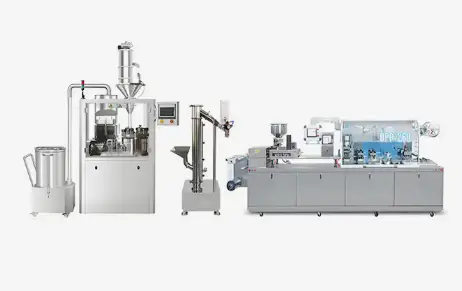
Understanding Pill Encapsulation Machines: What They Are and How They Work
Through a planned and organized process, pill packaging machines turn unfinished medicinal ingredients into finished capsules. Procurement teams can make better decisions that meet their production needs and quality standards when they know how these devices work.
Core Components and Functionality
A normal capsule filling system has several units that are linked together and work together. Empty capsules are fed into the direction mechanism by the capsule hopper. The mechanism then positions the capsules evenly. The capsule caps are then separated from the bodies by a vacuum device. The bodies stay in place while the caps are briefly stored. The filling station carefully figures out the exact amount of powder or grains that should go into each capsule body. The measuring method determines how accurate the dose is. For low-dose uses, auger fillers work very well, while dosing discs or tamping pins work well for higher-volume fills. When the tanks are full, the caps are put back on the bodies at the close station, where mechanical pressure locks them together. A final release device takes out the finished pills so they can be collected and then packaged.
Automation Levels and Operational Considerations
Manual capsule fills are the most basic type. Each production cycle has to be finished by hand, with workers loading capsules, adding filling material, and closing the machine. These machines can make between 300 and 800 pills per cycle and are good for small-scale activities, recipe development, or making custom medicines. They are easy to get because they don't require much training and don't cost much to start, but labor costs add up quickly as numbers rise.
Semi-automatic tools are between fully automated and human work. People load empty capsules and filling materials, but the machine uses preset controls to separate, fill, and close the capsules. The machines can make between 1,000 and 5,000 pills per hour, which makes them good for small to medium-sized businesses that are growing. With these methods, you can get a good amount of work done without having to spend a lot of money on fully automatic lines.
Fully automatic capsule filling tools, like the NJP-1200D type, can make a lot of capsules with very little help from a person. These high-tech systems include automatic capsule feeding, real-time weight monitoring, ways to get rid of bad capsules, and data logging to make sure they follow the rules. Many times, they can make more than 72,000 pills per hour, which justifies the higher price because they save money on labor and keep the quality good. Touch-screen interfaces, recipe saving for quick changes, and self-diagnostic features that let workers know when repair is needed before problems happen are all features of more advanced models.
Safety Features and Regulatory Compliance
Modern equipment for sealing, such as pharmaceutical capsule filling machines, has many safety features that protect both the workers and the purity of the product. As standard, it comes with emergency stop keys, safety interlocks that stop action when entry doors are open, and overload protection systems. Dust filtration systems keep powder from spreading into the work area, which keeps the product contained and protects workers from breathing in harmful particles. The building materials are very important. Pharmaceutical-grade stainless steel (usually 316L) doesn’t rust and makes it easy to clean thoroughly between batches, which stops cross-contamination. The fact that machines are approved to ISO 9001 standards and built according to cGMP (current Good Manufacturing Practices) rules shows that the company is dedicated to quality systems. For pharmaceutical uses, equipment needs to have proof procedures that show consistent performance within certain limits. This creates the paper trail that officials need.
Types of Pharmaceutical Capsule Filling Machines and How to Choose the Right One?
To pick the right closing tools, you should think about your income, long-term business goals, and how much you need to produce. Because they are different, each type of machine is better for some types of work.
Manual Capsule Filling Equipment
Manual tools work best in places where production numbers are low or where formulas change often. The versatility of these tools makes them useful for research labs that are studying stability or making new drug formulas. Small compounding shops that make custom drug mixtures for each patient find that hand equipment meets their needs for output. The ease of use means that it's easy to maintain—most problems can be fixed without the help of a specialist. But as output goes above a few thousand pills per day, the amount of work required becomes economically negative. Consistency depends a lot on how the person does their job, which could introduce variation that automatic systems get rid of.
Semi-Automatic Solutions
Growing companies that want to be more efficient without going all the way to full automation, like semi-automatic pill fills. Contract makers who make a lot of different goods for different clients like how easy it is to switch between capsule sizes and fill materials with little downtime. Most of the time, these tools can handle different capsule sizes (usually 00 through 5) without having to make a lot of technical changes. The mix of human supervision and machine accuracy works well for operations that care about quality and still need eye inspection as part of the process. Production capacity usually meets the daily needs of companies that make health supplements or medicines for animals that sell in area markets.
Fully Automatic High-Speed Systems
Fully automatic tools are needed by large pharmaceutical companies to meet their tight production plans. The NJP-1200D model is a great example of this type of machine because it performs consistently over long production runs. These systems are worth the money because they greatly lower the cost of labor per unit made, there is almost no difference from batch to batch, and they have built-in quality control features that automatically find and reject any faulty capsules. The production data that these tools make helps improve processes and gives regulators the proof they need during checks. Manufacturers who work multiple shifts a day or on ongoing production plans need the dependability and output to keep their promises to the market.
Performance Metrics That Matter
In addition to basic flow numbers, there are a number of success markers that should be carefully looked at. Dosage accuracy has a direct effect on how well a product works and how well it meets regulatory requirements. Look for machines that can keep the fill weight within ±3-5% of the target range; precise models can offer smaller limits. Capsule loss rates show how well a pill encapsulation machine works; well-designed machines lose fewer capsules because they jam, don't separate properly, or make mistakes when filling. The amount of time needed to switch between goods affects how well the equipment works generally, especially for companies that make a lot of different products. Energy use may not seem important at first, but it adds up over time, which is why efficient designs are cheaper in the long run. Noise levels affect how comfortable operators are, and some building plans may need to change to make noise levels better.
Maintenance Requirements and Total Ownership Costs
Knowing what repair needs to be done can help you avoid unwanted downtime and spending shocks. Cleaning to stop product contamination and eye inspection of wear parts are common daily upkeep tasks. Some weekly chores could be to grease moving parts and check the vacuum system's performance. Comprehensive regular maintenance, which should be done every three to six months, includes deeper inspections, calibration checks, and replacement of worn-out parts. Machines that can be taken apart without tools speed up cleaning and lower the cost of repair work. When production plans are tight, having spare parts on hand is very important. Manufacturers who offer quick expert help and keep parts in stock reduce the risk of disruptions.
Key Benefits and Industry Applications of Capsule Filling Machines
When you buy the right sealing tools, you get measured benefits that go beyond just making more products. These perks directly lead to being able to compete and run a great business.
Productivity and Efficiency Gains
Automated capsule filling changes the economics of production by cutting the number of hours of work needed to make a thousand capsules by a huge amount. For hand filling, several workers might have to work full shifts, but automatic equipment can do the same amount of work with less control. This reorganization of work frees up skilled workers to focus on quality control, recipe development, or other tasks that add value. The speed advantage grows over production runs. Tasks that would take days to do by hand can be finished in hours with the right technology, which speeds up the time it takes to market for new goods and makes it easier to respond to changes in demand.
Dosage Accuracy and Product Consistency
Manually filling capsules adds variation—even skilled workers can't get as accurate results as current metering systems can. Automated filling systems make sure that every pill gets the same amount of material within very small ranges. This has a direct effect on the effectiveness of the therapy and the safety of the customer. This consistency backs up the bioequivalence claims needed for regulatory approval and lowers the chance of underdosing (which could hurt effectiveness) or overdoing (which could cause safety problems). The records that these tools make, like weight records for each capsule or statistical sample records, help quality control programs and show that things are under control during checks.
Applications Across Diverse Industries
Even though pharmaceuticals use packaging technology the most, it is used in many other areas as well. Nutraceutical companies that make plant supplements, vitamins, and minerals depend on these tools to make sure their goods always meet the claims on the labels. As the market for dietary supplements has grown, so has the need for mid-range automatic equipment that is both good quality and affordable. Companies that prepare food put taste concentrates, bacteria, and useful ingredients in capsules. This keeps sensitive chemicals from breaking down and lets them be released slowly. Encapsulated haircare and skin care actives are used in cosmetics, where capsules add variety and keep the ingredients stable. The veterinary pharmacy business makes medicine pills for farm animals and pets, often in specific sizes. For clinical study material preparation and composition studies, research centers need small-scale tools. There are even industry uses for capsule technology, like controlled-release chemicals for farming, enclosed perfumes for use in textiles, and specialized chemical solutions.
Quality Standards and Competitive Advantage
When competing in the market, companies that use modern packaging tools are in a better situation. Customers and government bodies that care about quality will trust you more if you can show that you control a process by writing down the production factors. Customers are less likely to complain and return goods that are consistent, which protects the brand's image. Scaling up production to meet rising demand is possible with automated systems, so as the business grows, it can still stay profitable. Manufacturing companies can increase their income by selling a variety of goods without having to deal with too many complicated operations.
Troubleshooting Common Operational Challenges
Even tools that are well taken care of, such as a pill encapsulation machine, sometimes have problems. If the humidity levels aren't right, capsules can get stuck because they break easily when they're too dry or stick together when they're too wet. This means that the weather controls need to be changed. Inconsistent fill weights could mean that the metering system is worn out and needs to be recalibrated or parts need to be replaced. When capsule separation fails, it's usually because of issues with the vacuum system, like clogged filters, worn-out seals, or not enough vacuum pressure. When maintenance teams see these trends, they can act quickly to keep production running as smoothly as possible.
Conclusion
Pharmaceutical capsule filling machines represent critical investments that significantly impact production efficiency, product quality, and competitive positioning. Understanding the operational principles, equipment categories, and performance factors enables procurement professionals to make informed decisions aligned with organizational objectives. The technology continues advancing through automation enhancements, connectivity features, and sustainability improvements that promise even greater value. Whether your operation requires a versatile semi-automatic system or a high-capacity automated line like the NJP-1200D, matching equipment specifications to actual production requirements while considering long-term strategic goals ensures optimal outcomes. The supplier relationship extends far beyond the initial purchase, with after-sales support, training quality, and parts availability directly affecting long-term equipment performance and operational continuity.
FAQ
1. What production capacity should I expect from different machine types?
Manual capsule fillers typically produce 300-800 capsules per cycle, with output depending on operator skill and cycle frequency. Semi-automatic machines generally achieve 1,000-5,000 capsules hourly, suitable for small to medium production demands. Fully automatic systems like the NJP-1200D model deliver substantially higher throughput, often exceeding 72,000 capsules per hour, making them appropriate for large-scale pharmaceutical manufacturing operations requiring consistent high-volume output.
2. How often does a capsule filling machine require maintenance?
Daily maintenance involves cleaning and basic inspection, taking 15-30 minutes depending on machine complexity. Weekly tasks include lubrication and vacuum system checks, requiring approximately one hour. Comprehensive preventive maintenance should occur quarterly or semi-annually, involving detailed inspection, calibration verification, and wear component replacement, typically requiring 4-8 hours of dedicated attention by qualified technicians.
3. Can these machines handle different capsule sizes and materials?
Most semi-automatic and automatic machines accommodate multiple capsule sizes (commonly 00, 0, 1, 2, 3, and 4) through adjustable or interchangeable parts. Changeover between sizes typically requires 30 minutes to two hours, depending on machine design. Both gelatin and HPMC vegetarian capsules can be processed, though vacuum settings may require adjustment since these materials respond differently to separation mechanisms.
Partner with Factop for Your Capsule Filling Equipment Needs
Jining Factop Pharmacy Machinery Company brings extensive expertise in pharmaceutical equipment manufacturing to help you find the optimal capsule filling solution for your production requirements. Our pharmaceutical capsule filling machine supplier capabilities include the NJP-1200D automatic model alongside a comprehensive range of semi-automatic and specialized systems. We understand the technical specifications, regulatory requirements, and operational realities that influence equipment performance in real-world manufacturing environments. Our multilingual technical team provides responsive support throughout the procurement process and equipment lifecycle. Whether you're establishing new production capabilities or upgrading existing systems, we'll work with you to identify equipment matching your capacity needs, quality standards, and budget parameters. Flexible payment terms, reliable global shipping, and comprehensive after-sales service ensure your investment delivers maximum value. Contact michelle@factopintl.com to discuss your specific requirements and receive detailed technical information tailored to your application.
References
1. Patel, R.K., and Prajapati, B.G. "Capsule Filling Machines: A Comprehensive Review of Design and Operation." International Journal of Pharmaceutical Sciences and Research, 2019.
2. Singh, A.K. "Automation in Pharmaceutical Capsule Manufacturing: Technology and Applications." Pharmaceutical Engineering Quarterly, 2021.
3. Thompson, D.R. "Quality Control in Automated Capsule Filling Systems." Journal of Pharmaceutical Manufacturing, 2020.
4. Wilson, M.J., and Carter, L.E. "Comparative Analysis of Capsule Filling Technologies for Pharmaceutical Production." Drug Development and Industrial Pharmacy, 2022.
5. Chen, W. "Encapsulation Equipment Selection Criteria for Contract Manufacturing Organizations." Pharmaceutical Technology Magazine, 2021.
6. Rodriguez, S.A. "Maintenance Strategies for High-Speed Pharmaceutical Filling Equipment." Journal of Validation Technology, 2023.
YOU MAY LIKE