
How Does a Size 2 Capsule Filling Machine Work? A Complete Guide to Capsule Filling Equipment
2026-04-27 11:00:00
Pharmaceutical ingredients, food supplements, or other powdered substances can be put into two-piece gelatin or veggie capsules automatically by capsule packing tools made for size 2 capsules. A Size 2 capsule filler works in a planned way: empty capsules are put into trays, where the caps and bodies separate. The bodies are then given exact amounts of fill material by filling mechanisms, the caps are put back on the bodies, and the final capsules are released to be packaged. Pharmaceutical companies, supplement companies, and research labs use this equipment to make sure that dosing is always accurate and output is always efficient for a wide range of formulations.
Understanding the Basics of Size 2 Capsule Filling Machines
What Makes Size 2 Capsules Different?
Size 2 capsules have a locked length of about 18 mm and can hold between 0.37 ml and 0.50 ml of material, based on how dense it is. This middle-sized pill works well for most vitamin and drug formulas, which makes it a popular choice across many industries. The size 2 label follows the international standard method for sizing, which says that smaller numbers mean bigger pills.
This size is chosen by drug companies for medicines that need to be taken in modest amounts, and health product companies use it for vitamins, minerals, and plant supplements. The sizes are just right so that the active ingredients can fit without being too big or too small for the customer.
Core Components of Capsule Filling Equipment
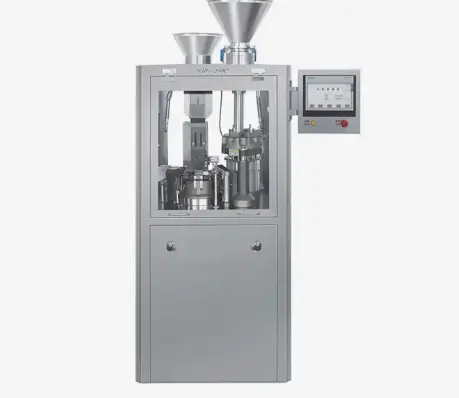
Modern pill-filling tools have a number of important parts that all work together to make sure they work correctly. Before they are processed, the bin system saves empty capsules, and the correction plate lines up the capsules so they can be separated properly. Vacuum dividers use controlled pressure to separate caps from bodies, and the filling machine correctly measures and provides fill material.
With a small size of 1000x700x1900mm, Factop's NJP-200C model is a great example of this kind of combination. This partially automatic machine can make 12,000 pills an hour, even though it only weighs 700 kg. The design of the machine uses GMP-compliant stainless steel construction, which keeps the machine clean during production runs.
The Step-by-Step Working Process
The process of filling capsules starts when workers put empty capsules into the delivery plate, which has several pathways. The capsules move to a horizontal fork that changes their center, then to a vertical fork that changes their direction. Before separation, this correction makes sure that everything is in the same place.
Once everything is lined up right, a vacuum system pulls the caps up while the bodies stay in place in the loading tray. The uncovered bodies are then moved to the filling station, where the right amount of powder or grains is dispensed using either tamping, a dosator, or vacuum filling, depending on the dose method chosen. When the tanks are full, the caps are put back on top of the bodies, and a device locks them together. When the capsules are done, they come out of the machine and into bins for storage.
Throughout this process, quality control is carried out. If sensors find that capsules aren't split properly or aren't filled all the way, faulty units are instantly thrown away and put in trash bags. Through this automatic inspection, product stability is kept, and the number of human quality checks is cut down.
Advantages and Usage Guide of Size 2 Capsule Fillers
Precision and Consistency Benefits
To meet legal standards and make sure treatment is effective, production settings need exact doses. When set correctly, size 2 capsule filling tools can get fill weight accuracy to within ±3% of what it should be, which is much better than filling by hand. This accuracy cuts down on waste and makes sure that each pill has the right amount of active ingredient.
This accuracy has everything to do with the dose methods, such as the Size 2 capsule filler. Tamping devices get rid of the air pockets that cause weight differences by pressing powder down over and over again. Carefully putting dosator tubes into powder beds and figuring out exact amounts is how they are filled. During each shift, these technologies make sure that thousands of pills are all the same, which can't be done by hand.
Automation not only makes things more accurate, but it also makes it less likely that different recipes will get contaminated. Between runs, machines can be taken apart and cleaned carefully without any tools. The parts that people touch are made of stainless steel, which doesn't let bacteria grow. These features make it safer for the structure of the item and make it easier to clean.
Operational Best Practices
The first thing that needs to be done before capsules can be filled properly is to set up and clean the machine. Temperature and humidity must be kept in the right ranges by the people who work on the machine, and the voltage must match the power source in the building. When there is too much water, pills stick together. When there's not enough water, they're easy to break.
Before they are used in production, empty capsules should be checked for flaws like holes, cracks, or caps and bodies that aren't far enough apart. Before the pills are put into groups, any that are broken and could get stuck in the machines are thrown away. Also, make sure the fill material's grain size is right for the machine by checking it. When the powder is too small, it can trap dust, which can change the reading. The powder can get stuck in the dose tubes if it is too big.
Keeping the steady flow of materials into the dose station during operation stops breaks. The people who work there keep an eye on how full the fill hopper is and add more powder before it runs out. Dust doesn't get stuck in it and make doses less accurate if you clean it often. The machine is fully taken apart every time a new batch of goods is made. The touch parts are cleaned with pharmaceutical-grade fluids that have been cleared, and the machine is then put back together according to written directions.
Maintenance Strategies for Longevity
Scheduled preventive repair that addresses wear before problems happen is important for equipment longevity. Every day, they have to check the moving parts visually for strange wear patterns, make sure the vacuum pressure stays within the acceptable ranges, and use food-grade oils to lubricate certain parts. As part of the weekly upkeep, calibration checks with test weights to make sure the dose is correct are added.
Every month, steps include checking electrical connections more closely, replacing old seals in vacuum systems, and making sure safety interlocks work. The manufacturer's repair guidebook has specific plans, but skilled workers change the rates based on how much work needs to be done. Facilities that work multiple shifts every day need to be checked on more often than laboratories that only work sometimes.
Documentation is an important part of making repair work well. By keeping track of all upkeep tasks, part repairs, and performance issues, you can see what problems have happened in the past and make sure that preventative plans work best. This information is very helpful during regulatory checks because it shows that the equipment is always qualified.
Comparing Size 2 Capsule Fillers in Today's Market
Manual Versus Semi-Automatic Systems
Each step of the process has to be done by hand by the user of a manual capsule filling machine, which means that only about 800 capsules can be made per pressing cycle. These tools are good for labs that are working on new formulas or small businesses that are only making a few at a time. The initial investment is still small, usually between $500 and $3,000, but as output rates rise, labor costs rise quickly.
The NJP-200C is an example of semi-automatic equipment that works between fully automatic and fully human methods. The machine automatically separates, fills, and closes the capsules while the operators add empty capsules and watch the process. This combination of ways cuts down on the amount of work that needs to be done compared to fully automatic lines while keeping costs low. It can make up to 12,000 pills an hour, which is enough for small to medium-sized businesses.
Fully automatic systems don't need much help from people and can work continually at speeds of over 40,000 pills per hour. These tools, including the Size 2 capsule filling machine, have high-tech features like automatically adding capsules, checking weights while the process is going on, and creating digital batch records. The cost is between $80,000 and $300,000, based on the features and capacity, and it's only worth it in high-volume production settings.
Size 2 Versus Other Capsule Sizes
The size of the capsule affects how well people take their drug, how easy it is to give the right amount, and how much it costs to make. There are five sizes of capsules, with size 5 being the smallest and size 000 being the largest. Size 2 capsules are in the middle of the range. Some people find it hard to take bigger pills, like size 0 or 00, which can hold more low-potency ingredients.
Formula for babies and other things that only need a small amount of the active ingredient works well with sizes 3, 4, or 5. But when the amounts of chemicals go up, these small pills need more units per dose. This makes them harder to pack and use. Size 2 can be used for a wide range of recipes that need 300 mg to 500 mg of fill material. This includes many common vitamin and medicine uses.
In order for packing equipment to switch between pill sizes, it has to go through processes that involve moving tools that are made for each size. Changes take less time on machines with quick-change systems, but each size change still needs to be tried and recalibrated to make sure it works right. There is less need to switch between batches when they are grouped by pill size, which also speeds things up.
Supplier Considerations and Certifications
When choosing what tools to buy, it's also important to think about the seller's reputation and the help they offer. Companies that are certified by ISO 9001 show that they care about quality management systems. Having CE and GMP licenses shows that a company knows how to make drugs the right way. These requirements lower the legal risk for buyers who have to show that the equipment works when it is checked on the job site.
The NJP-200C type from Factop is approved by CE, GMP, and ISO 9001, which means it meets medical equipment standards around the world. The business has a technical support team in other countries that helps customers from all over the world with setting up questions and issues and operator training. This help system is very important when there are problems with production, because taking too long to respond costs a lot of money during downtime.
When things are made in different places, they have different lead times, shipping costs, and parts supplies. There are already set-up supply lines for when new parts are needed for tools made in industry hubs. But it can take longer than planned to send specialized parts from far away. Seeing how many setups a company has in your area can help you figure out how easy it is to get parts and talk to a service worker in your area.
Procurement and Buying Guide for Size 2 Capsule Filling Machines
Sourcing Reliable Equipment Suppliers
B2B procurement platforms like Alibaba, Made-in-China, and IndiaMART connect buyers with global equipment manufacturers, but verifying supplier legitimacy requires careful investigation. Requesting business licenses, manufacturing facility certifications, and customer references helps distinguish established manufacturers from trading companies lacking production capabilities.
Direct manufacturer relationships often provide better pricing and technical support compared to distributor arrangements. Manufacturers understand their equipment's engineering details and can customize specifications to match unique production requirements. They also control spare parts inventory and can expedite shipments during urgent situations.
Trade shows focused on pharmaceutical manufacturing equipment offer opportunities to inspect machines in person, meet supplier representatives, and compare multiple brands simultaneously. Events like CPhI Worldwide, Interphex, and Pack Expo attract major equipment manufacturers and facilitate relationship building that strengthens long-term partnerships.
Evaluating Total Cost of Ownership
The purchase price represents only one component of equipment costs over its operational lifespan. Buyers should calculate the total cost of ownership, including installation expenses, operator training, ongoing maintenance, replacement parts, and energy consumption. A machine with a lower purchase price but higher operating costs or frequent breakdowns may ultimately cost more than premium equipment with superior reliability.
The NJP-200C's semi-automatic design balances initial investment against operational efficiency. While fully automatic systems offer higher throughput, their complexity increases maintenance requirements and operator training needs. Organizations producing multiple formulations in smaller batches often find semi-automatic equipment optimal because changeover procedures remain manageable and capital costs stay reasonable.
Financing options, including equipment leasing or installment payment plans, allow businesses to acquire necessary machinery such as a size 2 capsule filling machine without depleting working capital. Leasing arrangements may include maintenance coverage, transferring some operational risk to the lessor. However, buyers should compare total payments under lease terms against outright purchase costs plus separate maintenance contracts to determine the most economical approach.
After-Sales Support and Warranty Coverage
Comprehensive warranty coverage protects buyers against manufacturing defects and premature component failures. Standard warranties typically span one year from installation, covering parts replacement and labor for repairs. Extended warranty options provide additional coverage periods at incremental costs, worthwhile for operations where equipment downtime causes significant production losses.
After-sales service quality varies considerably among suppliers. Responsive technical support resolving issues within hours minimizes production disruptions, while delayed responses extend costly downtime. Evaluating supplier responsiveness during pre-sale interactions provides insight into post-sale service quality—vendors who answer questions promptly before receiving payment typically maintain that attentiveness afterward.
Spare parts availability determines how quickly repairs can be completed when components fail. Suppliers maintaining regional parts warehouses enable faster shipments than those shipping exclusively from overseas facilities. Establishing relationships with suppliers offering local inventory reduces vulnerability to supply chain disruptions.
Conclusion
Size 2 capsule filling machines deliver efficient, accurate production across pharmaceutical, nutraceutical, and research applications. Understanding their operational principles, maintenance requirements, and market options enables informed procurement decisions aligned with production needs and budget constraints. The NJP-200C semi-automatic model exemplifies equipment balancing performance, affordability, and reliability for small to medium manufacturing scales. Proper operation combined with preventive maintenance ensures consistent output quality while maximizing equipment longevity and return on investment for businesses committed to pharmaceutical excellence.
FAQ
1. What production capacity should I expect from a size 2 capsule filling machine?
Production capacity varies significantly based on automation level. Manual machines produce approximately 800 capsules per cycle, requiring multiple cycles for larger batches. Semi-automatic equipment like the NJP-200C achieves 12,000 capsules hourly, suitable for small to medium production volumes. Fully automatic systems exceed 40,000 capsules per hour, justifying their higher cost only for large-scale manufacturing operations.
2. Can one machine handle multiple capsule sizes?
Most capsule filling machines accommodate multiple sizes through tooling changeovers. This process involves replacing size-specific components, including separation plates, dosing tubes, and closing mechanisms. Quick-change systems minimize downtime during transitions, though each size change requires recalibration and test runs. Manufacturers typically design machines for a range of adjacent sizes rather than the complete size spectrum.
3. How often does capsule filling equipment require maintenance?
Daily maintenance includes visual inspections, vacuum pressure verification, and lubrication of moving parts. Weekly tasks add calibration checks and cleaning of dosing components. Monthly procedures involve deeper inspections of electrical systems and replacement of worn seals. Production intensity determines actual frequencies—facilities operating multiple daily shifts require more frequent maintenance than occasional users.
Partner with Factop for Your Capsule Filling Solution
Selecting the right Size 2 capsule filler manufacturer impacts production efficiency, product quality, and long-term operational costs. Factop brings decades of pharmaceutical equipment manufacturing expertise, delivering machines that meet international GMP, CE, and ISO 9001 standards. Our NJP-200C semi-automatic capsule filler combines proven reliability with competitive pricing, currently available in stock for immediate delivery.
Our multilingual technical team provides comprehensive support from initial consultation through installation, operator training, and ongoing maintenance assistance. We understand the challenges pharmaceutical manufacturers face and design equipment addressing real production needs rather than unnecessary complexity. Whether scaling up from laboratory development or expanding existing capacity, Factop offers solutions tailored to your specific requirements. Contact our team at michelle@factopintl.com to discuss your capsule filling needs and receive a detailed quotation.
References
1. Patel, K.R. & Shah, N.M. (2019). Pharmaceutical Capsule Filling Technology: Principles and Practice. Journal of Pharmaceutical Sciences, 108(4), 1456-1467.
2. Thompson, R.L. (2020). Modern Capsule Manufacturing: Equipment Selection and Optimization. Pharmaceutical Engineering Magazine, 40(3), 34-42.
3. Chen, W. & Rodriguez, M. (2021). Quality Assurance in Automated Capsule Filling Operations. International Journal of Pharmaceutical Manufacturing, 15(2), 78-89.
4. Anderson, J.P. (2018). Capsule Filling Machinery: A Comprehensive Guide for Pharmaceutical Manufacturers. Industrial Pharmacy Press, New York.
5. Kumar, S. & Williams, D. (2022). Dosing Accuracy and Process Optimization in Size 2 Capsule Production. Pharmaceutical Technology Europe, 34(6), 22-28.
6. Mitchell, H.L. (2020). Equipment Maintenance Strategies for Pharmaceutical Manufacturing. GMP Review, 19(1), 45-53.
YOU MAY LIKE