
Best laboratory tablet press machines for small-scale pharmaceutical research
2026-04-22 11:00:01
Choosing the right tools is very important if you are in charge of a pharmaceutical research lab and you want to make new drugs. To make tablets better, experts need a lab tablet compression machine. This machine lets them try out different recipes, find the best ingredients, and make sure the production process works before going big. These unique tools take powders or grains and shape them into pills that are all the same size, weight, and hardness. These are important things that determine how well drugs break down and enter the body. Lab tablet presses are different from industrial ones that are made to make a lot of tablets because they are designed to be flexible, accurate, and able to work with small groups. In R&D settings, where every calorie counts, this makes them very important.
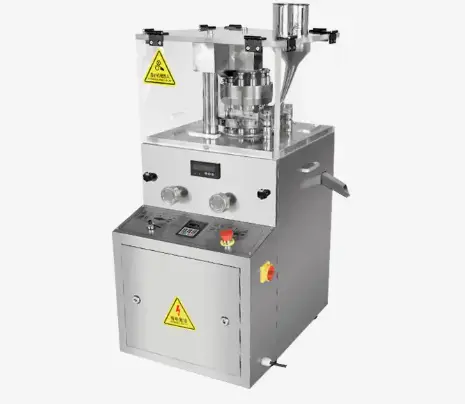
Understanding Lab Tablet Press Machines and Their Principles
What Defines Laboratory Tablet Press Equipment?
Laboratory pill press machines are small, well-made tools that are made for pharmaceutical study and small-scale production. High-speed rotating presses make millions of tablets every hour, but lab models focus on making small amounts, usually from one tablet to several thousand per hour, with full control over all variables. This difference is important because research needs to be able to be repeated and settings changed fast without losing expensive active ingredients.
Core Working Principles and Components
The process of compression follows a simple set of mechanical steps. The material fills a die hole either by falling into it or being pushed into it. Upper and lower punches are then use controlled force to pack the powder together. The pressing force joins the particles together, and the form and printing of the tablet are controlled by the punch design. When the tablet is done being compressed, the lower punch rises to release it. As the heart of the machine, the cuts and dies directly affect the quality of the tablets by the quality of the material, the finish on the surface, and the accuracy of their measurements. The force comes from compression rollers or cams, and the pre-compression and main compression steps can be changed so that experts can finetune the qualities of the tablets.
Classification of Laboratory Models
The easiest to use is a manual single-punch press, where the user pulls a handle to squeeze each tablet separately. These units are easy on the wallet and can be used for training and basic feasibility studies. Electric single-punch types handle the compression cycle, keeping the size small while providing uniform force and speed. Multi-station laboratory presses have several die stations that move through filling, compression, and release zones. This increases output to several thousand tablets per hour while keeping the freedom needed for research-scale production. Even though rotary tablet presses are usually used for production, there are small models that can be used in the lab to mimic industrial conditions during studies that involve scaling up.
Key Features and Benefits of Lab Tablet Press Machines for Small-Scale Use
Production Capacity Tailored for Research Needs
Some tools can make a million tablets in an hour, but labs don't need that many. Research tablet presses can make anywhere from 20 to 5,000 pills an hour, which is a good amount of time to make new medicines. The decent output lets the quality control staff carefully check each batch, writing down details like how it looks, how big it is, and what its physical features are, without using too many research resources. When the recipe is still being worked out and is still in its early stages, being able to make small amounts, sometimes as few as 50 pills, cuts down on waste.
Maintenance Requirements and Machine Longevity
Machinery stays correct and lasts longer when it is fixed on a regular basis. Powder doesn't get on new runs or cause mechanical sticking when the machine is cleaned once a week. Moving parts wear out faster when they are oiled once a month, and the tension force needs to be checked every three months to make sure it is right. When cleaning agents and active ingredients touch good lab presses made of 316-grade stainless steel, they don't rust. If you take good care of them, they can last for 15 to 20 years. It's easy to fix single-punch designs when they go wrong, which means there is less downtime that can mess up study plans.
Advantages of Driving Laboratory Productivity
These days, tablet compression tools have a lot of great features that help researchers reach their goals:
- When you use electronic force control, the breaking pressure stays within a range of ±2%. This means that tablets made today will be the same as tablets made weeks ago. When comparing different formulas or making sure that the production process is right, this uniformity is very important. Real-time readings of force, depth, and speed are shown on digital screens, which keep logs that government agencies need.
- Formulation Flexibility: Researchers can use quick-change tools to quickly switch between different tablet forms, sizes, and mixtures. This makes it possible to work on more than one plan at once without having to switch between tools. Because the level of compression can be changed, different types of materials can be used, from soft fillers to thick drugs.
- Easy to Use and Safe: Safety guards that are see-through let workers watch the compression process without touching any moving parts. Complex mechanical changes have been replaced by easy-to-use tablet displays, which cut down on the time needed to train new techs. When unexpected problems happen, like too many granules getting stuck in the die, emergency stop buttons and overload safety keep the equipment from getting damaged.
All of these benefits help solve the main problems that pharmaceutical research teams face: making reliable tablets quickly, safely, and cheaply using a lab tablet compression machine, while keeping full records of all the working parameters.
How to Choose the Best Lab Tablet Press Machine for Pharmaceutical Research?
Defining Your Research and Production Requirements
You should be sure of what you need before you look at different tools. It's very important to know how big of a lot you'll be making when you choose a machine. A single-punch press is fine for testing groups of 100 tablets, but you might need a multi-station type for stable studies on 2,000 tablets. It's also important how complicated the computer is made to be. For round tablets, easy tools are all you need. But for shaped, multi-layered, or etched tablets, you'll need more advanced tools. The qualities of the materials affect how well they work together. Powders that absorb water need protected systems to keep it out, and tools used with sharp chemicals need to be strengthened. Select whether you want to mix dry granules, wet granules, or direct-blend powders before you start. In terms of flow and compressibility, each type is different.
Critical Evaluation Criteria
When you think about lab tablet presses, you should pay close attention to a bit of scientific stuff. The types of mixes you can use depend on how hard they are to break. These are the amounts of kilonewtons you'll need to learn most of the time. But sometimes you may need more. Before you buy the machine, measure it to make sure you have enough room for work and doors. There are pros and cons to every level of technology. On the other hand, hand tools cost less, but the person using them always needs to pay attention to them. But computer models can do easy jobs without any help from a scientist. Scientists can then work on more important projects. One thing that often sets one seller apart from another is how well they take care of their customers after the sale. Check to see if the makers offer setup help, training for workers, help with coming up with new methods, and quick help from experts in case something goes wrong.
Comparing Models and Trusted Suppliers
You can find a lot of good research tools on the market. European companies are known for using exact engineering and making sure they follow medical standards. Their high prices show that these things are good. A lot of the time, American sellers stress designs that are simple and full of paperwork, which makes it easier to enter governmental markets. If you want to compare cost and worth, you should look at more than just the buying price. This includes how much the tools cost, how often they need to be fixed, how easy it is to get extra parts, and how much energy is used. A machine that isn't too expensive and comes with great customer service may be worth more in the long run than a cheap one from a seller who doesn't follow through. Get some sample units or go to the site to see how the tools work with materials that are like the ones you need. This will show you skills that are useful in real life that stats alone can't.
Procurement Considerations: Buying and After-Sales Services
Efficient Purchasing Channels
Acquiring laboratory tablet presses has become more straightforward as manufacturers embrace direct sales and digital channels. Authorized distributors provide local support and faster delivery across North America and Europe, often maintaining inventory for immediate shipment. Online industrial marketplaces connect buyers with multiple suppliers simultaneously, facilitating price comparisons and specification reviews. When purchasing internationally, clarify whether quoted prices include customs duties, shipping insurance, and import documentation preparation.
Logistics and Implementation Support
Delivery timelines vary from immediate shipment for stock models to 8-12 weeks for customized configurations. Installation services prove valuable, as experienced technicians ensure proper leveling, electrical connections, and initial calibration—critical steps that affect long-term performance. Comprehensive training covers operation, routine maintenance, basic troubleshooting, and documentation practices that satisfy quality management systems. Plan for 2-3 days of on-site training to bring operators up to competent operation levels.
Warranty and Ongoing Support
Standard warranties for a laboratory tablet press machine typically cover 12-24 months against manufacturing defects, though extended coverage options exist. Clarify what the warranty includes—some cover parts only, while others include labor and travel expenses. Ongoing support matters tremendously; responsive technical assistance via phone or video call can resolve issues within hours, whereas waiting days for email responses halts research progress. Spare parts availability affects long-term viability; machines using proprietary components from a single manufacturer create supply risk if that company exits the market.
New Versus Used Equipment Considerations
Used laboratory presses can reduce initial investment by 40-60%, appealing when budget constraints exist. However, several risks accompany used equipment purchases. Previous wear on critical components like compression cams or guide rails may compromise accuracy. Missing documentation prevents proper validation and qualification. Unknown maintenance history creates uncertainty about remaining service life. When considering used machines, insist on operational demonstrations using your materials, obtain complete service records, and budget for immediate tooling replacement and professional inspection to verify specifications.
Troubleshooting and Optimizing Performance in Your Lab Tablet Press
Common Operational Issues and Root Causes
Tablet capping occurs when the upper tablet portion separates from the lower section, typically caused by excessive compression speed, insufficient dwell time at maximum pressure, or entrapped air within the powder bed. Reducing turret speed or adjusting pre-compression force usually resolves this defect. Lamination manifests as horizontal splitting, often resulting from poor particle bonding, inadequate binder levels, or moisture content issues. Weight variation between tablets indicates inconsistent die filling, which may be influenced by powder flow characteristics, feed frame speed, or fill depth settings. Sticking problems, where tablets adhere to punch faces, stem from insufficient lubrication, punch surface roughness, or formulation factors.
Maintenance and Calibration Routine
Establishing a disciplined maintenance schedule prevents many performance problems. Daily tasks include cleaning punch faces and die bores to remove powder residue, inspecting tablets for defects that signal emerging issues, and verifying that safety systems function properly. Weekly activities involve thorough cleaning of the feed frame and turret, checking lubrication levels, and documenting any unusual sounds or vibrations. Monthly calibration confirms compression force accuracy using calibrated load cells or certified force sensors, while quarterly inspections by qualified technicians detect wear before it causes failures. Maintaining detailed maintenance logs documents equipment reliability and supports regulatory inspections.
Process Optimization Strategies
Achieving optimal tablet quality using a laboratory tablet press machine requires systematic experimentation with processing parameters. Compression force profiling—measuring how force changes throughout the compression cycle—identifies whether adjustments to pre-compression, main compression, or decompression rates might improve quality. Material preparation significantly impacts results; ensuring consistent granule size distribution, moisture content, and lubricant blending prevents many common defects. Monitoring tablet weight, hardness, thickness, and friability across production runs reveals trends that indicate when tooling replacement or calibration becomes necessary. Recording these parameters creates a knowledge base that accelerates future formulation development.
Conclusion
Selecting the best laboratory tablet press for pharmaceutical research requires balancing technical capabilities, budget realities, and long-term support considerations. The right equipment delivers precise, reproducible results that accelerate formulation development while documenting parameters that regulatory agencies require. Whether your lab focuses on novel drug development, generic formulation optimization, or nutraceutical research, investing in quality tablet compression equipment pays dividends through reliable data, reduced material waste, and faster project timelines. By carefully evaluating your specific requirements against available options, you can identify machines that serve your research objectives today while accommodating future growth.
FAQ
1. What distinguishes lab tablet presses from production rotary presses?
Laboratory models prioritize flexibility and precision for small batches, typically producing under 5,000 tablets hourly with extensive parameter adjustability. Production rotary presses emphasize throughput, generating hundreds of thousands of tablets per hour with limited adjustment capability once validated. Lab machines feature simpler designs that facilitate cleaning and tooling changes, whereas production equipment incorporates complex automation and monitoring systems justified by large-scale manufacturing economics.
2. How do I determine the appropriate compression force for my formulation?
Begin with manufacturer recommendations for similar materials, typically 5-15 kilonewtons for standard pharmaceutical formulations. Conduct compression studies by gradually increasing force while measuring tablet hardness, friability, and dissolution. The optimal force produces tablets that meet mechanical strength requirements without over-compression that impedes disintegration. Document force-hardness relationships to establish working ranges.
3. Which certifications should I prioritize when purchasing equipment?
ISO 9001 quality management certification indicates systematic manufacturing controls. CE marking confirms European safety standards compliance, while UL certification addresses North American electrical safety requirements. For pharmaceutical applications, verify that the manufacturer provides documentation supporting equipment qualification protocols, including installation qualification, operational qualification, and performance qualification frameworks that your quality systems require.
Partner with Factop for Your Laboratory Tablet Compression Machine Needs
Navigating the complexities of laboratory equipment procurement becomes significantly easier when you work with experienced partners who understand pharmaceutical research demands. At Factop, we specialize in connecting research institutions, pharmaceutical companies, and quality control laboratories with precision tablet compression machines that match their exact requirements. Our multilingual technical team brings decades of combined experience across American, European, and Asian markets, enabling us to provide guidance that considers both technical specifications and regional regulatory expectations.
We represent manufacturers who have built reputations on reliability, precision, and comprehensive support—qualities that matter tremendously when research timelines and product quality hang in the balance. Whether you need a simple manual press for preliminary feasibility studies or an automated multi-station system for stability batch production, our portfolio includes options at various capabilities and price points. As a trusted lab tablet compression machine supplier, we facilitate the entire procurement journey from initial consultation through installation, training, and ongoing technical support.
Reach out to our team at michelle@factopintl.com to discuss your specific application. We'll help you identify equipment that fits your technical requirements, budget parameters, and timeline constraints, ensuring that your investment supports successful pharmaceutical research for years to come.
References
1. Patel, R.K. & Sharma, D.N. (2019). Pharmaceutical Tablet Compression Technology: Principles and Practice. Academic Press International.
2. Thompson, L.M. (2021). "Laboratory-Scale Tablet Press Selection Criteria for Drug Development." Journal of Pharmaceutical Engineering, 41(3), 112-128.
3. European Pharmacopoeia Commission (2020). Uniformity of Dosage Units: Technical Guidelines for Analytical Methods. Council of Europe Publications.
4. Anderson, K.J., Mitchell, S.A., & Roberts, M.P. (2018). Solid Dosage Form Development: From Laboratory to Production. Pharmaceutical Sciences Publishing.
5. Zhang, Y. & Liu, Q. (2022). "Compression Force Optimization in Small-Batch Tablet Manufacturing." International Journal of Pharmaceutics, 615, 121-135.
6. American Association of Pharmaceutical Scientists (2020). Equipment Qualification Guidelines for Pharmaceutical Manufacturing. AAPS Technical Report Series, Volume 12.
YOU MAY LIKE