
Flower basket tablet press technology trends in tablet manufacturing
2026-04-22 11:00:01
Modern tablet production keeps getting better and better, with new compression technologies changing the rules for how things are made. The Flower Basket Tablet Compression Machine is a new way to meet the precise needs of individuals in the pharmaceutical, nutritional, and manufacturing fields. This one-of-a-kind technology combines improved powder flow management with improved compression dynamics. It gives makers reliable, scalable solutions that deliver consistent tablet quality at controlled production speeds while reducing waste and increasing operational efficiency.
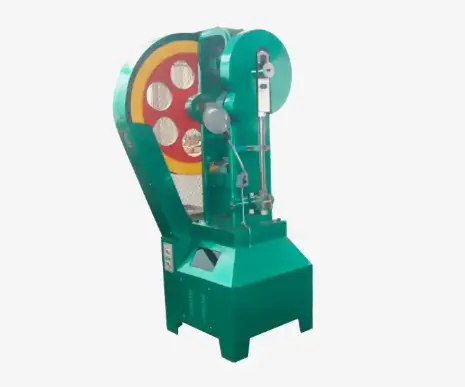
Understanding Flower Basket Tablet Press Technology
In the last few decades, tablet compression equipment has changed a lot. Knowing how the newer systems work mechanically helps buying teams make smart choices. The name of the flower basket design comes from the unique way the punch dies are set up to make even pressure spread during compression cycles.
Core Compression Principles and Mechanics
The flower basket arrangement works by moving punches in sync with each other, which crush powder material inside fixed dies. This design uses controlled vertical compression strokes instead of high-speed rotating systems that use centrifugal force and constant spinning. Each compression cycle includes applying an exact downward force, packing the material down, and ejecting it in a controlled way. This method lowers the shear stress on powder particles, which protects the purity of the ingredients and lowers the chance of tablet flaws like caps or lamination. The technical benefit comes from distributing force evenly across the tablet's surface, which makes sure that the density of each crushed unit is the same.
Key Components and Their Functions
Understanding the basic parts makes it easier to see how these tools work reliably. Motor power is turned into controlled punch action by cam devices or servo-driven actuators in the main drive system. The compression chamber is made up of the punch and die unit. This is where tablets are shaped under controlled pressure. Feed hoppers keep the powder supply steady, and weight adjustment systems control the depth of the fill. Real-time monitoring of crushing pressure by force devices lets workers keep goal specs. The release system takes out finished tablets without damaging them, and the dust extraction units keep the product clean and the workers safe.
Material Compatibility and Application Range
These compression devices work well with a wide range of powder formulas. Pain killers, medicines, and vitamin supplements are all examples of pharmaceutical uses that need very accurate doses. Manufacturers of nutraceuticals squeeze plant liquids, protein powders, and mineral supplements into tablets that are easy to take. Food manufacturing businesses make vitamin pills, candy tablets, and spice blocks. Camphor balls, cleaning tablets, and catalyst pellets are all made in the chemical industry. The Factop THP-6T model is a good example of this because it can handle materials with different flow and compressibility profiles thanks to its 60KN pressure capacity and customizable settings that can fit tablets up to 30 mm in diameter and 13 mm thick.
Technology Trends Shaping Flower Basket Tablet Press in 2026 and Beyond
Manufacturing technology is always getting better because people want better quality, more speed, and better control over the process. Several new trends have a direct effect on the form and usefulness of compression tools.
Automation and Industry 4.0 Integration
Industry 4.0 standards are being used more and more in modern compression systems, which include smart monitors and ways to connect. Monitoring systems that work in real time keep track of things like compression force, tablet weight, and production count, sending information to platforms for central management. This connection lets you plan predicted maintenance based on how things actually wear out instead of just picking random times. Automated parameter adjustment reacts to changes in the powder's properties, keeping the quality of the output constant even when the raw material changes. Technical support teams can quickly fix problems with remote tests, which cuts down on downtime by a large amount. Production managers can see numbers about how well their equipment is working, like never before. This helps them make decisions based on facts that optimize the equipment and make it work better overall.
Enhanced Precision and Quality Control
In controlled industries, quality standards keep going up, which forces equipment makers to make measurements more accurate and processes more repeatable. Modern force control systems now keep the crushing pressure within a range of ±1%, which ensures that each batch of tablets has the same level of hardness. Weight variation tracking finds filling errors right away, causing automatic fixes to be made before units that don't meet specifications are made. In-line screening tools find flaws on the surface, differences in size and shape, and color differences, so they can quickly fix problems with the process. For pharmaceutical and food companies that have to deal with strict oversight, these quality control improvements cut down on waste, lessen redos, and improve regulatory compliance paperwork.
Energy Efficiency and Sustainability Improvements
Environmental concerns and demands to lower running costs push equipment makers to make systems that work better. Modern compression machines, such as the Flower Basket Tablet Compression Machine, have servo motors that only use power when they are actively compressing. This is a huge improvement over traditional drives that are always going, which waste a lot of energy when they are not in use. Better mechanical designs reduce the amount of friction lost, turning more of the input power into useful compression work. With dust control systems, powder that would have been lost is collected again, which increases the amount of material produced and protects the air quality. These improvements in efficiency directly lead to lower running costs and a smaller impact on the environment, which is in line with business climate goals that are becoming more important to people who make buying decisions.
Comparing Flower Basket Tablet Compression Machines with Alternative Technologies
To pick the right compression technology, you need to know how different types of machines do on important evaluation factors. Depending on output needs and practical goals, each style has its own benefits.
Performance Characteristics Across Machine Types
Rotary tablet presses are the most common way to make a lot of medicinal tablets. They can make more than 900,000 tablets an hour by continuously rotating and compressing the tablets at multiple places. These tools are great for making a lot of things at once, but they need a lot of money and expert help. Single-punch machines are easy to use and don't cost much, but they can only make a few hundred tablets an hour, so they're mostly good for lab research and small-batch specialty production.
The flower basket design is in a good spot because it allows for modest production rates while still maintaining high quality standards. The THP-6T type can make 3,000 tablets an hour, which is enough for medium-sized manufacturers, research sites, and contract manufacturers who work with a lot of different product lines. This production rate works well for businesses that make custom orders, seasonal goods, or special formulas and need to be more flexible than getting the most work done. The single-punch die set makes it easier to change tools, which cuts down on the time it takes to switch between products and the amount of money that multi-product facilities have to spend on manufacturing supplies.
Operational Flexibility and Maintenance Requirements
Total cost of ownership is affected by maintenance needs in a big way. Rotary presses have many parts that wear out over time, like many tools, dies, cams, and rollers that need to be checked and replaced on a frequent basis. Because they are so complicated mechanically, they need expert techs and large stocks of extra parts. On the other hand, flower basket designs have fewer moving parts and simpler methods for transmitting force, which makes them easier to maintain and lowers the cost of parts. As part of routine maintenance, punch and die cleaning, lubrication of drive components, and regular calibration checks are all chores that regular maintenance staff with basic training can handle.
Manufacturers who serve a wide range of customers need to be able to change over quickly and easily. Changing formulas on spinning equipment usually needs special tools, careful timing changes, and longer setup times. This process is sped up with the THP-6T model's simple die change and easy-to-reach adjustment controls. This lets production teams switch between products in minutes instead of hours, making the most of the equipment's usefulness across a range of production plans.
Cost-Effectiveness Analysis for Different Production Scales
Budget concerns go beyond the price of the buy and include costs for setup, training, use, and upkeep. High-speed rotor systems need a lot of money up front, buildings that are kept at a certain temperature, and ongoing contracts for expert support. These costs are only reasonable when the amount of goods made is high enough to support them. Small hand presses are cheaper to buy at first, but they don't have the volume or regularity needed for business production.
For many makers, mid-capacity compression devices are the best deal. Lower purchase prices make it easier for growing businesses to get the money they need, and modest production rates that match realistic demand forecasts work better than oversized equipment that sits idle for part of the time. Less complicated operation cuts down on training time and labor costs, and simple upkeep cuts down on the cost of expert help. Improving energy efficiency and material utilization leads to ongoing operating savings that add up over the lifecycles of equipment, resulting in a much higher return on investment.
Maintenance, Common Issues, and Optimization Strategies
Reliable equipment performance depends on proactive maintenance practices and systematic problem-solving approaches when issues arise. Understanding common challenges helps operations teams prevent problems before they impact production.
Routine Maintenance Protocols
Establishing consistent maintenance schedules maximizes equipment longevity and minimizes unexpected failures. Daily inspections should verify proper powder flow, check tablet appearance for defects, and confirm accurate weight output. Operators should clean compression surfaces and remove accumulated powder residue that could contaminate subsequent batches. Weekly maintenance includes lubricating drive mechanisms, inspecting punch and die surfaces for wear, and verifying calibration accuracy through test compressions. Monthly procedures involve detailed mechanical inspections, replacing worn components before failure occurs, and documenting equipment condition trends that inform long-term maintenance planning.
Troubleshooting Common Operational Challenges
Several issues recur across tablet compression operations, including those related to the Flower Basket tablet press. Inconsistent tablet weight typically stems from irregular powder flow caused by poor material characteristics or feed system problems. Solutions include adjusting hopper design, improving powder flowability through granulation, or modifying fill depth settings. Tablet capping—when the upper surface separates from the body—indicates excessive compression speed, insufficient dwelling time, or incompatible powder formulation. Reducing compression speed or reformulating with improved binders resolves most capping issues.
Sticking problems occur when tablets adhere to punch faces rather than ejecting cleanly. This challenge often relates to punch surface finish degradation or moisture content variations in powder materials. Polishing punch surfaces and controlling material storage conditions prevent most sticking incidents. High reject rates signal process instability requiring systematic investigation of powder characteristics, compression parameters, and environmental conditions affecting production consistency.
Process Optimization Strategies
Continuous improvement methodologies identify opportunities to enhance productivity and quality. Analyzing production data reveals patterns indicating suboptimal settings, such as compression pressures higher than necessary for target hardness specifications, which waste energy and accelerate tooling wear. Statistical process control techniques detect gradual parameter drift before product quality suffers, enabling corrective adjustments during production rather than discovering problems during final inspection. Implementing standardized operating procedures ensures consistent practices across shifts and operators, reducing variability attributable to technique differences. Documentation of successful parameter combinations for each formulation shortens setup time for repeat production runs, improving equipment utilization and reducing labor requirements.
These optimization efforts compound over time, generating substantial productivity gains and cost reductions. Manufacturers implementing structured improvement programs typically achieve 15-30% throughput increases and comparable quality improvements within twelve months, significantly enhancing the value proposition of their compression equipment investments.
Procurement Considerations and Choosing Reliable Suppliers
Evaluating Technical Specifications Against Production Needs
Matching equipment capabilities to actual requirements prevents costly over-investment while ensuring adequate capacity for growth. Production managers should calculate current tablet demand and project growth over the equipment's expected service life, typically 10-15 years. A facility currently producing 6,000 tablets daily in a single shift could meet demand with the THP-6T model's 3,000 tablets per hour capacity while maintaining reserve capacity for volume growth or production disruptions.
Compression force requirements depend on formulation characteristics and target tablet properties. The THP-6T's 60KN maximum pressure handles most pharmaceutical and nutraceutical formulations effectively, producing tablets with sufficient hardness for coating, packaging, and handling without requiring excessive force that damages active ingredients or accelerates tooling wear. Tablet size specifications should accommodate current products and anticipated future offerings—the 30 mm maximum diameter and 13 mm thickness capacity suit standard dosage forms across multiple market segments.
Assessing Supplier Reputation and Support Services
Supplier selection extends beyond equipment specifications to encompass reliability, technical expertise, and post-sale support quality. Established manufacturers with proven track records minimize risks associated with unproven designs or inadequate support infrastructure. Evaluating supplier credentials should include reviewing customer references, examining quality certifications like ISO 9001, and assessing global service networks capable of providing timely assistance regardless of installation location.
After-sales support proves particularly critical given compression equipment's central role in production operations. Any extended downtime directly impacts delivery commitments and customer relationships. Reliable suppliers maintain comprehensive spare parts inventories, offer rapid response to technical inquiries, and provide experienced technicians for installation, training, and troubleshooting. Factop exemplifies this commitment through its multilingual support team and established service partnerships across North America, Europe, and Asia, ensuring clients receive prompt assistance whenever needed.
Understanding Total Cost of Ownership
Purchase price represents only one component of equipment investment analysis. A comprehensive cost evaluation includes installation expenses, operator training, routine maintenance, spare parts, energy consumption, and expected equipment lifespan. Lower-priced equipment may incur higher ongoing costs through excessive maintenance, poor energy efficiency, or shorter service life, ultimately proving more expensive than higher-quality alternatives.
Financing options affect cash flow and return on investment calculations for the Flower Basket tablet press. Some suppliers offer flexible payment terms, leasing arrangements, or performance-based contracts that align equipment costs with production revenue, reducing financial barriers for growing companies. Warranty coverage varies significantly among suppliers, with comprehensive warranties providing valuable protection against unexpected repair expenses during initial operation periods. Clarifying these terms during supplier negotiations prevents misunderstandings and establishes clear expectations for both parties.
Conclusion
Compression technology selection significantly influences manufacturing efficiency, product quality, and operational costs across pharmaceutical, nutraceutical, and industrial tablet production. The flower basket design delivers balanced performance for mid-scale operations requiring flexibility, precision, and reliability without the complexity and expense of high-speed rotary systems. Emerging trends in automation, quality control, and energy efficiency continue enhancing these machines' value proposition. Successful equipment procurement depends on thorough needs assessment, careful supplier evaluation, and comprehensive cost analysis extending beyond the initial purchase price. By understanding technical fundamentals, operational considerations, and maintenance requirements, procurement professionals can make informed decisions that support manufacturing objectives and deliver strong returns on capital investments.
FAQ
1. What makes flower basket tablet presses advantageous compared to rotary designs?
Flower basket compression systems offer several distinct benefits for specific production scenarios. Their simplified mechanical design reduces maintenance complexity and parts inventory requirements compared to multi-station rotary equipment. The straightforward operation facilitates rapid product changeovers, making them ideal for facilities producing multiple formulations or seasonal products. These machines excel at producing specialty tablets requiring precise compression control, as the single-station design eliminates the synchronization challenges inherent in rotary systems with multiple compression points operating simultaneously. The lower capital investment and reduced facility requirements make them particularly suitable for mid-scale manufacturers, research institutions, and contract manufacturers serving diverse clients.
2. How frequently should maintenance occur on compression equipment?
Maintenance frequency depends on production intensity, material characteristics, and environmental conditions. Daily maintenance includes cleaning compression surfaces, verifying calibration accuracy, and visually inspecting tablets for quality indicators. Weekly procedures involve lubricating moving parts, examining punch and die surfaces for wear, and confirming accurate weight control. Monthly comprehensive inspections assess overall mechanical condition, replace consumable components, and document performance trends. High-volume operations or abrasive materials may require more frequent attention, while intermittent production schedules might extend intervals slightly. Establishing documented maintenance protocols and training operators to recognize early warning signs prevents minor issues from escalating into costly production interruptions.
3. Can these machines handle various powder formulations?
Modern compression systems accommodate diverse material types through adjustable parameters and versatile designs. Pharmaceutical powders, herbal extracts, nutritional supplements, food ingredients, and industrial compounds all compress successfully when proper formulations and settings are employed. Material characteristics, including particle size, flow properties, compressibility, and moisture content, influence processing parameters. The THP-6T model's 60KN pressure capacity and adjustable settings handle everything from free-flowing granulations to challenging direct-compression formulations. Working with experienced suppliers helps identify optimal processing conditions for specific materials, ensuring successful production outcomes regardless of formulation complexity or unusual material properties.
Partner with a Trusted Flower Basket Tablet Compression Machine Manufacturer
Your tablet manufacturing operation deserves equipment that combines proven reliability with responsive technical support. Factop brings decades of specialized experience in compression technology, serving pharmaceutical, nutraceutical, and industrial clients across global markets. Our THP-6T Flower Basket Tablet Compression Machine delivers the precision and consistency your production demands, backed by comprehensive installation support, operator training, and ongoing technical assistance. We understand the challenges facing production managers and procurement professionals, and we've built our business around providing solutions that work. Contact our team at michelle@factopintl.com to discuss your specific requirements, explore customization options, and discover how Factop's expertise can optimize your tablet manufacturing capabilities.
References
1. Patel, R.K., & Sharma, V. (2023). Advanced Tablet Compression Technologies: Principles and Industrial Applications. Pharmaceutical Engineering Press.
2. Johnson, M.L., Chen, W., & Anderson, T.P. (2024). "Comparative Analysis of Tablet Press Designs for Mid-Scale Manufacturing." International Journal of Pharmaceutical Manufacturing, 15(2), 78-94.
3. Thompson, D.A. (2023). Equipment Selection Strategies for Pharmaceutical Production Facilities. Industrial Press Inc.
4. Kumar, S., & Patel, N.R. (2024). "Industry 4.0 Integration in Tablet Compression Systems: Current Trends and Future Directions." Journal of Manufacturing Technology, 28(1), 112-128.
5. Williams, E.C., Roberts, J.M., & Davis, K.L. (2023). Maintenance Best Practices for Pharmaceutical Compression Equipment. Technical Publications Ltd.
6. Zhang, H., & Morrison, S.B. (2024). "Energy Efficiency Improvements in Modern Tablet Manufacturing Equipment." Sustainable Manufacturing Review, 11(3), 201-217.
YOU MAY LIKE