
How do laboratory tablet press machines differ from industrial models?
2026-04-23 11:00:00
When formulation scientists, R&D managers, and buying staff look at compression tools, it's easy to tell the difference between lab and industrial tablet presses. If you want to make small amounts, have freedom, and be accurate in a study setting, a lab-scale tablet press (Lab-scale tablet press) is the best choice. With these small tools, researchers can try out different recipes, quickly change the compression settings, and make anywhere from a few dozen to several thousand tablets all at once. It is important for industrial models to be fast, automated, and reliable so they can meet the needs of mass production, which in this case means making millions of computers every day. Teams can pick technology that helps them meet their current goals and gets them ready for future growth if they know these basic differences.
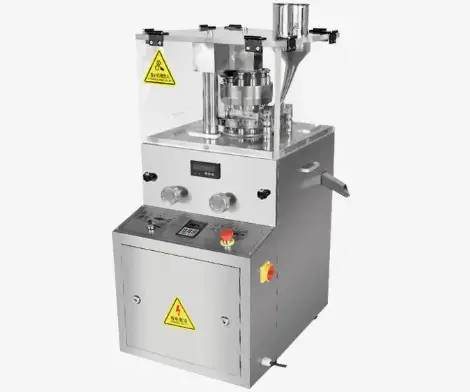
Understanding Laboratory Tablet Press Machines vs. Industrial Models
Purpose and Production Scale
People working on improving recipes in the pharmaceutical, health, and quality control fields need laboratory pill makers more than anything else. It is best to use these tools on small amounts of active pharmaceutical ingredients (APIs) or trial mixes that need to be carefully looked at before being made bigger. Lab presses can make anywhere from 100 to 5,000 pills an hour. They are able to do test runs that help decide how well the ingredients work together, how hard the tablets are, and how much force is needed to break them.
If you want to make a lot of them, though, you need large tablet presses. Based on how the guns are set up and how many hits they have, these powerful machines can make between 50,000 and over 500,000 tablets an hour. The FDA and EMA have very strict quality standards that pharmaceutical businesses, big supplement makers, and food preparation plants must follow. To do this, they depend on industrial presses.
Design Philosophy and Operational Flexibility
When lab equipment is made, the goal is to make it as adaptable as possible. It's easy to change the gear sets on a normal single-punch or small spinning lab press. On the job, this means that tablet shapes, sizes, and recipes can be changed quickly. It's very helpful to be able to try different forms when planning a clinical study or when working on projects that need to change the recipe. Researchers can use either human settings or semi-automated tools to finetune factors like compression force, rest time, and release, all of which have a direct effect on the quality of the tablet.
An important part of industrial presses is that they manage and standardize things. Along with tablet HMIs and programmable logic controllers (PLCs), these machines have a lot of complicated software tools that keep an eye on dozens of process factors in real time. To make sure that tight specs are met during long production runs, closed-loop feedback systems keep an eye on turret speeds, feed frame moves, and weight control methods. Engineers are now more concerned with being constant than with being flexible. They need to make sure that all computers meet certain standards without any help from a user.
Compression Force and Mechanical Capabilities
One important difference between tools is the amount of crushing force they use. Most lab pill presses can crush things with pressure between 5 kN and 80 kN, which is more than enough for most medicinal and food goods that come up during study. Small rotary presses have many stations, and each station needs less force to spread the compression. Single-punch types use a simple cam method to apply force.
Most industrial tools use between 80 and 120 kN of force per station, and some specialty presses can handle more than 150 kN. They can use a lot of force, which lets them work with tough materials like clay powders, metal compounds, and thick chemical catalysts that need a lot of pressure to get the right stiffness and structure. The frames, drives, and compression wheels of industrial tools are made to last millions of compression rounds without breaking. For use in the lab, this level of dependability is not needed.
Key Functional and Technical Differences
Automation Levels and Software Integration
Automation makes a big difference between professional-grade tools and lab-grade equipment. Lab-scale presses usually work manually or partially automatically. To use them, techs put powder into hoppers, change settings using dials or simple digital interfaces, and then pick up finished tablets from open chutes. Data logging might only include basic batch records, with workers writing down by hand things like pill weight, compression force, and output numbers.
Manufacturing execution systems (MES) and business resource planning (ERP) tools work well with industrial tablet machines, including lab-scale tablet presses. Sensing devices built into things send real-time data to central systems, which store hundreds of process factors every second. Advanced quality control units automatically sort tablets by weight, test their hardness, and check their dimensions. Any pills that don't meet the standards are thrown out without stopping production. These systems make detailed electronic batch records (EBRs) that meet legal needs for checking, tracking, and being ready for audits.
Turret Speed and Production Efficiency
One more big difference between types of tools is that production yield is directly linked to turret speed. Rotating presses in labs move slowly, about 10 to 30 times per minute (rpm). Because of this, they can handle test mixtures more gently than raw materials. Researchers can keep the speed steady and watch the tablets take shape. They can see early signs of caps or lamination and make small changes without throwing away useful materials.
A lot of speed is added to industrial rotating presses. They usually work at speeds between 40 and 80 rpm when making pharmaceuticals. More than 100 rpm is the fastest speed for models made for over-the-counter drugs, medical pills, or sweets. These models can combine complex mechanical movements across 40, 60, or even 80 punch points at the same time. Engineering needs to use complicated cam profiles, force-adjusting algorithms, and vibration-damping systems that aren't found in lab tools to keep things accurate at these speeds.
Energy Consumption and Noise Profiles
The energy economy is becoming more important as people worry more about the world when they buy things. Lab tablet presses use between 0.5 and 3 kilowatts of power when they're working. This is because their motors are small and their duty cycles aren't always the same. These don't need much power, so they're good for study spots that don't have a lot of plugs. They also work with most normal wall outlets.
Tools for work need a lot more power. They can use anywhere from 15 to 50 kilowatts, depending on the size of the press, how the turret is set up, and any extra controls or dust collectors that are added. More output means more costs to run, but the extra energy use is still worth it because of the increased output. When buying teams, figure out the total cost of ownership, they have to look at things like how much electricity costs, how much power the machine can handle, and how well it can control heat.
The stream of noise follows the same trends. Lab presses make noises that are about the same volume as normal talk or background office noise, which means they can be used in open study spaces. Industrial presses make noise that is between 75 and 95 decibels, so workers need to wear hearing protection and working areas need to be soundproofed. These worries can be lessened with acoustic barriers, sound isolators, and careful facility design, but they make installation more difficult.
Maintenance Routines and Calibration Requirements
Maintenance plans are different for lab equipment and industry equipment because of how they are used. For a lab-scale tablet press, between runs of formulations, lab-scale presses need to be cleaned, the compression parts need to be oiled, and wear parts like punches and dies need to be replaced every so often. Calibration times are usually every three or six months, and the processes are kept simple so that trained techs can use basic measurement tools to do them.
Industrial tablet presses need strict preventative repair plans that are in line with output levels, rules, and regulations. Everything is checked every day to make sure it's properly oiled and aligned and that the sensors work. Protocols for deep cleaning once a week keep product lots from getting contaminated with each other. Every month, all gun stations are calibrated to make sure that the force is applied correctly, the weight is controlled correctly, and the time is in line. These jobs are done by specialized repair teams that have precise tools, thermal imaging cameras, and sound monitors on hand to keep equipment from breaking down when it's not supposed to and to extend its life.
Advantages of Lab-Scale Tablet Presses for R&D and Procurement
Flexibility for Experimental Formulation Development
One of the best things about laboratory tablet press machines is that they let you switch between formulas quickly. Pharmaceutical researchers working on new ways to deliver drugs can use the same tools to try immediate-release, extended-release, and multiple tablet configurations with very little time spent changing the settings. On laboratory models, changing tools only takes 15 to 30 minutes, whereas on industrial presses it could take hours. This keeps the study moving forward, which is very important.
The settings for compression can also be changed. Researchers can fine-tune the pre-compression force, main compression force, compression speed, and rest time to find the best conditions for handling each different recipe. This freedom in experiments is very helpful in the early stages of development, when the qualities of the material aren't fully understood and standard methods of processing might not work. Systematic lab trials teach us a lot that helps us make plans for scaling up, which lowers risk and speeds up the time it takes for new goods to reach the market.
Cost Efficiency and Procurement Advantages
When small and medium-sized businesses (SMEs), university institutions, and contract development groups choose tools, budget concerns play a big role. Lab-scale tablet presses usually cost between $8,000 and $50,000, but the exact price depends on the features, amount of automation, and name of the maker. This reasonable price range lets businesses start or grow their research skills without having to spend a lot of money on expensive industrial equipment, which usually costs between $150,000 and over $1 million.
When it comes to operating costs, laboratory presses are better for low-volume jobs than other types of presses. Facility costs go down when areas are smaller. Lowering the amount of energy used lowers electric costs. When upkeep tasks are made easier, there is less need for skilled workers. When you reduce the amount of waste during recipe optimization, you keep expensive APIs and excipients. When spread out over the normal length of a research project, these factors work together to give companies that are focused on creativity rather than production output a good return on their investment.
Seamless Scale-Up and Quality Control Support
Laboratory pill presses are very important links between coming up with ideas for new medicines and making them for sale. These tools make data that can be successfully translated during technology transfer by copying the compression processes found in industrial equipment, though on a smaller scale. During lab tests, compression force profiles, powder flow characteristics, and tablet quality traits are seen. These give a starting point for scale-up activities, which keeps pilot and validation runs from being too surprising.
Quality control teams use lab machines to keep an eye on products and do research studies all the time. When problems happen during production, like pills breaking easily, failing to dissolve, or having visible flaws, quality control teams can mimic production conditions on lab tools to find the root causes without stopping business as usual. This ability to investigate helps with efforts to make things better all the time and makes regulatory applications stronger by showing a deep knowledge of the formulation and process factors.
Choosing the Right Tablet Press: Laboratory vs. Industrial Models
Defining Critical Procurement Criteria
Successful equipment selection begins with an honest assessment of operational requirements. Procurement teams should collaborate with R&D managers, production supervisors, and quality assurance leaders to establish clear specifications covering several dimensions:
- Batch Size Requirements: Organizations conducting formulation screening with precious investigational compounds need machines capable of producing 100 to 500 tablets per batch. Clinical trial support demands scalability to thousands of tablets per run. Pilot production bridging research and commercial manufacturing may require tens of thousands of units, pushing toward small industrial presses or high-capacity laboratory models.
- Precision and Quality Standards: Pharmaceutical applications demand weight variation below 2 percent relative standard deviation, hardness consistency within tight ranges, and dimensional uniformity meeting compendial specifications. Less regulated industries like nutraceuticals, confectionery, or industrial catalysts may accept broader tolerances, influencing equipment sophistication requirements.
- Automation and Data Handling: Modern GMP compliance increasingly mandates electronic batch records, automated process monitoring, and integrated quality verification. Organizations pursuing FDA submissions or operating under stringent regulatory oversight should prioritize equipment offering comprehensive data systems, even within laboratory categories. Companies focused on exploratory research may find manual systems adequate for near-term needs.
Comparing Manual Versus Automatic Laboratory Presses
The laboratory equipment spectrum extends from simple manual single-punch presses to sophisticated automatic rotary models approaching industrial capabilities. Manual single-punch presses offer unmatched simplicity and affordability, with intuitive operation requiring minimal training. These machines suit academic institutions teaching pharmaceutical technology, small research groups exploring novel materials, and quality control labs conducting occasional tablet testing. Limitations include low throughput, operator-dependent variability, and minimal process documentation.
Automatic laboratory rotary presses, including the laboratory tablet press machine, incorporate motorized turret rotation, automated powder feeding, and electronic force control while maintaining compact footprints suitable for research environments. These hybrid systems bridge the gap between manual equipment and industrial machines, delivering production capacities approaching 5,000 tablets per hour with improved consistency and reduced operator influence. The investment premium over manual presses—typically 100 to 200 percent—buys reproducibility, documentation capabilities, and formulation confidentiality through reduced human interaction.
Evaluating Manufacturers and Technical Specifications
Reputable tablet press manufacturers distinguish themselves through engineering excellence, regulatory compliance support, and comprehensive after-sales service. European manufacturers like Fette Compacting, KORSCH, and IMA have established decades-long reputations for precision engineering and robust construction. Their laboratory presses often incorporate design elements derived from industrial equipment, ensuring scale-up compatibility and long service life. Asian manufacturers increasingly offer competitive alternatives combining modern features with attractive pricing, particularly appealing to cost-conscious buyers willing to accept potentially longer lead times and evolving support networks.
Technical specifications warrant careful scrutiny beyond headline figures. Compression force specifications should include not only maximum capacity but also controllability and repeatability across the working range. Tooling compatibility determines future flexibility—machines accepting industry-standard punch configurations simplify sourcing and reduce long-term costs. Software capabilities, data export formats, and upgrade pathways influence how equipment integrates with existing laboratory information management systems (LIMS) and quality management platforms.
Conclusion
Laboratory and industrial tablet presses serve distinct yet complementary roles within pharmaceutical development and manufacturing ecosystems. Lab-scale equipment excels in research settings demanding flexibility, precision, and cost-effective production of small batches. Industrial machines deliver the throughput, automation, and consistency required for commercial-scale operations. Understanding the technical, operational, and economic differences between these equipment categories enables informed procurement decisions that align capabilities with organizational objectives. Whether exploring novel formulations in research laboratories or scaling production for market launch, selecting appropriate compression technology forms the foundation for successful tablet manufacturing programs.
FAQ
1. How often should laboratory tablet presses undergo maintenance compared to industrial models?
Laboratory presses typically require less frequent preventive maintenance due to lower utilization rates and reduced mechanical stress. Routine cleaning after each formulation change remains essential to prevent cross-contamination. Comprehensive mechanical inspections occur quarterly or semi-annually, with annual calibration verifying force accuracy and control system precision. Industrial presses demand daily inspections, weekly deep cleaning protocols, and monthly calibrations to maintain performance across continuous multi-shift operations.
2. Can laboratory tablet presses accurately predict industrial-scale production outcomes?
When operated under similar compression conditions, quality laboratory presses generate data that reliably predicts industrial performance. Compression force, dwell time, and powder flow characteristics scale proportionally between equipment types. However, differences in feeding mechanisms, turret speeds, and environmental conditions can introduce variables affecting direct comparability. Systematic scale-up methodologies accounting for these factors enable confident technology transfer from laboratory to commercial manufacturing.
3. What production volume justifies transitioning from laboratory to industrial tablet presses?
The transition threshold depends on multiple factors beyond raw production volume. Organizations consistently producing more than 50,000 tablets weekly may benefit from industrial equipment efficiency despite higher capital costs. Regulatory requirements, product stability considerations, and growth projections also influence timing. Many pharmaceutical companies maintain both laboratory and industrial presses, using smaller equipment for development while commercial models handle validated production, ensuring operational flexibility across product lifecycles.
Contact Factop for Expert Guidance on Laboratory Tablet Press Selection.
Navigating the complex landscape of compression equipment requires expertise spanning pharmaceutical engineering, regulatory compliance, and practical manufacturing experience. At Factop, we combine decades of tablet press manufacturing knowledge with a genuine commitment to client success, helping research teams, procurement professionals, and production managers identify optimal solutions for their unique requirements.
Request a personalized consultation by contacting michelle@factopintl.com with your project details. We provide competitive quotations, equipment demonstrations, and technical comparisons, helping you evaluate options with confidence. As your trusted lab-scale tablet press supplier, we commit to delivering precision-engineered equipment, comprehensive training, and responsive after-sales support, ensuring long-term success for your tablet manufacturing programs.
References
1. Patel, R.K., et al. (2019). Pharmaceutical Tablet Press Technology: Design Principles and Scale-Up Considerations. Journal of Pharmaceutical Sciences, 108(4), 1523-1538.
2. Schmidt, H. & Wagner, K. (2020). Compression Force Profiles in Tablet Manufacturing: Laboratory to Industrial Translation. European Journal of Pharmaceutics and Biopharmaceutics, 156, 78-92.
3. Chen, L.M. (2021). Equipment Selection Strategies for Pharmaceutical Development Laboratories. American Pharmaceutical Review, 24(3), 44-51.
4. Morrison, J.D. & Thompson, S.A. (2018). Automation in Tablet Press Technology: Impact on Quality and Efficiency. International Journal of Pharmaceutical Manufacturing, 12(2), 167-181.
5. Gupta, A., et al. (2022). Maintenance Protocols for Laboratory and Industrial Compression Equipment. Pharmaceutical Engineering, 42(1), 56-68.
6. Williams, T.R. (2020). Economic Analysis of Tablet Press Procurement for Small-Scale Pharmaceutical Operations. Drug Development and Industrial Pharmacy, 46(5), 823-835.
YOU MAY LIKE