
Top features to look for in a laboratory tablet press machine
2026-04-23 11:00:00
To get reliable results when choosing tools for research and development, it's important to know what makes a good laboratory pill press machine stand out. For making small batches of tablets, these small laboratory pill press machines provide exact compression. This lets pharmaceutical researchers, quality control teams, and formulation scientists try new chemicals safely. The right laboratory pill press machine has accurate dose capabilities and settings that are easy for anyone to use. This keeps costs low while making sure that every tablet meets strict standards. It is important to choose equipment that is exact and lasts a long time if you are working on vitamin recipes, drug studies, or looking into how chemical pills can be used.
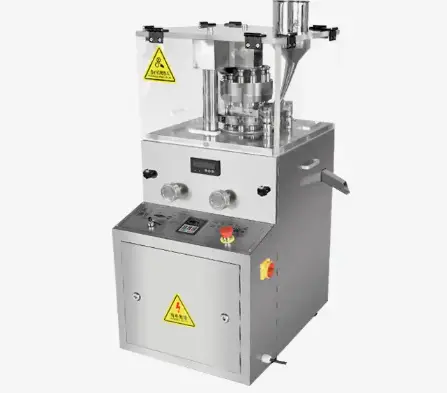
Understanding Laboratory Tablet Press Machines: Key Concepts and Uses
Laboratory tablet press machines are special compression tools made for making small amounts of tablets. They are different from industrial high-speed rotary presses because they focus on flexibility instead of volume. These tools work great in places where quality study, formula testing, and process improvement are more important than mass production.
What Makes Laboratory Presses Different?
The main difference is in practical size and flexibility. Industrial rotary presses can make tens of thousands of tablets every hour, but laboratory types usually only make a few dozen to a few thousand at a time. This restriction was made on purpose so that researchers can work with smaller amounts of expensive active ingredients during the development stages. This cuts down on trash and material costs by a large amount.
Core Applications Across Industries
Pharmaceutical research centers use these tools to study how to make new drugs. They try different mixtures of excipients and compression settings before going big enough for production. Nutraceutical makers depend on them to make test runs of food supplements, vitamin pills, and plant supplements. Chemical labs squeeze catalyst pellets, sample tablets for testing, and other unique items that need precise control over their dimensions. Even the creation of medicines for animals can use these tools to make dosage forms that are right for each animal.
Essential Benefits for Research Environments
Lab tablet presses are useful for study settings for a lot of important reasons. Each tablet has the right amount of active ingredients because of its exact dose. This is very important when working with strong poisons. These tools can be used over and over again, so experts can get the same results from different test runs. They can be used in labs that don't have a lot of room because they don't take up much. Smaller study groups and college campuses can afford to buy them. Workers can quickly switch between different tablet shapes, sizes, and formulas without having to spend a lot of time or money on new tools. This may be their best quality.
Top 7 Features to Prioritize When Choosing a Laboratory Tablet Press Machine
To choose the right lab tools, you need to carefully consider the features that will have a direct effect on the results of your study and the speed of your operations. Working with study sites around the world, we've found seven important differences between tools that are great and ones that are just fine.
Precision Compression Control
To get consistent tablet quality, you need to be able to control the pressure well. Lab presses today use precise hydraulic systems or servo motor technology to keep the force of the crushing very low. This check makes sure that each pill is packed down the same way so there aren't any differences in how hard they are, how easily they break, or how they dissolve that could damage study data. It is best to find tools that have digital displays and pressure levels that can be changed. This will let experts write down exact rules for following the rules and making the process work again.
Dosage Accuracy and Weight Consistency
Reliable fill systems are what make sure that pills always meet the requirements. Good lab presses have depth-of-fill adjustment tools that precisely control how much powder goes into the die hole. In more advanced models, gravimetric feedback systems automatically account for changes in powder flow, keeping the weight within ±2% of the same across production runs. When working with expensive medicinal substances, where waste directly affects research budgets, this accuracy is very helpful.
Operational Mode Flexibility
Figuring out the right amount of automation is easier if you know what your process needs. These are the three main types of operations:
- Hand Operation: Single-punch hand presses are good for very small amounts and testing the waters. Each compression step is controlled by an operator, who has full control over the machine but can only handle 50 to 200 tablets an hour. These tools are great for testing out new formulas that need constant parameter adjustments.
- The breaking part of these devices is done by the machine, but you still have to put powder in and take tablets out by hand. The best mix between speed and cost is reached when production rates reach between 500 and 1,500 pills per hour. As long as the batch sizes are small and precision is important, semi-automatic processing works well for regular tests.
- Fully Automatic Machines: Systems that fill, squeeze, and release materials automatically allow machines to run all the time with little or no help from a person. Somewhere between 2,000 and 5,000 tablets can be made in an hour. This makes it good for large test runs or labs doing in-depth, stable studies. Auto-types save money on work and make sure that data is always right, but they cost more to set up at first.
The size of your normal batch, the number of staff members you have access to, and your cash should help you make these choices. A lot of growing labs start out with semi-automatic tools and update them as needed as the need for study grows.
Tablet Specification Adaptability
Tablets of different sizes, styles, and other qualities are often needed for research projects. Good lab presses have gear sets that can be switched out, so it's easy to switch between different tablet settings. Most of the time, standard round pills with a width of 6mm to 25mm are needed. However, many recipes work better with capsule forms, ovals, or special designs that make them easier to swallow or better for branding. When looking for new tools and dies, machines that accept both EU and TSM tooling standards give you the most options. Being able to make bi- or multi-layer pills adds another level, allowing for controlled-release formulas or mixed goods that look different.
User Interface and Control Systems
Intuitive operation cuts down on training time and mistakes during important research stages. Modern laboratory pill press machine tablet presses have touchscreens that show real-time compression data, such as force measures, tablet numbers, and operating alerts. Programmable recipe storage lets workers save a set of tested parameters for various formulas, which ensures consistency when using goods that have already been made. Data logging features record production parameters instantly, making audit trails that are needed for regulatory reports and quality management systems. Connecting via USB or network makes it easy to move data to laboratory information management systems.
Machine Durability and Maintenance Requirements
Strong building and clear maintenance steps are important for long-term reliability. Heavy-duty frames made of steel or cast iron don't bend or break when they're compressed, so they stay in place for years of use. Tool steel that has been strengthened doesn't wear down easily, even when dealing with rough mixes that have rocks or solid chemicals in them. It's easier to clean between runs on machines with quick-access screens and parts that can be taken off without tools. This is very important when working with different recipes so that they don't get mixed up. Lubrication systems that are easy to get to and repair plans that are easy to understand help workers keep mechanical parts in good shape. Because they are modular, workers can change parts of machines without having to send the whole thing back for service.
Safety Features and Regulatory Compliance
You can't follow business rules and protect workers at the same time. Some safety features that are very important are emergency stop buttons that are simple to reach, interlocked guards that stop the machine from working when access panels are open, and overload protection systems that stop compression when safe limits are crossed. Machines that were built according to cGMP rules have smooth, germ-proof surfaces that are easy to clean. People who make things should make sure they follow the rules by including documentation with validation, installation qualification methods, and working qualification guides. As if the CE mark for European markets wasn't enough to give you peace of mind, the FDA's rules for medical tools give you even more.
Comparing Laboratory Tablet Press Machines: How to Make the Right Choice?
Beyond individual features, successful equipment selection requires evaluating how different machine configurations align with specific operational requirements and long-term strategic goals.
Manual Versus Automatic Operation
There are more reasons to choose an automatic system over a manual one than just output estimates. Manual single-punch presses give scientists the most control for exploratory research, allowing real-time adjustments based on tablet appearance and feel. Priced between $3,000 and $12,000, they are affordable for projects with limited funds. However, their labor-intensive process makes them impractical for proof batches requiring hundreds or thousands of identical tablets.
With research-grade accuracy, automatic laboratory tools ensure consistent repeatability. Priced from $15,000 to $50,000 depending on features, they greatly reduce labor costs per tablet. They are especially useful for stability studies requiring many similar batches over long periods, or for sites supporting multiple research teams where high utilization justifies higher capital expenditure.
Portability Versus Benchtop Configurations
Space constraints in many research facilities make the equipment footprint a practical consideration. Portable tablet presses weighing under 50 pounds allow movement between laboratories, enabling shared equipment utilization across departments. These compact units suit academic institutions or contract research organizations serving multiple clients with varying needs. However, portability sometimes compromises frame rigidity, potentially affecting long-term precision under heavy use.
Benchtop models with permanently mounted configurations provide superior stability and precision through reinforced frames and vibration-damping. Their fixed installation allows integration with auxiliary equipment like dust collection systems or automated testing devices. Laboratories focused on specific research programs benefit from dedicated benchtop presses optimized for their particular application requirements.
Evaluating Manufacturers and Suppliers
Selecting a reliable equipment partner influences not just initial purchase satisfaction but long-term operational success. Established manufacturers with decades of pharmaceutical machinery experience, particularly in laboratory tablet press machine production, typically offer better engineering quality, comprehensive documentation, and responsive technical support. Companies like Factop, with proven track records serving the pharmaceutical and nutraceutical sectors globally, provide equipment backed by extensive application knowledge.
When assessing potential suppliers, examine their quality certifications, including ISO 9001 compliance, which demonstrates systematic quality management. Request customer references from organizations with similar applications, and inquire about their experiences with equipment performance and after-sales support. Warranty terms reveal manufacturer confidence—comprehensive coverage spanning two years or more suggests robust construction and reliable components. Technical support availability matters tremendously when troubleshooting production issues; suppliers offering multilingual assistance and remote diagnostic capabilities minimize downtime that could delay critical research timelines.
Practical Tips for Laboratory Pill Press Machine Operation and Maintenance
Establishing Effective Maintenance Routines
Preventive maintenance schedules protect your investment and preserve compression accuracy. Daily protocols should include cleaning punch tips and die cavities after each production run, preventing material buildup that causes sticking and inconsistent filling. Operators should inspect punches visually for chips or wear patterns indicating replacement needs. Weekly maintenance expands to lubricating moving components according to manufacturer specifications, checking compression force calibration using test materials, and verifying weight accuracy through sample tablet measurements.
Monthly procedures include thorough cleaning of feeding mechanisms, examination of electrical connections for signs of wear or looseness, and documentation review, ensuring all maintenance activities are properly recorded. Quarterly professional servicing by qualified technicians provides comprehensive inspection of critical components, replacement of wear items like seals and bearings before failure occurs, and recalibration of force measurement systems against certified standards. These systematic approaches prevent unexpected breakdowns during crucial research phases while maintaining the equipment precision necessary for validated results.
Troubleshooting Common Production Challenges
Even well-maintained machines occasionally present operational difficulties. Understanding common issues and their solutions enables quick resolution. Tablets with inconsistent weight typically indicate uneven powder flow into the die cavity. Solutions include adjusting feeding mechanisms, modifying formulation flow properties through granulation or adding glidants, and ensuring proper die cavity cleaning between compressions. Tablet capping or lamination where layers separate after compression usually stems from insufficient binding, air entrapment, or improper compression speed. Addressing these requires formulation adjustments, pre-compression steps to remove trapped air, or reducing compression rate to allow proper material consolidation.
Excessive powder adhesion to punch faces causes picking or sticking problems. Polishing punch surfaces, applying appropriate coatings, or modifying formulation moisture content typically resolves these issues. When tablets exhibit hardness variations despite consistent parameters, investigate powder blend uniformity and compression force calibration accuracy. Systematic troubleshooting following logical diagnostic steps minimizes production interruptions and maintains research schedule integrity.
Operator Training and Safety Protocols
Comprehensive training programs ensure safe, effective equipment utilization. New operators should complete hands-on training covering machine startup procedures, parameter adjustment methods, routine cleaning protocols, and emergency shutdown procedures. Understanding the relationship between compression parameters and tablet quality enables intelligent decision-making when unexpected results occur. Safety training must emphasize lockout/tagout procedures during maintenance, proper ergonomics when loading materials or removing tablets, and appropriate personal protective equipment, including safety glasses and hearing protection if operating in environments with multiple machines.
Regular refresher training keeps skills current as equipment capabilities expand through upgrades or as new formulations introduce different processing challenges, including for the laboratory tablet press machine. Documentation of all training activities supports quality system requirements and demonstrates organizational commitment to operational excellence. When operators understand both the mechanical principles underlying tablet compression and the safety protocols protecting them, laboratories achieve optimal productivity while minimizing risk.
Conclusion
Selecting appropriate laboratory tablet press equipment requires balancing technical specifications with practical operational considerations. The seven features outlined—compression precision, dosage accuracy, operational flexibility, tablet adaptability, user interface quality, durability, and safety compliance—form the foundation of successful equipment evaluation. Understanding the distinctions between manual and automatic operation, portable versus benchtop configurations, and various manufacturer capabilities enables informed decisions aligned with research objectives and budgetary constraints. Implementing systematic maintenance protocols and comprehensive operator training maximizes equipment performance while ensuring consistent tablet quality, supporting regulatory requirements. As pharmaceutical research continues advancing, partnering with experienced manufacturers offering proven technology and responsive support positions laboratories for long-term success in formulation development and quality testing applications.
FAQ
1. What accuracy can laboratory pill press machines achieve?
Quality laboratory tablet presses maintain weight consistency within ±2-3% for properly formulated materials, with premium models achieving even tighter tolerances approaching ±1%. Compression force accuracy typically falls within ±5% of setpoint values. These specifications enable reliable research data and support formulation development requiring precise reproducibility. Actual accuracy depends on powder flow characteristics, machine quality, and proper operational technique.
2. How do laboratory presses differ from industrial production equipment?
Laboratory models prioritize flexibility and precision over speed, producing dozens to thousands of tablets hourly compared to industrial rotary presses generating hundreds of thousands per hour. Their compact size, simplified tooling changeover, and lower material requirements suit research and development. Industrial machines feature continuous operation, automated quality monitoring, and higher throughput optimized for validated commercial production rather than experimental flexibility.
3. Where can I find reliable laboratory tablet press suppliers?
Reputable manufacturers with pharmaceutical machinery expertise offer the best combination of equipment quality, technical support, and regulatory documentation. Companies like Factop, specializing in laboratory and production pharmaceutical equipment, provide reliable machines backed by global service networks. Industry trade shows, pharmaceutical engineering conferences, and peer recommendations from other research organizations help identify trustworthy suppliers offering appropriate equipment for specific applications.
Partner with Factop for Your Laboratory Tablet Press Machine Needs
Selecting the right laboratory pill press machine supplier impacts your research success for years to come. Factop brings over two decades of pharmaceutical machinery manufacturing expertise, delivering precision equipment trusted by research institutions, pharmaceutical companies, and nutraceutical developers across America, Europe, Africa, and Asia. Our comprehensive product portfolio includes single-punch manual presses for exploratory research, semi-automatic models for routine testing, and fully automatic systems supporting pilot-scale production.
What sets Factop apart is our commitment to customer success beyond the initial sale. Our multilingual technical team provides responsive support throughout equipment selection, installation, and ongoing operation. We offer detailed validation documentation supporting regulatory compliance, comprehensive operator training programs, and readily available spare parts, ensuring minimal downtime. Whether you're establishing a new research laboratory or upgrading existing equipment, our application specialists help identify the optimal configuration for your specific formulation requirements and budget constraints.
Contact our team today at michelle@factopintl.com to discuss your laboratory tablet press requirements. We'll provide tailored recommendations, competitive quotations, and technical specifications, helping you make informed decisions.
References
1. Patel, M.R. and Kumar, S. (2022). "Pharmaceutical Tablet Press Technology: Principles and Applications in Modern Drug Development." Journal of Pharmaceutical Engineering, 42(3), 156-174.
2. Anderson, J.W. (2023). "Laboratory-Scale Tablet Compression: Equipment Selection and Validation Strategies for Research Environments." International Pharmaceutical Technology Review, 18(2), 88-103.
3. Chen, L. and Thompson, R.K. (2021). "Compression Science in Pharmaceutical Manufacturing: From Laboratory to Production Scale." Academic Press Pharmaceutical Sciences Series, 7th Edition.
4. Rodriguez-Martinez, F. (2023). "Quality by Design Approaches for Laboratory Tablet Press Operations." Pharmaceutical Development and Technology, 28(4), 412-429.
5. Williams, D.A. and Lemke, T.L. (2024). "Modern Pharmaceutical Equipment: Selection, Operation, and Maintenance for Research Applications." McGraw-Hill Professional Publishing, 5th Edition.
6. European Pharmaceutical Manufacturers Association. (2022). "Guidelines for Laboratory Tablet Press Qualification and Validation in Pharmaceutical Research Facilities." EPMA Technical Standards Document TS-2022-08.
YOU MAY LIKE