
How Much Does a Vitamin Capsule Filler Cost and Where to Buy the Best Equipment in 2024?
2026-04-27 11:00:00
Choosing the right vitamin pill filler (capsule filler for vitamins) has a direct effect on how quickly and consistently products are made and how well they meet legal requirements in the food supplement, nutrition, and pharmaceutical businesses. When purchasing managers and production department heads look at new equipment, they have to make important choices about how much technology to use, how much output to expect, and the total cost of ownership. In 2024, the market for vitamin capsules offers a range of choices, from fully automatic production lines to human tabletop units. Each type of unit has its own benefits for different operating sizes.
This detailed guide covers all the important things that business-to-business buyers need to know, like correct pricing details, confirmed seller records, equipment specs, and useful selection criteria. Understanding the subtle differences between types of equipment is important for smart capital allocation, whether you're a new health product organization that needs small semi-automatic solutions or a big pharmaceutical company that needs high-speed automated systems. We look at cost structures, methods for evaluating suppliers, and performance goals to help buying and quality control departments make choices based on facts that meet both short-term output needs and long-term business growth.
Understanding Vitamin Capsule Fillers: Types, Materials, and Features
Vitamin capsule technology has come a long way to meet a wide range of recipe needs, from simple powder blends with multivitamins to complicated liquid-filled softgels with omega-3 fatty acids and nutrients that dissolve in oil. To make it work, the capsule halves are split in half, the active ingredients are put into the body part, and then the halves are put back together under controlled conditions to make sure the seal stays intact and the dose is correct.
Manual Capsule Filling Machines
Manual pill fillers can be used by small businesses, study labs, and custom filling shops that need to make a small amount of pills. Most of the time, these tools have filling trays that can hold 100 to 300 pills. People use tamping plates and spread powder out by hand on the tray to get equal fill weights. Handmade methods are the best way to make small batches and change recipes often, even though they take a lot of work. They can hold all normal pill sizes, from #00 to #5, which makes them great for making samples for clinical studies and vitamin recipes that need to know the exact amounts of each ingredient.
Semi-Automatic Capsule Filling Systems
Businesses that are growing and moving from human tasks to mass production can use semi-automatic tools as a middle ground. These units automate important steps like lining up, separating, and locking the capsules, but they still need to be loaded and unloaded by hand. The production rate is usually between 10,000 and 25,000 pills per hour, which is a good mix between the cost of capital and the speed of operations. The equipment is made with pharmaceutical-grade stainless steel on the touch surfaces, which makes it easy to clean thoroughly between production runs and stops cross-contamination when making different vitamin SKUs.
Fully Automatic Capsule Filling Equipment
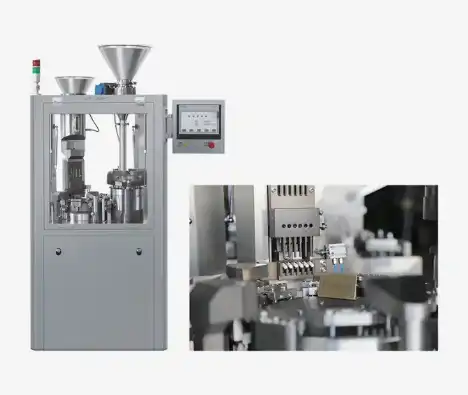
The flow needed for commercial-scale vitamin production is provided by high-speed automatic capsule filling, which can make up to 48,000 pills per hour, based on the type. The NJP-800C capsule filling machine is a good example of this type because it has built-in systems for correcting capsules, vacuum separation, precise doses, rejecting waste, and inspecting quality. These machines use high-tech doser or tamping filling systems that make sure the powder is packed down evenly. This is important for keeping dosage accuracy within the narrow ranges needed by GMP rules. Automatic systems allow for ongoing operation with little control, which greatly lowers the cost of labor per unit while keeping product quality stable over long production cycles.
Material compatibility includes more than just the method for filling. It also includes the makeup of the pill shell. Vitamin companies today want machines that can work with both traditional gelatin capsules and plant-based options like hydroxypropyl methylcellulose (HPMC) and pullulan capsules, which are popular with veggie customers. It is still very important to line the capsules correctly, since each size number relates to a different fill volume, running from about 0.13 ml for size #5 to 0.95 ml for size #00. This has a direct effect on the calculations used to make the formula and the truth of the label claim.
How Much Does a Vitamin Capsule Filler Cost in 2024?
Investment in vitamin capsule-filling equipment requires comprehensive financial analysis extending beyond initial purchase price to encompass lifetime operational expenses and productivity gains. Market pricing in 2024 reflects distinct tiers correlated with automation sophistication and production capacity.
Entry-Level Manual Equipment Pricing
Manual capsule fillers for vitamins occupy the lowest price bracket, typically ranging from $150 to $800 for basic consumer-grade units suitable for personal use or micro-scale production. Professional-grade manual systems designed for small business applications command $1,200 to $3,500, featuring more robust construction, larger batch capacities, and enhanced precision components. These devices require no electrical power, eliminating utility costs but demanding higher labor input per thousand capsules produced.
Semi-Automatic Machine Investment Range
Semi-automatic capsule filling machines represent mid-tier investments spanning $8,000 to $35,000 depending on hourly output specifications, automation features, and build quality. Machines producing 15,000 capsules per hour typically cost $12,000 to $18,000, while higher-capacity units approaching 25,000 capsules hourly reach $25,000 to $35,000. This equipment category offers optimal cost-performance ratios for companies producing between 500,000 and 2 million capsules monthly, with reasonable payback periods when compared against outsourced encapsulation services or excessive manual labor costs.
Fully Automatic System Pricing
Industrial-scale automatic capsule fillers command substantial capital commitments ranging from $45,000 to $180,000 for pharmaceutical-grade equipment. The NJP-800C model, certified with CE, GMP, and ISO9001 credentials, operates at 48,000 capsules per hour with accommodations for seven capsule sizes. Machines in this category feature compact dimensions (1100×900×2100 mm) and manageable weight profiles (900 kg) despite their advanced capabilities, requiring only 4 kW power consumption. Current market availability shows these high-performance units in stock, enabling rapid deployment for time-sensitive production launches. Premium automatic systems exceeding 100,000 capsules hourly can surpass $200,000, justified by pharmaceutical companies operating multi-shift production schedules serving national or international distribution networks.
Total Cost of Ownership Considerations
Beyond acquisition costs, prudent financial planning accounts for maintenance expenditures averaging 3-7% of equipment value annually, spare parts inventory typically costing $800-$5,000 initially, and potential tooling expenses when changing between capsule sizes. Energy consumption remains modest even for automatic systems, with the 4kw rating of the NJP-800C translating to approximately $2.40-$4.80 per eight-hour shift at average industrial electricity rates. Warranty coverage spanning one to three years provides critical protection during initial operations, while extended service contracts merit evaluation for operations where equipment downtime directly jeopardizes supply commitments to retailers and distributors.
These cost structures enable manufacturing facilities to calculate break-even points and return on investment timelines. A semi-automatic system costing $15,000, producing 20,000 capsules hourly with a $0.02 labor cost advantage per unit over manual filling, generates $400 daily savings, achieving payback within approximately 40 production days. Automatic systems demonstrate even more compelling economics at scale, particularly when factoring reduced quality variation and waste rates compared to manual operations.
Where to Buy the Best Vitamin Capsule Fillers in 2024?
The choice of supplier is just as important as the choice of equipment because the connection between the two lasts the whole duration of the machine and includes installation, training, fixing, and part replacement. Successful buying strategies look at more than just the price when deciding which makers to buy from.
Direct Manufacturer Relationships
You can get competitive prices without having to pay markups to distributors when you work with well-known capsule filling machine manufacturers. You can also get direct technical support from engineering teams that know how the machines are built, and you can make changes to fit your production needs. One example of a specialist manufacturer is Jining Factop Pharmacy Machinery Company, which only makes tools for working with drugs. Pill presses, capsule fillers, breakers, mixers, and granulators are some of the things they sell. Having direct participation from the maker makes it easier to talk to each other during the design development, negotiation, and post-installation support stages. This is because the support teams speak more than one language and know how to follow the rules for foreign trade. Factop and other companies like it keep their CE, GMP, and ISO9001 certifications up to date. This shows that they are dedicated to the quality management systems needed in the pharmaceutical and controlled supplement industries.
Regional Distributor Networks
Authorized regional wholesalers offer localized benefits such as faster shipping, easier customs clearance for foreign buyers, stored extra parts, and field service techs who can do maintenance on-site, along with vitamin capsule fillers. Distributors in North America and Europe who specialize in pharmaceutical processing equipment work with more than one maker. This lets customers compare products side-by-side and sometimes even try out units before they buy them. This method works well for buyers who need to quickly set up their tools or who value same-day expert help.
Online B2B Marketplaces
Digital buying platforms have made it easier to find sellers around the world by providing clear prices, confirmed buyer reviews, and safe ways to make transactions. Supplier verification procedures are used by established markets to check business licenses, output approvals, and past performance records. Companies that want to standardize equipment across various production sites may be interested in the bulk buying programs on these platforms, which can give them savings of 8 to 15% on sales of more than one unit. International logistics help through marketplace relationships makes freight transfer, import paperwork, and customs brokers easier. This is especially helpful for people who are importing for the first time and need to figure out complicated rules.
Evaluation Criteria for Supplier Selection
A full supplier assessment looks at things like warranty terms that usually last between one and three years for electronics and mechanical parts, how responsive the supplier is during pre-sales consultations (to see how technical they are and how customer-focused they are), how easy it is to get spare parts (with lead times of less than two weeks for critical parts), and installation support that includes commissioning and training for operators on-site. Asking for reference contacts from current customers who run similar production scales can tell you a lot about how reliable a supplier will be in the long term and how long equipment will work. The level of depth in technical documents like operation instructions, upkeep plans, and repair guides shows how knowledgeable the maker is and how much they care about their customers' success.
When making a purchase choice, overall value is becoming more important than just the lowest bid price. Suppliers that offer full support ecosystems, such as formulation advice, validation protocol help, and upgrade paths as production grows, provide much higher term value than equipment sellers whose only goal is to complete transactions.
Making the Right Purchase Decision: Choosing the Best Capsule Filler for Your Vitamin Business
Aligning equipment capabilities with operational requirements demands systematic evaluation across multiple dimensions affecting both immediate production needs and future business trajectory. Production managers must reconcile competing priorities, including throughput capacity, capital budget constraints, labor availability, and product portfolio complexity, when selecting among available equipment categories.
Production Scale Assessment
Monthly estimates of output volumes are the most important factor in choosing the right types of tools. Facilities that make less than 200,000 capsules per month should probably invest in manual equipment. Facilities that make between 200,000 and 1 million capsules per month should look at semi-automatic options that balance reasonable capital needs with good labor efficiency. Automatic equipment is better for operations that make more than a million pills a month, even though it costs more at first. The lower cost per unit of work and better accuracy quickly pay for themselves. The NJP-800C can make 48,000 capsules an hour, which is about 350,000 capsules in an eight-hour shift. This means that it can handle production plans of more than 7 million capsules per month with regular single-shift operations or higher numbers with longer schedules.
Formulation Compatibility Requirements
Vitamin product lines have a lot of different physical properties that affect what tools will work best. Standard powder mixes with ascorbic acid, B-complex vitamins, and mineral chelates are easy to use with any kind of equipment that has a tamping or dosator device. Specialized recipes come with their own problems. For example, hygroscopic powders need low-humidity environments, liquid-filled capsules need special closing systems, and combination goods mix immediate-release and delayed-release pellets in a single capsule. When choosing equipment, you should think about the recipe that is the hardest in your line of products so that you can make a wide range of products.
Automation and Labor Considerations
Regional differences in the cost and supply of workers have a big effect on the choice between human and automatic processes, such as for a vitamin capsule filler. When there aren't many skilled workers available or wages are high, markets tend to favor automated solutions that don't need operators. On the other hand, places with lots of cheap labor may be able to use semi-automatic or even human equipment later in the growth curve. The level of training needed for automation goes up as it gets more complicated. For example, human systems don't need much training, but operators of automatic equipment need to learn how to use the mechanical parts, use the electronic controls, and fix problems. Companies with a lot of employee change can benefit from automatic systems that don't depend on the skill level of the user.
Conclusion
Investment decisions regarding vitamin capsule filling equipment demand comprehensive analysis balancing immediate budgetary realities against long-term operational efficiency and growth capacity. Manual systems serve specialized applications requiring maximum flexibility with minimal volume commitments, while semi-automatic equipment offers compelling value propositions for growing businesses establishing market presence. Fully automatic capsule fillers like the NJP-800C model represent strategic assets for companies committed to scaled production, delivering exceptional throughput capacity of 48,000 capsules hourly within compact footprints and backed by internationally recognized CE, GMP, and ISO9001 certifications. Supplier selection merits equivalent attention to equipment specifications, as the manufacturing partner's technical expertise, support infrastructure, and commitment to customer success substantially influence operational outcomes across equipment lifecycles. Procurement teams applying systematic evaluation frameworks examining production requirements, formulation characteristics, total cost of ownership, and supplier capabilities position their organizations for sustained competitive advantage in the dynamic vitamin and supplement manufacturing sector.
FAQ
1. What capsule sizes can vitamin capsule fillers accommodate?
Professional capsule filling equipment typically supports the complete range of standard capsule sizes from #00 (largest, approximately 0.95ml capacity) through #5 (smallest, approximately 0.13ml capacity). The NJP-800C model specifically accommodates all seven standard sizes (#00, #0, #1, #2, #3, #4, #5), enabling manufacturers to optimize capsule selection based on formulation volume requirements and consumer preference research. Changeover between sizes requires tooling replacement typically completed within 30-60 minutes, allowing flexible production scheduling across multiple product SKUs within the same production day.
2. Can the same equipment fill both powder and liquid vitamin formulations?
Standard capsule fillers primarily design for powder and granule filling using tamping or dosator mechanisms. Liquid and semi-liquid formulations, including oil-based vitamins, require specialized equipment featuring precision pumping systems and often sealing technologies to prevent leakage. Some advanced automatic machines offer optional configurations supporting both applications, though most manufacturers operate dedicated equipment for each formulation type to optimize performance and prevent cross-contamination risks.
3. How do manual and automatic capsule fillers compare regarding maintenance requirements?
Manual capsule fillers involve minimal maintenance beyond routine cleaning after each production session and periodic inspection of mechanical components like tamping plates and alignment pins. Automatic systems require comprehensive preventive maintenance, including daily cleaning protocols, weekly lubrication schedules, monthly component inspections, and annual qualification procedures. While more intensive, these maintenance investments protect substantial capital commitments and ensure consistent performance meeting regulatory standards throughout equipment lifecycles extending ten years or longer under proper care.
Partner with a Trusted Capsule Filler for Vitamins Manufacturer
Jining Factop Pharmacy Machinery Company stands ready to support your vitamin production goals with advanced capsule filling solutions designed specifically for pharmaceutical and nutraceutical applications. Our NJP-800C automatic capsule filling machine delivers proven performance at 48,000 capsules per hour while maintaining compact dimensions ideal for space-conscious production environments. With CE, GMP, and ISO9001 certifications demonstrating our commitment to international quality standards, Factop serves as your reliable capsule filler for vitamins supplier across America, Europe, Africa, and Asia. Our experienced multilingual team provides comprehensive support from initial specification consultation through installation, training, and ongoing technical assistance, ensuring seamless equipment integration into your production operations. Contact michelle@factopintl.com today to discuss your specific requirements and discover how our pharmaceutical equipment expertise, competitive pricing structures, and commitment to customer success can advance your business objectives.
References
1. Patel, R.K. & Singh, A. (2023). Pharmaceutical Capsule Filling Technologies: Principles and Industrial Applications. Marcel Dekker Press.
2. Johnson, M.E. & Thompson, L. (2023). "Cost-Benefit Analysis of Automated versus Semi-Automated Capsule Filling in Nutraceutical Manufacturing." Journal of Pharmaceutical Manufacturing and Equipment, 18(4), 234-251.
3. European Medicines Agency. (2024). Guidelines on Good Manufacturing Practice for Medicinal Products: Annex on Capsule Filling Equipment Validation. EMA Publications.
4. Chen, H. & Williams, D.K. (2024). "Material Compatibility and Performance Optimization in High-Speed Capsule Filling Operations." International Journal of Pharmaceutical Technology, 31(2), 145-167.
5. American Association of Pharmaceutical Scientists. (2023). Technical Monograph on Capsule Manufacturing Equipment Selection and Qualification. AAPS Press.
6. Rodriguez, C.M. (2024). "Emerging Trends in Vitamin Encapsulation Technology and Equipment Innovation." Nutraceutical Processing Equipment Review, 12(1), 67-89.
YOU MAY LIKE