
Top Tips to Maintain and Operate Your Supplement Capsule Filler for Optimal Performance
2026-04-24 11:00:00
It's important to know how to take care of your vitamin pill filler, including the supplement capsule filler, so that it keeps working well. How fast you make things, how well they work, and how long they last all depend on how daily you clean and fix your tools. It doesn't matter if you use slow machines that only make a few items an hour or fast machines that make thousands of items an hour. As the manufacturer tells them to, smart workers clean the machine and check the parts often to avoid expensive downtime and keep things going smoothly, including the supplement capsule filler. They also make sure that every capsule meets high standards. If you follow these tips, you can plan your production ahead of time and avoid having to fix problems when it's time to pack the pills. It will help you make more things and keep your money safe.
Introduction
Supplement capsule fillers are an important part of making food supplements because they allow powders, granules, and semi-solid mixtures to be precisely enclosed inside capsules. Equipment stability has a direct effect on production plans, cost structures, and compliance results for B2B buying managers, production engineers, and quality control experts in the food and drug industries. Modern facilities need tools that consistently deliver fill weights, reduce product waste, and can change to different pill shapes while still meeting strict cleanliness standards.
In Europe, the US, and developing countries, where competition is high, producers have to find a balance between speed and accuracy. When equipment breaks down, it can cause production to stop, orders to be missed, product quality to be weakened, and client relationships to become tense. These problems can be turned into competitive benefits by learning the best ways to run a business and do repairs. This guide gives you useful information that you can use right away to increase production, lower unexpected downtime, and make tools last longer by using tried-and-true methods tested in real-life production settings.
Understanding Your Supplement Capsule Filler: Types and Operation Basics
Manual, Semi-Automatic, and Automatic Systems
Manual capsule fills can usually handle around 800 capsules per cycle, which makes them good for research labs, small-scale makers, and developing new specialized medicines. Hand-operated devices are used to add empty capsules, fill them with powdered ingredients, and seal the caps. These methods are flexible enough for small production runs without requiring a lot of money to be spent.
Semi-automatic equipment is in between fully automated and human processes. These combination machines do the filling and rearranging of capsules automatically, but they still need a person to add them and check the quality. Compared to human systems, automatic systems can make a lot more, but workers still have control over important quality factors. Stainless steel and non-corrosive materials that meet pharmaceutical cleanliness standards are often used in the building. This makes it easy to switch between different formulas.
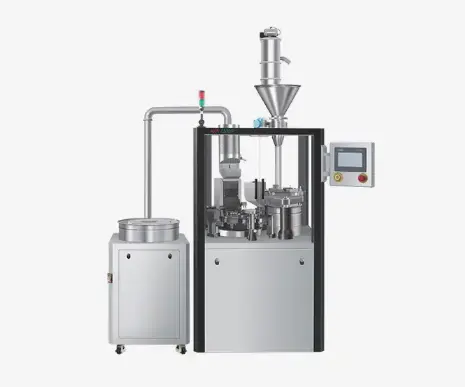
Automatic pill fills are the most efficient way to make things. Our NJP-1200D type can make 1,200 pills per minute. It is intended for use in medicinal and food settings. These systems work with little help from people because they use computers to do things like separating, filling, and closing capsules. Upstream powder handling systems and downstream packing lines work smoothly with high-speed automatic machines, creating constant production processes that make the most of the facility's output.
Core Operating Principles
The first step in filling a capsule is correction, which is when the joined capsule bodies and caps go into distribution plates with circular openings. When capsules fall, they land on horizontal and vertical forks that change their position so they are ready to be separated. Then, vacuum separators separate the caps from the bodies and move each to its own spot.
Filling processes are different depending on how the mixture is made. When tamping filling, powder is pressed into bodies with compression punches. Material is moved between punches to make the consistency smooth. Dosator devices put tubes into powder hoppers. Inside the hoppers, tools squeeze the ingredients before putting them into capsule bodies. Using negative pressure, vacuum filling pulls measured amounts straight into dose tubes. This works especially well for fine powders. Once the capsules are full, automatic closing mechanisms put the caps back on the bodies, and the final capsules fall into gathering trays. Built-in rejecting systems find units that aren't filled or packed properly and get rid of them, keeping quality standards high.
Capsule Compatibility and Material Considerations
Modern fills can handle capsule sizes from 0.000 (the biggest) to 5 (the smallest), and they have quick-change features that make it easy to switch between sizes. Supplement capsule filler can be part of such modern fills. Gelatin capsules are still commonly used in many situations, but vegan options made from pullulan and hydroxypropyl methylcellulose (HPMC) are becoming more popular as people's tastes change. To make sure that the equipment works with these other materials, you need to pay attention to how sensitive it is to moisture and how well it seals. For long-term flexibility without having to spend more money on new equipment, production engineers should make sure that the specs of their machines match both the current needs for capsules and the changes they expect to see in future formulations.
Top Tips for Operating Your Supplement Capsule Filler Efficiently
Pre-Operation Preparation Checklist
Careful planning keeps problems from happening and ensures quality. Clean any areas that people touch with the right pharmaceutical-grade sanitizers and get rid of any powder that is still there from earlier runs to stop the spread of germs. Make sure there are enough capsules in the hoppers for the planned production run. Look for flaws in the pills, such as cracks, bumps, or color changes. Test runs with sample materials and goal fill weights should be done on the dose systems before they are put into full production to make sure they work right.
Make sure that all of the safety guards are still in place and that the start/stop buttons still work. There should be just the right amount of oil on the points where moving parts touch each other so that dust doesn't stick to them. When switching from one type of vitamin to another, it's important to check the batch paperwork to make sure that the new ingredients match the recipe.
Optimizing Production Parameters
To get regular fill weights, you have to carefully change the parameters. How much material gets into each pill depends on the depth of the dosing disc, the tamping pressure, and the vacuum strength. Start with the settings that the maker suggests, and then make small changes based on how much filling you actually need. Statistical process control methods help find trends before they cause goods to not meet specifications.
Production speed makes workers want to get more done, but going too fast can hurt accuracy and cause more rejects. At 1,200 pills per minute, the NJP-1200D model strikes a good mix between speed and accuracy. However, the best choices rely on how the powder flows and how complicated the recipe is. Materials that absorb moisture, fine powders that tend to dust, or mixtures that are hard to compress may need slower speeds to keep the quality. Keep an eye on rejection rates as speed markers. Rising rejects mean that parameters or formulations need to be changed.
Safety Protocol Compliance
This is to make sure that you follow the rules and keep your workers safe. It is important to make sure that power sources are turned off before anyone gets to the inside of things that need to be fixed. Always make sure that everyone who works with powdered goods has the right safety gear, like safety glasses, gloves, and dust masks. People should learn what to do in an emergency, how to carefully lift things, and how to spot risks that are unique to activities that fill capsules when they are trained.
Always keep track of safety events and close calls. Then, use them to figure out how to make things better. Risks can be found before they cause accidents by having trained professionals check for them on a regular basis. People who see safety problems should be able to stop working. This will help keep them safe and show that you care about their health and happiness.
Essential Maintenance Tips to Extend Capsule Filler Lifespan
Daily Cleaning and Inspection Routines
When you clean up at the end of each shift, you stop the growth of material that wears down parts faster. Measurement discs, tamping pins, pill trays, and the supplement capsule filler are some of the parts that can be taken off and cleaned. Sometimes powder gets stuck in cracks and other places that brushes can't reach. Compressed air can get rid of that powder. Look for signs of wear on the gaskets and seals. Seals that are worn out let powder get into the moving parts.
When parts are being cleaned, early warning signs of wear and tear can be seen. Cuts in metal, odd wear on moving parts, or links that aren't tight could all be signs that something is wrong with shaking. In repair logs, write down what you find and keep track of how each part is doing over time to see when it needs to be changed before it breaks. By being cautious, this way cuts down on unplanned breaks that slow down production.
Lubrication and Component Servicing
It keeps things moving easily, cuts down on friction, and makes bearings last longer. See the directions on the lube's package to find out what kind to use and how often. Dust can build up, or seals can break if you use the wrong grease. For the pivot points, cam followers, and bearing surfaces, use a small amount of lube. Wipe off any extra that might touch the product surfaces.
No matter how they look, important parts need to be changed on a regular basis. The fill weight isn't always the same because the springs in the dosing discs lose force over time. The diaphragms of vacuum pumps get tiny tears that make them less effective at sucking. O-rings and seals get harder and less good at closing as they age. If you keep these worn-out parts on hand, you won't have to wait for spares for long periods of time. Putting together new automatic systems like the NJP-1200D is easy when the parts come in perfect shape after being wrapped in export board.
Troubleshooting Common Operational Issues
Fill weights that don't stay the same are usually caused by problems with powder flow or worn dose parts. Check the powder's moisture content and particle size distribution, because changes in these areas can affect how it flows. Check the dose disc for signs of wear and make sure that vacuum systems keep the pressure levels that were set. The wear patterns on tamping devices should be even. If they aren't, it means there are alignment problems that need to be fixed by a professional.
Capsule jams usually happen when the capsules are not oriented correctly during correction or when broken capsules enter the system. Check the time of the feed systems and the quality of the capsules that come from the sources. Things in the environment, like too much humidity, can make capsules sticky, which makes them more likely to jam. Climate-controlled production settings help keep the capsules' properties constant. Power outages or electrical problems need to be looked into right away by experienced techs, because a wrong diagnosis can put people in danger or damage a lot of equipment.
Comparing Manual and Automatic Supplement Capsule Fillers for Optimal Usage
Production Scale and Throughput Requirements
Manual fillers serve niche applications where flexibility outweighs production volume. Research laboratories developing new formulations benefit from the ability to produce small batches without committing to full production runs. Contract manufacturers handling multiple low-volume products find manual systems economical, as changeover between formulations requires minimal downtime. The approximately 300-capsule capacity per cycle suits these applications while maintaining manageable capital costs.
Automatic systems like the NJP-1200D transform economics for medium to large-scale producers. At 1,200 capsules per minute, a single shift produces over 400,000 units, meeting distribution demands for growing brands. This throughput capacity justifies higher equipment investment through labor reduction and improved consistency. Pharmaceutical companies and established supplement brands operating in competitive markets rely on automatic equipment to maintain cost structures that support market pricing while preserving profit margins.
Integration and Workflow Automation
Stand-alone manual fillers require operator attention throughout the production cycle, limiting simultaneous operations. Semi-automatic equipment allows operators to monitor multiple stations or perform quality checks while filling continues. Fully automatic systems integrate with powder handling, weight checking, and packaging equipment, creating production lines where material enters as raw powder and exits as finished packaged products.
This integration reduces contamination risk by minimizing material transfers and limiting human contact with intermediate products. Automated data collection documents production parameters for each batch, supporting regulatory compliance and quality investigations. Modern facilities designing new production lines should consider total system integration rather than isolated equipment purchases, as coordinated workflows deliver compounding efficiency gains.
Decision Framework for Equipment Selection
Matching equipment capabilities to business objectives prevents underutilization or capacity constraints. Startups and small brands experiencing market validation should evaluate growth trajectories before committing to automatic systems. Leasing or toll manufacturing arrangements may provide flexibility during uncertain growth phases. Established producers expanding product lines benefit from versatile automatic equipment that handles diverse formulations without extensive changeover procedures.
Budget considerations extend beyond purchase price to include installation, training, validation, and ongoing maintenance costs for the supplement capsule filler. Total cost of ownership calculations should project five to ten-year timelines, accounting for anticipated volume growth and formulation complexity changes. Suppliers offering comprehensive support packages including operator training, spare parts programs, and technical consultation, add value that justifies premium pricing for quality-focused buyers.
Conclusion
Optimal capsule filler performance stems from understanding equipment capabilities, implementing disciplined operational procedures, and maintaining proactive maintenance schedules. Whether operating manual systems for specialized applications or automatic equipment for high-volume production, consistent attention to machine condition prevents costly failures while ensuring product quality. Smart manufacturers view their capsule filling equipment as long-term investments requiring thoughtful selection, proper training, and ongoing care. The competitive advantage gained through reliable, efficient production directly contributes to market success and customer satisfaction. By applying the strategies outlined in this guide, you position your operation for sustained growth while protecting equipment investments that serve your business for years ahead.
FAQ
1. What distinguishes manual from automatic capsule fillers?
Manual capsule fillers require operators to perform each process step, including loading, filling, and capsule closing, typically producing around 800 capsules per cycle. These systems suit small-scale production, research applications, or specialized low-volume products. Automatic fillers like the NJP-1200D operate with minimal human intervention, handling capsule rectification, separation, filling, and sealing through programmed sequences at rates reaching 1,200 capsules per minute. Automatic systems deliver consistent quality at high volumes, justifying their higher investment through labor savings and throughput capacity that manual equipment cannot match.
2. How frequently should maintenance be performed?
Daily cleaning after production runs prevents cross-contamination and removes powder buildup from components. Weekly inspections should examine wear patterns on dosing mechanisms, capsule orientation systems, and sealing stations. Monthly maintenance includes thorough lubrication of moving parts and detailed inspection of critical components like vacuum pumps and motor assemblies. Annual comprehensive servicing by qualified technicians addresses internal mechanisms requiring specialized tools or expertise. Adhering to manufacturer-specified maintenance schedules maximizes equipment lifespan while minimizing unexpected failures.
3. Can one machine handle multiple capsule sizes and supplement types?
Modern capsule fillers accommodate various sizes through adjustable components and quick-change tooling. Switching between capsule sizes typically requires dosing disc replacement and filling parameter adjustment, achievable within one to two hours depending on equipment design. Different supplement formulations can be processed provided powder characteristics fall within equipment specifications. Challenging materials like extremely fine powders, hygroscopic ingredients, or poor-flowing compounds may require specialized dosing systems or formulation modifications to achieve consistent results across standard equipment.
Partnering with Factop for Advanced Capsule Filling Solutions
Your company needs equipment that is always reliable, performs precisely, and has a flexible capacity. The NJP-1200D automatic capsule filler from Factop meets these needs and gives pharmaceutical and food companies the freedom they need to succeed in today's markets. Our engineering team uses decades of experience with pharmacy equipment, along with cutting-edge robotics technology, to come up with solutions that lower costs while improving product quality.
As a well-known company that makes vitamin pill fillers, including the supplement capsule filler, we know how hard it is for production managers to meet both quality and flow standards. The NJP-1200D can accurately handle 1,200 pills per minute and can be used for both medicine and health purposes. Our export wooden packing makes sure that your goods get delivered safely around the world, protecting your investment during shipping. We've made relationships that last in America, Europe, South Africa, and Asia by putting customer success first through quick expert help and real teamwork.
Connect with our team to discuss your specific production requirements. Email michelle@factopintl.com to arrange a consultation where we'll analyze your capacity needs, formulation characteristics, and growth projections. We'll recommend configurations matching your operational goals while respecting budget constraints.
References
1. Patel, R. & Johnson, M. (2022). Pharmaceutical Capsule Filling Technology: Principles and Industrial Applications. Academic Press.
2. Thompson, D. (2021). "Maintenance Strategies for High-Speed Pharmaceutical Equipment." Journal of Manufacturing Systems, 58(2), 145-162.
3. Wilson, K. & Chen, L. (2023). Automated Dosing Systems in Nutraceutical Manufacturing. Springer Publishing.
4. American Pharmaceutical Machinery Association (2022). Best Practices Guide for Capsule Filling Operations. APMA Technical Standards.
5. Rodriguez, A. (2021). "Comparative Analysis of Manual and Automatic Capsule Filling Systems." International Journal of Pharmaceutical Engineering, 34(4), 287-304.
6. European Society for Pharmaceutical Engineering (2023). Equipment Validation and Maintenance Protocols for Capsule Manufacturing. ESPE Industry Guidelines.
YOU MAY LIKE