
Single Punch vs Rotary Tablet Machine: Advantages, Disadvantages, and Which One Suits Your Needs
2026-02-04 15:35:43
Choosing the right tablet press technology has a big effect on how quickly and well you can make things, how good the products are, and how much it costs to run your business. Single-punch tablet machines are great for small-scale production and research and development because they are easy to use and can be adjusted to fit specific formulas. On the other hand, rotary tablet machines work better and can make more things at once. Learn how these technologies work, how much they cost, and how much production they can handle. This will help you make smart purchases that meet the needs of your business now and in the future.

Introduction
Part of the food preparation, nutrition, and medicine businesses is making tablets. This is because tablets make doses that are consistent and easy to measure out of powder mixes. How quickly and well things meet quality standards and how much money the business makes will depend on the tablet press technology chosen. Lately, businesses have to meet strict deadlines, lower costs, and make sure they meet high-quality standards all at the same time.
Choosing between single-punch and rotating tablet compression systems is a big purchase decision that will have an effect on how well the business does in the long run. Each technology has its own benefits that make it better for a certain type of production, from small-scale study projects in the lab to large-scale business production. Procurement managers can make smart investments in tools by understanding the basic differences in how things work, what they can make, and how much they cost.
This in-depth study looks at the technical details, operating advantages, and usefulness restrictions of both single-punch and rotating-tablet machines. We look at real-world uses in the chemical, food processing, and pharmaceutical industries. This gives buying teams the information they need to weigh equipment choices against their budget and production needs.
Understanding Tablet Press Types: Single Punch vs. Rotary Tablet Machines
Single Punch Tablet Press Fundamentals
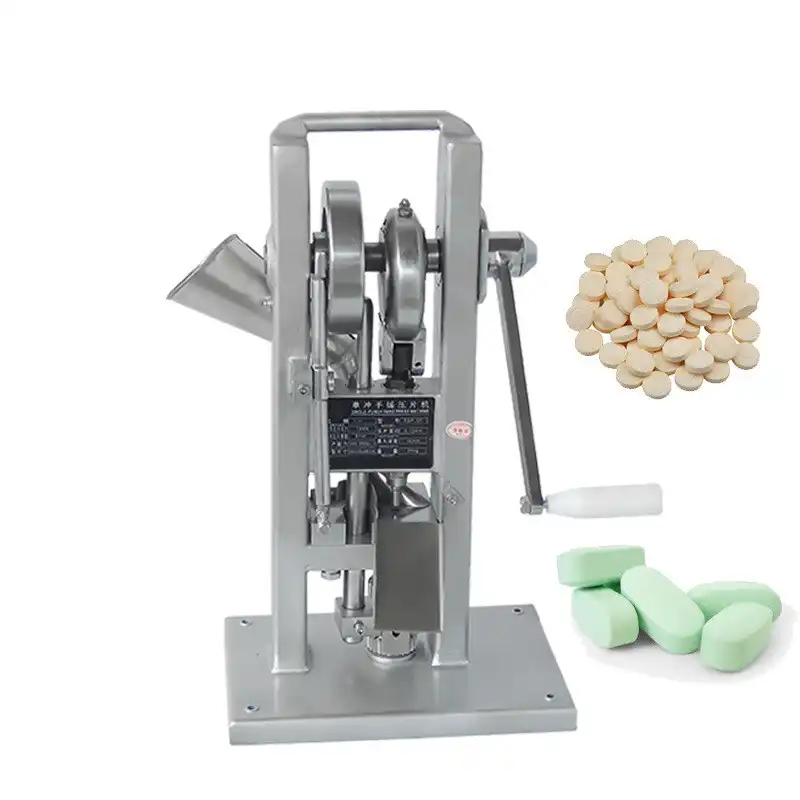
With just one set of upper and lower holes in a single die station, single-punch tablet machines use a simple compression device to work. Powder is fed into the die hole to start the process. The material is then compressed by moving a vertical punch, and the process ends with the tablet being ejected. Single-punch systems are great for small-batch production, study, and special formulas that need to be controlled very precisely because they work in a straight line.
The TDP1.5 single-punch tablet press is a good example of this technology because it is small and works well. This type can make between 4,500 and 6,000 pieces per hour and has a maximum press width of 12 mm. It can be used for pharmaceutical research, small-scale production, and test batch manufacturing. The CE, ISO9001, and GMP approvals for the machine make sure that it meets world quality standards.
Rotary Tablet Machine Architecture
Multiple punch sets work at the same time around a spinning shaft in multi-station compression systems used by rotary tablet machines. This design allows for constant feeding, compression, and release, which greatly increases the amount of work that can be done compared to single-punch options. The rotating device lets you do both pre-compression and main compression, which makes the uniformity and quality control of the tablets better.
Modern rotating systems have high-tech features like electric speed control, weight change that is done automatically, and the ability to watch in real time. With quick-change cutting systems, these machines can handle tablets of different sizes and forms, making them useful for making a wide range of products in pharmacy and nutritional settings.
Operational Contrasts and Production Impact
Because these technologies work in fundamentally different ways, they have different performance patterns that work best in certain industrial situations. Single-punch machines are very flexible and easy to use. They let workers change settings and formulas fast and with little downtime. Their sequential action, on the other hand, slows down output and may cause pill features to vary.
Because they are designed to run continuously, rotary tablet machines can consistently make a lot of things. The multi-station compression improves the consistency and spread of force on the tablet, which is very important for meeting pharmacy quality standards. Advanced technology in rotary tablet machines makes operators less necessary while still allowing precise control over compression settings during long production runs.
Advantages and Disadvantages of Single Punch and Rotary Tablet Machines
Single Punch Machine Benefits and Limitations
Single-punch tablet presses have a lot of great benefits that make them a good choice for some tasks and businesses that want to save money. These tools are very flexible and can handle a wide range of formulas, from normal medicinal pills to plant preparations and study chemicals. The simple design makes it easy for workers to get good at it quickly, which cuts down on training needs and operating complexity.
One of the best things about single-punch technology is that it is cost-effective, since it requires less original investment and less complicated upkeep. The straightforward mechanical design cuts down on possible weak spots and makes it easy to find problems and fix them. When freedom is more important than speed, like in custom recipe development and specialized medicinal uses, these tools are great for small-batch production.
However, single-punch machines have built-in problems that make them less useful in high-volume industrial settings. They can't be used for commercial-scale output because the sequential process greatly reduces the amount of work that can be done. Human mistake and uneven production can happen when parts are operated by hand, and the single-station design doesn't allow for the complex control systems that are common in rotating options.
Rotary Machine Advantages and Constraints
Because they can run automatically and have multiple stations, rotary tablet machines are very good at getting work done quickly. When set up in big setups, these devices can make more than a million pills an hour, meeting the high output needs of pharmaceutical and nutrition companies. The constant compression process makes sure that tablets are more consistent and that quality control is better than with single-punch methods.
In modern factories, spinning tools stand out because they use advanced technology. Integrated tracking systems give real-time information on the weight, hardness, and dimensions of tablets, so changes can be made to the process right away and quality can be assured. The automatic process cuts down on the need for workers while keeping production standards the same over long manufacturing runs.
Rotary tablet machine tools are limited by the amount of money they require and how hard they are to operate. Smaller factories and research centers have trouble because they need to pay more for starting cash and have upkeep experts who know how to do certain things. The complex mechanical and electrical systems of the Rotary Tablet Machine need to be run and maintained by trained professionals, which raises the costs and technical dependencies of operations over time.
Key Factors to Consider When Choosing Between Single Punch and Rotary Tablet Machines
Production Scale Assessment
The main thing that determines which tablet press technology to use is the amount of production that needs to be done. Most of the time, single-punch machines are more cost-effective and useful for businesses that make fewer than 100,000 screens per day. These machines can handle enough output for study purposes, trial production, and custom formulas, without being as complicated or expensive as rotating systems.
Rotary tablet machines are very useful for large-scale manufacturing processes that need millions of tablets every day. The constant operation and multi-station design give it the high output needed for making pharmaceuticals for sale while keeping the uniformity needed to meet regulatory standards. To make sure tools can be used in more places, production planning teams have to look at both present volume needs and expected growth.
Product Complexity and Formulation Requirements
The features of the tablet mixture have a big impact on the choice of tools. Both single-punch and rotation methods work well with simple formulas that have good flow and compression features. But recipes that are hard to work with because they contain plant extracts, chemicals that are sensitive to moisture, or special coating needs may benefit from the exact control that single-punch machines offer during the research process.
Rotary tablet makers are very useful for making complex multi-layer pills, formulas that release drugs slowly, and goods that need specific compression profiles. These systems offer the advanced tracking and control needed to keep quality consistent across big production runs while still meeting strict pharmacy standards.
Budget and Infrastructure Considerations
The costs of buying new equipment, installing it, keeping it in good shape, and paying for user training are all part of financial planning. Single-punch machines usually need less money to buy and can work in smaller facilities with only the most basic utilities. For smaller businesses, the lower total cost of ownership is due to easier upkeep processes and extra parts that are easy to find.
When you buy a rotary tablet machine, you have to spend a lot of money that goes beyond the cost of the machine itself. The total cost of the project goes up because the facility needs to be changed for proper installation, there are special energy needs, and there are long training programs for operators. But for high-volume production operations, the increased speed and lower worker needs often make these investments worth it.
Procurement Considerations for Global B2B Buyers
Supplier Evaluation and Selection Criteria
Successful tablet press procurement requires a comprehensive supplier assessment covering technical capabilities, manufacturing quality, and service support infrastructure. Established manufacturers like Fette, Korsch, and Bosch bring decades of engineering expertise and global service networks, while specialized suppliers like SaintyCo and emerging manufacturers offer competitive pricing and innovative solutions tailored to specific market segments.
Supplier evaluation should encompass manufacturing certifications, quality management systems, and compliance with pharmaceutical manufacturing standards. ISO 9001 quality certification, GMP compliance, and FDA registration status indicate supplier commitment to quality and regulatory adherence. Technical support capabilities, including installation services, operator training, and ongoing maintenance support, significantly impact long-term operational success.
Service and Support Infrastructure
Post-purchase support represents a critical factor in tablet press procurement decisions, as equipment downtime directly impacts production schedules and revenue generation. Suppliers offering comprehensive service packages, including preventive maintenance, emergency repair services, and readily available spare parts, provide significant value for manufacturing operations. Local service presence or authorized service partners reduce response times and minimize production disruptions.
Training programs and technical documentation quality influence operational efficiency and equipment longevity. Comprehensive operator training, maintenance procedures, and troubleshooting guides enable in-house teams to maximize equipment performance while minimizing external service dependencies. Regular software updates and technology upgrades ensure equipment remains current with evolving manufacturing standards and regulatory requirements.
Pricing Models and Cost Analysis
Tablet press procurement involves complex financial considerations extending beyond initial purchase prices. Leasing options provide access to advanced equipment without large capital investments while preserving cash flow for other operational requirements. Flexible financing arrangements enable smaller manufacturers to acquire sophisticated equipment while spreading costs across multiple budget cycles.
Total cost of ownership analysis should include energy consumption, maintenance costs, spare parts requirements, and operator training expenses. Rotary tablet machines often demonstrate superior long-term economics for high-volume operations despite higher initial costs, while single-punch machines provide cost advantages for smaller-scale applications. Procurement teams must evaluate these factors against their specific operational profiles and financial constraints.
Conclusion
The choice between single-punch and rotary tablet machines depends on production scale, formulation requirements, and operational objectives. Single-punch systems excel in research environments and small-scale production with their simplicity and cost-effectiveness. Rotary tablet machines deliver superior performance for high-volume manufacturing with advanced automation and consistency. Successful procurement requires careful evaluation of current needs, future growth plans, and total cost of ownership. Partnering with experienced manufacturers like Factop ensures access to quality equipment, comprehensive support, and technical expertise necessary for long-term manufacturing success.
FAQ
1. What are the main differences between single-punch and rotary tablet machines?
Single-punch tablet machines utilize one compression station with sequential operation, making them ideal for small-batch production and research applications. They offer simplicity, lower costs, and flexibility for formulation development. Rotary tablet machines feature multiple compression stations operating continuously, delivering high production throughput and superior tablet consistency suitable for commercial manufacturing.
2. Which machine type is better for pharmaceutical startups?
Pharmaceutical startups typically benefit from single-punch tablet machines during initial phases due to lower capital requirements and operational simplicity. The TDP1.5 model provides adequate production capacity for pilot batches and market validation while maintaining compliance with pharmaceutical quality standards. As production scales increase, companies can transition to rotary systems to meet growing demand.
3. How do I maintain tablet press equipment for optimal performance?
Regular maintenance schedules prevent costly downtime and ensure consistent tablet quality. Single-punch machines require routine lubrication, punch and die inspection, and cleaning procedures. Rotary tablet machines need more comprehensive maintenance, including turret alignment, automated system calibration, and wear part replacement. Professional service support helps establish effective maintenance protocols tailored to specific equipment configurations and production requirements.
Choose Factop for Your Tablet Manufacturing Success
Selecting the right tablet press technology represents a critical decision that impacts your manufacturing efficiency and product quality for years to come. Factop's comprehensive expertise in both single-punch and rotary tablet machine technologies ensures you receive the optimal solution for your specific production requirements. Our experienced engineering team provides detailed consultation to evaluate your formulation characteristics, production volumes, and facility constraints, delivering customized recommendations that maximize your operational success. As a trusted rotary tablet machine manufacturer, Factop combines cutting-edge technology with reliable performance and exceptional service support. Contact our technical team at michelle@factopintl.com to discuss your tablet press requirements and receive a detailed quotation tailored to your production needs.
References
1. Smith, J.R. "Pharmaceutical Tablet Press Technology: A Comprehensive Guide to Modern Manufacturing Equipment." International Journal of Pharmaceutical Engineering, 2023.
2. Anderson, M.K. "Comparative Analysis of Single Punch versus Rotary Tablet Compression Systems in Pharmaceutical Manufacturing." Pharmaceutical Technology Review, 2023.
3. Chen, L.W. "Economic Evaluation of Tablet Press Technologies for Small and Medium-Scale Pharmaceutical Operations." Journal of Pharmaceutical Manufacturing, 2022.
4. Thompson, R.E. "Quality Control and Validation Procedures for Tablet Press Equipment in GMP Environments." Pharmaceutical Quality Assurance Quarterly, 2023.
5. Martinez, S.A. "Global Trends in Tablet Press Procurement and Supplier Selection Criteria." International Pharmaceutical Manufacturing Journal, 2022.
6. Wilson, D.P. "Maintenance and Optimization Strategies for Tablet Press Equipment in Commercial Pharmaceutical Production." Equipment Maintenance and Technology Review, 2023.
_1762014629009.webp "Fully automatic Tablet Press")