
Essential Maintenance Tips for High Precision Powder Capsule Fillers to Maximize Efficiency
2026-02-12 17:10:49
Systematic cleaning, testing, and preventive care procedures are important parts of maintaining high accuracy powder pill fills for powder capsule fillers. Keeping powder pill fills in good shape has a direct effect on how well powder capsule fillers work, how accurately they dose, and how long the equipment lasts. Regular maintenance cuts down on unplanned downtime for powder capsule fillers, keeps the machine in line with legal requirements, and makes sure that the quality of the capsules is the same in all pharmaceutical, nutritional, and custom production settings.

Understanding High-Precision Powder Capsule Fillers
Modern pharmaceutical and nutritional manufacturing depends on high-precision pill-filling equipment. Product quality and regulatory compliance depend on how accurate and consistent the equipment is. Pharmaceuticals, specialty chemicals, and other industries use these high-tech tools to turn raw powder formulations into carefully dosed pills.
Defining High Precision in Capsule Filling Technology
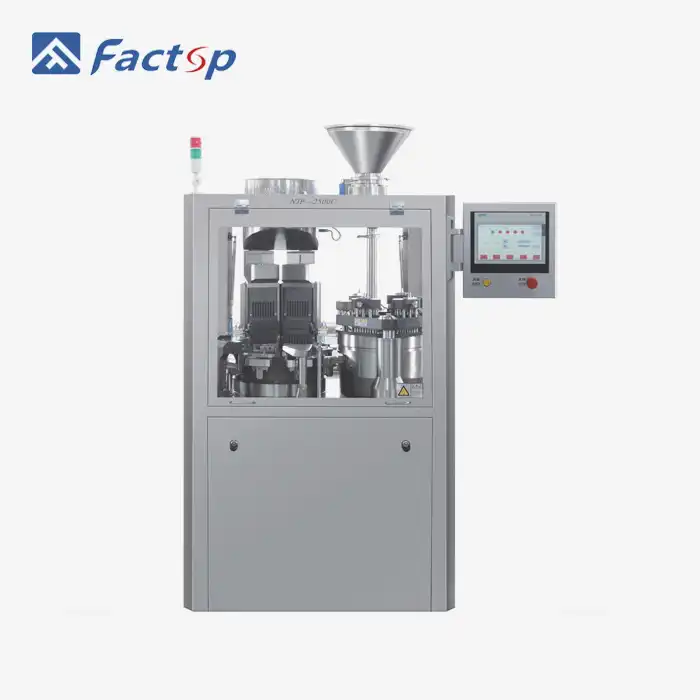
When capsules are filled with high precision, the tools can keep dose accuracy within very tight limits, usually less than 4%. Modern automatic pill fills are very consistent thanks to their improved dose systems, weight tracking systems, and weather controls. The NJP-400C model meets this high level of accuracy by producing 24,000 pills per hour with less than 4% filling variation. It also keeps its CE, GMP, and ISO9001 certifications.
Some examples of precision measures are rejection rates, weight regularity, and content consistency. These factors are used by manufacturing sites to meet legal standards and get the most out of their output processes. Environmental factors like humidity, temperature, and the way powder flows have a big effect on the accuracy of the results.
Types and Applications Across Industries
Different kinds and uses Capsule stuffing tools can be broken down into three main groups: fully automatic, semi-automatic, and human methods. Manual fills work well in labs and small-scale production, and they are flexible enough for use in study. Semiautomatic tools are a cost-effective way to make things on a medium-sized scale because they do some tasks automatically and some manually.
Fully automatic systems like the NJP-400C are used in large-scale production settings where speed, accuracy, and little human input are still very important. These machines can handle a wide range of powder forms, from pharmaceutical active ingredients (APIs) to nutritional supplements. They can also handle capsules made of different materials and sizes, such as gelatin, veggie, and specialized polymer capsules.
Common Challenges Affecting Performance
Getting regular filling precision is hard because powder flow can change a lot. Different particle sizes, cohesive powders, and the amount of wetness in the material all affect how it flows, which can cause weight and filling differences. Over time, accuracy is lost due to mechanical wear in dose parts, especially filling augers and closing mechanisms.
Conditions in the environment add to the problems. Changes in humidity affect how powder behaves, and changes in temperature affect the limits of parts and the powder's properties. Contamination risks from leftover materials between product changes are a threat to both quality and regulatory compliance, so strict cleaning routines are needed.
Essential Maintenance Practices for High-Precision Capsule Fillers
Tech that works well, lasts longer, and follows the rules, like Powder Capsule Fillers, is protected by service plans that cover everything. By planning when to clean, lubricate, and replace parts, you can avoid costly breaks and problems with the quality of the work.
Routine Cleaning and Contamination Prevention
Every day, cleaning processes get rid of the powder leftovers that build up during production cycles. Once all the touch parts are taken apart, the dosing devices, powder hoppers, and pill handle parts can be cleaned very well. Strong residues can be removed from surfaces without harm by using special cleaning products that are safe for use with medical equipment.
There are times when swab tests, scientific proof, and even just looking at something visually are needed to show that cleaning works. Keeping track of the steps you take to clean helps you follow the law and keep track of things. Cross-contamination can't happen if you clean well between changing goods. This keeps the products pure.
To keep the surroundings clean, air filter devices need to be serviced regularly. When to change HEPA filters is based on what the maker says and data from environmental tracking. Clean room rules cover more than just the tools. They also cover the places around the work area and how the operators should keep themselves clean.
Lubrication Schedules and Component Care
Systematic cleaning keeps moving parts running smoothly and reduces the amount of mechanical wear that happens. Food-grade oils that can be used in medicinal settings keep important parts from getting contaminated. Schedules for lubrication depend on the amount of work being done, the surroundings, and the specs of the parts.
Important places to grease are drive systems, cam followers, and parts that can be adjusted and move around a lot. Too much lubricant increases the chance of pollution and powder buildup, while not enough lubrication speeds up wear and lowers precision. Using the right amounts and methods for coating keeps performance at its best without lowering the quality of the product.
Regular inspections done during cleaning activities find new wear patterns and problems before they affect production. Documenting greasing activities helps with organizing maintenance and making sure that warranties are followed. It also gives predictive maintenance programs useful information.
Calibration and Accuracy Verification
Dosing accuracy stays within certain limits with regular testing, which also makes sure that legal requirements are met. Verifying the scale's accuracy and consistency across the whole working range by using approved test weights to check the weights. Calibration of the dosing device includes changing the fill amounts so that they match the target weights for different powder formulas.
Statistical process control is used during testing to find patterns and possible problems that could affect accuracy. Calibration data that are written down help quality control programs and government audits. How often you need to calibrate relies on how much you're making, how important the product is, and what the rules say.
The correctness of the data is affected by the environment during testing. Stable temperature and humidity levels make observations reliable while reducing the effects of outside factors. When you calibrate something correctly, you take into account the properties of the powder, the surroundings, and the features that are unique to your tools.
Troubleshooting and Problem-Solving for Maximized Uptime
Troubleshooting ahead of time cuts down on unnecessary downtime and keeps production plans and quality standards in check. Systematic ways of finding and fixing problems keep small problems from getting worse and turning into big mistakes.
Diagnostic Approaches for Common Issues
Dosing patterns that aren't consistent are often a sign of worn-out filling devices, bad powder flow, or calibration slip. The first step in a systematic evaluation is to check the weight against known standards. Next, the dose components and powder flow properties are inspected. Trending research shows trends of steady wear and tear that allow for planned upkeep.
Capsule jamming is usually caused by differences in size, bad alignment, or a buildup of trash. When you look at the gears that move capsules, you can see wear patterns and coordination problems. Careful study of refused pills shows the reasons behind the problems and helps with finding solutions.
Powder segregation, changes in the surroundings, or mechanical wear can all cause filling to be uneven. Powder flow testing finds problems with the recipe, and outdoor tracking finds effects from outside the product. By looking at the worn parts, you can see how they affect the regularity of the dose.
Preventative Measures and Early Detection
Scheduled checks help find new problems quickly, before they hurt the quality or speed of production. Structured check procedures cover performance factors, external conditions, and important parts. A trend study of inspection data shows trends of damage that allow for early action.
Logs for maintenance give useful information about the past that helps with plans for planned maintenance. Future repair choices are based on detailed records of when parts were replaced, adjusted, or had performance problems. When repair tasks are linked to production data, it shows that they affect performance.
Operator training makes it easier to find problems early and makes the tools work better generally. Skilled workers can spot small changes in performance that point to new problems. Regular improvements to training make sure that workers stay up-to-date on changes to equipment and upkeep needs.
Safety Protocols and Compliance Standards
Full safety measures keep workers safe and make sure that regulations are followed. Lockout/tagout measures keep equipment from starting up by mistake while repair is being done. The rules about personal safety equipment cover the risks of being exposed to cleaning chemicals and mechanical dangers.
Emergency stop processes let you act quickly when situations are dangerous while keeping people and equipment safe. Operators get regular safety training to make sure they know the right way to do things and what to do in a situation. Safety measures that are written down help with following the rules and limiting responsibility.
International safety standards make sure that everyone follows them and guide the creation and running of equipment, such as powder capsule fillers. If something has a CE mark, it means it meets European safety standards, and if it has a GMP mark, it means it meets standards for making medicines. Getting ISO9001 approval shows that you have put in place a quality management system.
Comparing Maintenance Needs: Manual vs. Automatic Powder Capsule Fillers
Understanding maintenance differences between manual and automatic systems guides procurement decisions while informing total cost of ownership calculations. Each system type presents unique maintenance requirements affecting operational efficiency and long-term costs.
Complexity and Frequency Variations
Manual capsule fillers present relatively simple maintenance requirements due to fewer mechanical components and minimal automation. Routine cleaning, basic lubrication, and occasional component replacement comprise primary maintenance activities. Lower complexity reduces specialized skill requirements while enabling in-house maintenance capabilities.
Automatic systems like the NJP-400C incorporate sophisticated control systems, precision dosing mechanisms, and automated handling components requiring specialized maintenance expertise. Higher component counts increase maintenance frequency while demanding advanced diagnostic capabilities. Complex systems benefit from manufacturer support and specialized training programs.
Maintenance frequency varies significantly between system types. Manual systems require less frequent intervention but demand more operator attention during production. Automatic systems need regular preventive maintenance but operate independently between maintenance intervals, maximizing production efficiency.
Impact on Efficiency and Precision
Maintenance quality directly affects equipment performance, with automatic systems showing greater sensitivity to maintenance variations. Precise calibration and component alignment become critical for maintaining dosing accuracy in high-speed automatic systems. Manual systems tolerate broader maintenance variations while relying more on operator skill for consistent results.
Production efficiency correlates strongly with maintenance effectiveness. Well-maintained automatic systems achieve higher throughput rates with minimal operator intervention. Manual systems depend heavily on operator proficiency and may experience greater performance variations despite adequate maintenance.
Long-term precision maintenance becomes increasingly important as equipment ages. Automatic systems benefit from predictive maintenance programs that monitor component wear and performance trends. Manual systems rely more on reactive maintenance approaches, addressing issues as they become apparent.
Total Cost of Ownership Considerations
Initial maintenance investments vary significantly between system types, with automatic systems requiring higher upfront training and tooling costs. However, automatic systems often demonstrate lower long-term maintenance costs per unit produced due to higher throughput rates and efficiency gains.
Labor costs represent major maintenance expense components, particularly for manual systems requiring more operator involvement. Automatic systems shift labor costs toward specialized maintenance activities while reducing routine operator requirements. Skilled maintenance personnel command higher wages but provide greater value through predictive maintenance capabilities.
Spare parts inventory requirements differ substantially between system types. Automatic systems may require larger spare parts inventories due to component complexity and longer lead times. However, standardized components in modern automatic systems often reduce overall spare parts costs through economies of scale.
Leveraging Advanced Technology for Maintenance Efficiency
Technological advancement transforms maintenance approaches while improving equipment reliability and performance predictability. Integration of smart sensors, powder capsule fillers, data analytics, and predictive maintenance tools revolutionizes traditional maintenance strategies.
IoT Integration and Predictive Maintenance
Internet of Things sensors enable continuous monitoring of critical equipment parameters, providing real-time visibility into component performance and wear patterns. Temperature, vibration, and pressure sensors detect emerging issues before they impact production quality or efficiency. Wireless connectivity facilitates remote monitoring and data analysis capabilities.
Predictive maintenance algorithms analyze sensor data to forecast component failure timing and optimal maintenance scheduling. Machine learning models improve prediction accuracy over time while reducing false alarms and unnecessary maintenance activities. Data-driven maintenance decisions optimize resource allocation while minimizing unplanned downtime.
Cloud-based maintenance platforms aggregate data from multiple machines and facilities, enabling enterprise-wide maintenance optimization. Benchmarking capabilities compare performance across equipment fleets while identifying best practices and improvement opportunities. Centralized data management supports regulatory compliance and audit requirements.
Real-Time Monitoring Benefits
Continuous monitoring enables immediate response to performance deviations while preventing quality issues and equipment damage. Automated alert systems notify maintenance personnel of critical conditions requiring immediate attention. Real-time dashboards provide visibility into equipment status and performance trends.
Production optimization benefits from real-time performance feedback, enabling immediate adjustments to maintain quality standards. Integration with process control systems automates responses to minor deviations while alerting operators to significant issues. Continuous improvement initiatives benefit from detailed performance data and trend analysis.
Energy efficiency monitoring identifies opportunities for reducing operational costs while supporting sustainability initiatives. Power consumption patterns reveal equipment inefficiencies and optimization opportunities. Environmental monitoring ensures optimal operating conditions while supporting quality assurance programs.
Case Study: Technology Implementation Success
A pharmaceutical manufacturer implemented IoT-enabled monitoring on their capsule filling line, achieving a 23% reduction in unplanned downtime and a 15% improvement in overall equipment effectiveness. Predictive maintenance capabilities identified bearing wear patterns three weeks before traditional inspection schedules, preventing costly production interruptions.
The implementation included vibration sensors on critical rotating components, temperature monitoring of drive systems, and pressure sensors in powder handling systems. Machine learning algorithms analyzed historical failure data to establish baseline performance parameters and develop predictive models.
Return on investment occurred within 18 months through reduced maintenance costs, improved product quality, and increased production capacity. Additional benefits included enhanced regulatory compliance through improved documentation and traceability capabilities. The success led to expansion across the entire manufacturing facility.
Conclusion
Effective maintenance strategies for high-precision powder capsule fillers encompass systematic cleaning protocols, regular calibration procedures, and proactive component replacement schedules. Understanding the unique requirements of different equipment types enables informed decision-making regarding maintenance investments and operational strategies. Advanced technology integration through IoT sensors and predictive maintenance tools revolutionizes traditional approaches while improving reliability and cost-effectiveness. The balance between maintenance complexity and operational benefits guides procurement decisions while supporting long-term manufacturing success. Comprehensive support from experienced manufacturers ensures optimal equipment performance and sustained competitive advantage in demanding pharmaceutical and nutraceutical markets.
FAQ
1. How often should powder capsule fillers undergo comprehensive maintenance?
Comprehensive maintenance frequency depends on production volume, environmental conditions, and equipment type. High-volume automatic systems typically require weekly preventive maintenance with monthly comprehensive inspections. Semi-automatic machines may extend intervals to bi-weekly maintenance with quarterly comprehensive reviews. Daily cleaning and basic checks remain essential regardless of maintenance schedules.
2. What are the warning signs indicating urgent maintenance needs?
Key warning indicators include increasing weight variation beyond acceptable limits, unusual noise patterns, visible wear on critical components, and declining production rates. Powder spillage, capsule jamming frequency increases, and temperature rises in drive components signal immediate attention requirements. Trending analysis of these parameters enables predictive intervention before critical failures occur.
3. Can existing automatic capsule fillers be retrofitted with predictive maintenance technology?
Modern automatic capsule fillers generally accommodate IoT sensor retrofits and monitoring system integration. Wireless sensors easily attach to accessible components while requiring minimal modification to existing equipment. However, older machines may need evaluation for compatibility and cost-effectiveness of upgrade investments. Professional assessment determines optimal retrofit strategies for specific equipment configurations.
Ready to Optimize Your Powder Capsule Fillers Manufacturing Line?
Maximize your production efficiency with Factop's proven maintenance solutions and cutting-edge powder capsule fillers technology. Our NJP-400C model delivers exceptional 24,000 pcs/hour capacity with less than 4% filling accuracy, backed by comprehensive maintenance support and global expertise. Connect with our technical specialists at michelle@factopintl.com to discuss customized service plans, explore advanced equipment options, or arrange consultations tailored to your specific production requirements. Partner with a trusted powder capsule fillers supplier committed to enhancing your manufacturing processes through reliable technology and responsive support.
References
1. Johnson, M.R. & Chen, L. "Maintenance Strategies for Pharmaceutical Manufacturing Equipment: A Comprehensive Guide." International Journal of Pharmaceutical Engineering, 2023.
2. Rodriguez, A.P. "Predictive Maintenance in Capsule Filling Operations: Technology Integration and Performance Outcomes." Pharmaceutical Manufacturing Review, 2022.
3. Thompson, K.S. et al. "Quality Assurance in High-Speed Capsule Filling: Maintenance Protocols and Regulatory Compliance." Drug Manufacturing Technology, 2023.
4. Williams, D.J. "IoT Applications in Pharmaceutical Equipment Monitoring: Case Studies and Implementation Guidelines." Industrial Automation in Pharma, 2022.
5. Lee, S.H. & Patel, R.K. "Cost-Benefit Analysis of Maintenance Strategies in Pharmaceutical Production Lines." Manufacturing Economics Quarterly, 2023.
6. Anderson, B.T. "Troubleshooting Guide for Capsule Filling Equipment: Common Issues and Solutions." Pharmaceutical Equipment Maintenance Manual, 2022.
YOU MAY LIKE
_1761987044972.webp "Empty capsule filler")