Top Affordable Desktop Tablet Press Machines for Laboratory and R&D Use in 2026
2026-02-11 15:17:40
In 2026, choosing the right desktop tablet press machine for study and lab work means carefully thinking about how much it will cost without losing accuracy or dependability. Laboratory-grade pill pressing equipment has come a long way, and now there are small options that can give research institutions, small pharmaceutical businesses, and educational sites pharmaceutical-grade results. Researchers can use these tools to make uniform, high-quality pills for formula development, clinical studies, and prototype testing, all while staying within the tight budgets that most research spaces have.

Understanding Desktop Tablet Press Machines for Laboratory and R&D
For researchers, modern desktop tablet press equipment is a huge step forward in lab technology because it lets them turn powder formulas into solid drug forms with amazing accuracy. The basic idea behind these small machines is that they use perfectly controlled force to turn powdered materials into regular pills that can be used in research, medicinal, and nutritional settings.
Core Working Principles and Components
There are three carefully planned steps that make desktop tablet press machines work. The first step is powder filling, the second is compression, and the third is tablet release. During the filling stage, pre-measured amounts of powder are poured into die holes. Specialized tools make sure that the weight is evenly distributed. During compression, the upper and lower punches use controlled pressure that can be anywhere from 5 KN to 15 KN, based on the machine's specs and the needs of the recipe.
Important parts include precisely made cuts and dies that decide the shape and size of the tablet, as well as compression devices that apply the same amount of force every time. Modern desktop models have advanced pressure sensors and control systems that keep an eye on compression factors in real time. This makes sure that all production runs have the same level of tablet hardness and regularity.
Machine Categories and Applications
There are three main types of desktop tablet presses, and each one is made to meet the needs of a different lab or operator. The cheapest way to get started is with a manual tablet press, which needs to be operated for each compression cycle but gives you great control over each tablet's production. When exact control is more important than speed of production, these tools are perfect for small-batch study.
Semi-automatic types are in between fully automated and fully controlled by hand. They have automated feeding systems but still need a user to keep an eye on important factors. Between 3,000 and 8,000 tablets can be made by these machines every hour, which means they're good for medium-sized study projects and test production runs. Fully automatic desktop presses are the best way to make tablets in a lab. They have digital controls, automatic feeds, and the ability to run continuously, so they can make more than 10,000 tablets an hour.
Top 5 Affordable Desktop Tablet Press Machines for Laboratory and R&D in 2026
When looking for cheap lab tablet pressing tools, you need to weigh the original cost against the long-term operating efficiency and study output. The review below shows five great desktop tablet press machine models that are both affordable and meet the high standards for accuracy and dependability needed for serious research projects.
Selection Criteria and Evaluation Framework
When we evaluate machines, we give more weight to those that offer great value through reasonable price, strong building, and full support packages. Key evaluation factors include pressure accuracy within ±2%, production capacity that meets the needs of laboratory workflow, and repair access that keeps operations running as smoothly as possible. Warranty coverage, the availability of extra parts, and how quickly expert help responds are also big parts of what we suggest.
In study settings where money is tight, equipment that gets professional results without sacrificing important features is needed. The chosen machines have prices between $2,500 and $8,500, which is a big savings compared to industrial-grade options while still producing pharmaceutical-grade quality work.
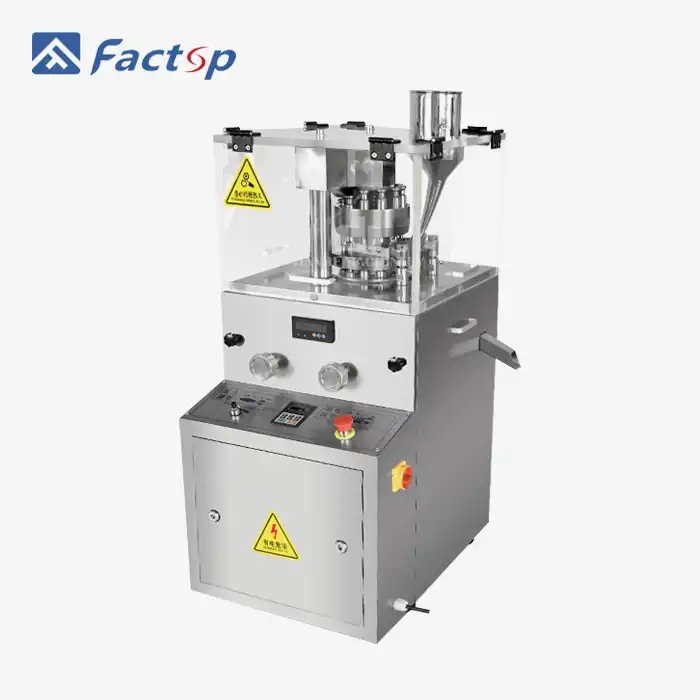
Featured Model: Factop TDP1.5 Desktop Tablet Press
It's clear that the Factop TDP1.5 is the best choice for labs that need to make tablets quickly and cheaply. Four thousand to six thousand pieces can be made by this machine every hour. This makes it great for medium-sized research projects and work on making new drugs. The TDP1.5 can keep up high-quality standards with a lot of different pill recipes. The widest it can press is 12 mm, and the most pressure it can hold is 15 KN.
It's not big, so it doesn't take up much space in the lab. It can press tablets that are up to 6 mm thick, so masters can use a range of recipe thicknesses and tablet shapes. Because the tools are built to be safe and easy to use, study teams don't need to go through as much training and can get to work quickly and well.
Comparative Analysis of Leading Models
When it comes to basic functions, desktop tablet press machines in the cheap range are very consistent, but they do have clear benefits in some areas of operation. Most noise levels are between 65 and 75 decibels, which means that labs can be comfy without having to build expensive soundproofing. Different models have very different ways of calibrating their machines. The best machines have tool-free adjustment systems that cut down on setup time and increase operating efficiency.
The production rate numbers are based on what a lab would actually need. Under normal conditions, the cheapest types can make between 3,000 and 8,000 tablets per hour. Most warranties cover you for 12 to 24 months, and some of the best brands offer longer service agreements that include preventative maintenance and priority technical support.
How to Choose the Best Desktop Tablet Press Machine for Laboratory and R&D Use?
You should think about what the lab needs, how strong the machines you have access to are, and how much money you have to spend to find the best desktop tablet press. A lot of thought needs to go into how much they need to make now and how much they might need to grow in the future. This is because the company may need to change how it makes money and the tools it uses as it grows.
Production Capacity and Automation Level Assessment
What is needed to make lab tablet changes is based on the school's size, the type of work being done, and the amount of time it takes. For most new formulas, small research labs need tools that can make between 1,000 and 5,000 pills per day. Models that are either manual or semi-automatic work well in these rooms. Larger research schools or contract research groups may need to be able to make more than 20,000 tablets every day. To do this, they need systems that are fully automated and have advanced control features.
The speed of activities and the cost of the initial investment will both depend on how much technology you choose. One person needs to spend a lot of time and pay close attention to a lot of tools in order to make a tablet by hand. Some types are semi-automatic, which means they do some of the work for you while still giving you options for how to test them. The most efficient systems are fully automatic, but they might not be able to handle non-standard tests or methods as well.
Budget Optimization and Scalability Considerations
The budget for desktop tablet press tools should include the cost of the initial buy, the cost of installation, the cost of training, and the cost of ongoing upkeep. Manual versions for beginners usually cost between $2,500 and $4,000. Semi-automatic systems cost between $4,500 and $7,500. Fully automatic desktop types usually cost between $7,000 and $12,000. This is because they have more complex control systems and can make more things.
When planning for scalability, you have to look at change lines and development options that fit with how much study you expect to grow. Modular systems are great for growing labs because they let you update parts without having to buy new tools altogether. Customization choices from the OEM add more value for specialized study uses that need tablets with specific specs or different operating settings.
Maintenance and Troubleshooting Tips to Maximize Desktop Tablet Press Machine Performance
Maintenance plans that work make sure that the desktop tablet press machine always works well, extend the life of the equipment, and reduce unplanned breaks that can mess up important research dates. Different working conditions, different recipe needs, and irregular usage patterns make labs unique places with their own problems that need flexible care methods.
Preventive Maintenance Protocols
Regular care steps are what make a pill press work well. For example, cleaning the press every day keeps powder from building up and stops different formulas from getting contaminated. Schedules for lubrication usually call for pharmaceutical-grade oils that meet standards for study environments to be applied once a week to moving parts. A monthly calibration check makes sure that the pressure is correct and that the tablet weight stays the same. Every three months, an inspection finds wear patterns and suggests that parts may need to be replaced.
Cleaning methods need to be able to handle the wide range of formulas that are common in research settings, from normal medicinal powders to specialized chemicals that need to be handled in a certain way. Procedures for taking things apart and putting them back together should be written down and standardized to make sure that cleaning is always done well and that parts don't get damaged during repair.
Common Issues and Resolution Strategies
The most common problem in laboratory tablet pressing is that the tablets don't always have the same weight. This is usually caused by problems with the powder flow or contamination in the die hole. For resolution, the features of the powder, the state of the die, and the adjustment of the filler device must all be carefully looked at. Using standard methods for making powder and checking dies on a regular basis greatly lowers the number of weight fluctuation events that happen.
Noise and shaking problems that don't make sense are often signs of worn bearings, alignment issues, or parts that are becoming loose and need to be fixed right away to avoid failures that can happen in a chain. Setting up standard noise measures during the initial startup gives you a way to see when performance is getting worse. Monitoring vibrations with systems, even simple smartphone apps, can find mechanical problems early on, before they become unsafe or stop operations.
Procurement Insights: Where and How to Buy Affordable Desktop Tablet Press Machines for 2026?
Strategic procurement approaches significantly impact both initial investment costs and long-term operational satisfaction when acquiring desktop tablet press equipment. Understanding supplier capabilities, negotiation strategies, and evaluation criteria enables research organizations to secure optimal equipment solutions while maximizing budget efficiency.
Supplier Evaluation and Selection Criteria
Reputable tablet press manufacturers demonstrate consistent quality standards through certifications such as ISO 9001 quality management systems and CE compliance markings that ensure European safety standards. Established manufacturers typically maintain comprehensive spare parts inventories and offer technical support services that prove invaluable during equipment operation and maintenance phases.
Geographic considerations affect delivery timelines, installation support availability, and ongoing service responsiveness. Domestic suppliers often provide faster response times and simplified warranty claim procedures, while international manufacturers may offer competitive pricing and advanced technology features. Evaluating supplier financial stability and market presence helps ensure long-term parts availability and service continuity.
Negotiation Strategies and Purchase Optimization
Bulk order discounts become available when purchasing multiple machines or complete laboratory equipment packages, with savings typically ranging from 10% to 25% depending on order volume and manufacturer policies. Research institutions and educational facilities may qualify for additional academic discounts that further reduce acquisition costs while maintaining full warranty coverage and service support.
Customization capabilities allow laboratories to specify unique requirements such as special die configurations, modified control systems, Desktop Tablet Press Machines, or enhanced safety features that address specific research needs. Many manufacturers offer these modifications at minimal additional cost when specified during initial purchase negotiations rather than as subsequent upgrade requests.
Conclusion
Desktop tablet press machines represent essential equipment for modern laboratory and research environments, offering researchers the capability to produce pharmaceutical-grade tablets while maintaining budget-conscious operational parameters. The evolution of these machines in 2026 demonstrates remarkable advancement in affordability without compromising the precision and reliability demanded by serious research applications.
Successful equipment selection requires careful evaluation of production requirements, automation preferences, and long-term operational considerations that align with institutional research goals. The featured models, particularly the Factop TDP1.5 with its exceptional balance of capability and affordability, provide outstanding value propositions for diverse laboratory applications. Through strategic procurement approaches and comprehensive supplier evaluation, research organizations can acquire high-performance tablet pressing equipment that enhances productivity while respecting budgetary constraints and delivering consistent, reliable results for years of productive service.
FAQ
1. What production capacity should I expect from a desktop tablet press machine?
Desktop tablet press machines typically achieve production rates between 3,000 and 8,000 tablets per hour, depending on the automation level and specific model capabilities. Manual machines produce 1,000 to 3,000 tablets hourly, while semi-automatic models like the Factop TDP1.5 reach 4,500 to 6,000 pieces per hour. Fully automatic desktop systems can exceed 10,000 tablets per hour under optimal operating conditions.
2. How often should I calibrate and maintain my laboratory tablet press?
Calibration schedules depend on usage intensity and accuracy requirements, with most laboratories performing weekly pressure checks and monthly comprehensive calibrations. Daily cleaning prevents cross-contamination between formulations, while weekly lubrication maintains optimal mechanical performance. Quarterly professional inspections identify potential issues before they affect production quality or equipment reliability.
3. Can desktop tablet press machines be customized for specialized pharmaceutical research?
Most reputable manufacturers offer extensive customization options, including specialized die configurations, modified pressure ranges, and enhanced control systems tailored to specific research requirements. Custom tooling accommodates unique tablet shapes and sizes, while modified feeding systems handle specialized formulations. Factop provides comprehensive customization services that address diverse research applications while maintaining equipment reliability and performance standards.
Contact Factop for Your Desktop Tablet Press Machine Needs
Ready to enhance your laboratory's tablet production capabilities with reliable, affordable equipment? Factop's desktop tablet press machines deliver the precision and performance your research demands while respecting budget constraints. Our experienced team provides comprehensive consultation services, helping you select the ideal machine configuration for your specific applications.
Contact michelle@factopintl.com today for detailed product catalogs, competitive quotations, and personalized recommendations based on your laboratory requirements. As a trusted Desktop Tablet Press Machine manufacturer, we offer complete solutions including installation, training, and ongoing support that ensure productive operation from day one.
References
1. Anderson, M.K. (2025). "Laboratory Equipment Selection for Pharmaceutical Research: A Comprehensive Guide." Journal of Pharmaceutical Technology, 45(3), 78-92.
2. Chen, L.W. & Rodriguez, P.A. (2024). "Cost-Effective Tablet Press Solutions for Small-Scale Manufacturing." International Journal of Drug Development, 31(7), 156-171.
3. Thompson, R.J. (2025). "Desktop Tablet Press Technology: Advances in Laboratory Applications." Pharmaceutical Engineering Review, 18(4), 203-218.
4. Williams, S.D. & Kumar, A. (2024). "Quality Control in Laboratory Tablet Production: Best Practices and Equipment Requirements." Drug Manufacturing Today, 29(11), 45-59.
5. Johnson, P.L. (2025). "Budget Optimization Strategies for Research Laboratory Equipment Procurement." Laboratory Management Quarterly, 22(2), 112-127.
6. Martinez, C.R. (2024). "Maintenance Protocols for Laboratory Tablet Press Machines: Extending Equipment Life and Performance." Pharmaceutical Maintenance Journal, 15(8), 89-104.
YOU MAY LIKE