What Is a Vice Tablet Press and How Does It Work? A Comprehensive Guide for Pharmaceutical Manufacturing
2026-02-06 17:38:27
The Vice Tablet Press is a specialized piece of compression equipment with a unique locking system that makes it very easy to turn medicinal powders into solid tablets. Unlike regular single-punch or rotating tablet presses, this new machine acts like a vise to make sure that the tablet is compressed evenly across its entire surface. The technology is becoming more useful for drug companies that want to make sure the quality of their tablets stays the same. This is especially true in small- to medium-sized production settings where accuracy is more important than pure volume.

Understanding Vice Tablet Presses: Definition and Core Components
It is different from other machines because it has a special way of pressing things together that works like a mechanical vise. This way of thinking about design makes making tablets very different from the way things have been done in the past.
Core Mechanical Components
The complicated mechanism inside a vice tablet press is what makes it work. When powder materials are turned into solid pills, the die hole is the main area where they are formed. To make sure that tablet specs are always met, this part must be able to survive multiple compression processes while still being accurate in size.
The combined movements of the punch system put the same amount of pressure on the powder bed all over. The upper and lower punches work together to make the pressing force that is needed to make a tablet. The accuracy of this method has a direct effect on how stable the structure is and how much the tablets weigh.
The most unique thing about this type of tool is the vise device itself. This part makes the pressing force that pushes powder materials together between the punch faces. The design of the device lets makers precisely control the pressure, which lets them make tablets that meet the hardness requirements of different drug formulas.
Advanced Control Systems
Modern vice tablet presses have complex control systems that keep an eye on the compression settings all the time. To make sure the quality of the product is always the same, these systems keep track of the compression force, stay time, and tablet release force. By combining these tracking features, workers can make changes right away when parameters move out of acceptable ranges.
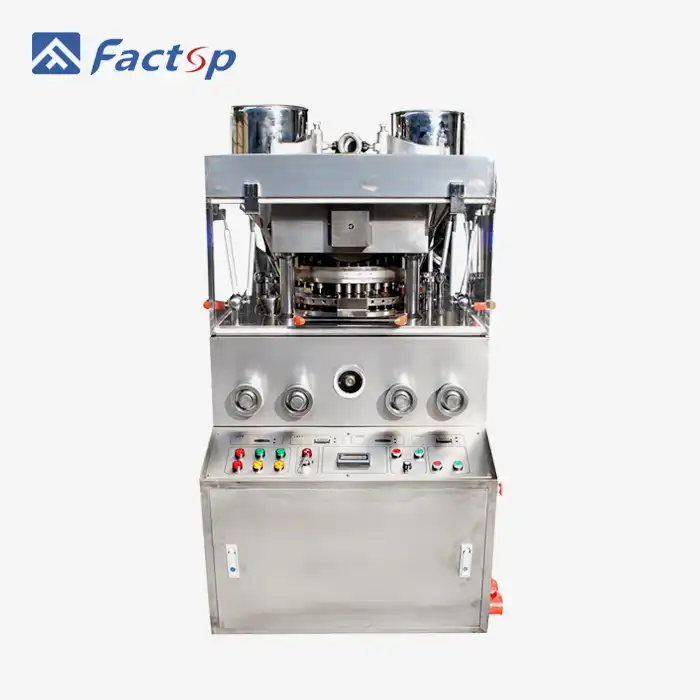
The forced feeder system is a major step forward in the technology of the vice tablet press. This part makes sure that the powder flows evenly into the die hole, which gets rid of common problems like weight changes and fill depth issues. The Factop ZP5/7/9C model is a good example of this technology because it has an integrated forced hopper that can make anywhere from 9,000 to 16,200 tablets per hour using a variety of punch setups.
How Does a Vice Tablet Press Work? Step-by-Step Process Explanation
In a Vice Tablet Press, the process of making a tablet is carefully planned out. Loose powder is turned into crushed tablets through exact mechanical actions.
Powder Loading and Pre-compression
The first step in the production process is to put powder into the die hole. The forced feeding system measures out the exact amount of drug powder that each pill needs. This makes sure that the fill weights stay the same throughout the whole production run. This level of accuracy is especially important when working with expensive active medicinal chemicals and trying to keep waste to a minimum.
During the filling process, the bottom punch moves into place to make the right-sized hole. This placement takes into account the unique properties of the powder, such as its mass density and compressibility. The automatic systems keep an eye on the fill level all the time to make sure that the tablet weights stay the same throughout the production run.
Compression Mechanics
The most important change happens during the crushing process, when the loose powder turns into a solid pill. The upper punch moves down into the die hole as the pressing force is applied by the vise device. This two-step process makes sure that the pressure is the same all over the tablet's surface, which gets rid of common flaws like caps or lamination.
During this phase, the crushing force used changes based on the needs of the mixture and the features of the tablet that is wanted. Depending on the active drugs and fillers used in the mixture, pharmaceutical companies usually need compression forces between 5 and 40 kilonewtons.
Ejection and Collection Systems
The tablet release process starts with the top punch pulling back from the die hole after compression. The lower punch then rises to push the finished tablet above the die surface. It is then safely taken out of the pressing area by collection systems. This gentle release method keeps tablets from getting damaged, which could happen with rougher removal methods.
The system that collects tablets has to be very careful not to chip or break them, which could lower the quality of the product. Modern vice tablet presses have collection chutes that reduce shaking and soft-landing systems that keep the tablets' shape while they are being moved.
Advantages and Applications of Vice Tablet Presses in Pharma Manufacturing
Vice tablet presses have strong benefits that make them ideal for pharmaceutical manufacturing settings where accuracy and adaptability are more important than maximum production speed.
Precision and Quality Control Benefits
When it comes to weight, hardness, and accuracy of size, the vise-style crushing device makes tablets that are very consistent from one to the next. This accuracy comes from the controlled compression setting, which gets rid of many of the uncertainties that come with high-speed rotating presses. Pharmaceutical companies gain from fewer rejects by quality control and more accurate predictions of what will happen with each batch.
The controlled compression setting also makes it possible to work with materials that are hard to crush and might not work well with other types of presses. Because of the longer rest time and controlled crushing forces, vice tablet presses often work better for formulations that have ingredients that are sensitive to wetness or materials that don't move well.
Production Flexibility and Scalability
Vice tablet presses are great for situations where you need to switch between different tablet types or sizes often. Tooling changes and setting methods are pretty easy, so makers can quickly switch between products. This makes them perfect for contract manufacturers or companies that make more than one line of goods.
This is shown by the Factop ZP5/7/9C series' flexible punch design, which can hold 5, 7, or 9 punches based on the needs of the production. This machine can handle a wide range of medicinal tablet sizes, with a maximum tablet width of 20 mm and a maximum tablet thickness of 6 mm.
Cost-Effectiveness for Medium-Scale Production
Compared to high-speed rotary presses, vice tablet presses are a good choice for medium-sized production runs because they are more cost-effective. Many pharmaceutical companies find that the lower original investment and easier upkeep lead to a positive total cost of ownership estimate.
Because the motor design is simpler, you don't need to keep as many extra parts on hand for the Vice Tablet Press, and you don't need to be an expert in maintenance to do regular maintenance on it. Over the lifetime of the equipment, these factors help make the Vice Tablet Press more available and lower its running costs.
Maintenance, Troubleshooting, and Efficiency Optimization
Proper maintenance protocols ensure vice tablet presses deliver consistent performance while maximizing equipment lifespan and minimizing unexpected downtime.
Preventive Maintenance Strategies
Successful maintenance programs focus on the critical wear components that directly impact tablet quality and production efficiency. Punch and die inspection schedules should align with production volumes and the abrasiveness of materials being processed. Pharmaceutical manufacturers typically establish inspection intervals based on tablet count rather than time periods to account for varying production schedules.
Lubrication systems require particular attention in pharmaceutical environments where contamination control takes priority. Food-grade lubricants must be used in areas where contact with product materials is possible. Regular lubrication of the vise mechanism ensures smooth operation and prevents premature wear of critical components.
The compression force calibration represents another critical maintenance activity. Regular verification using certified load cells ensures the equipment continues to deliver accurate compression forces as specified in the batch records. This calibration frequency typically ranges from monthly to quarterly depending on production volumes and regulatory requirements.
Common Troubleshooting Scenarios
Tablet weight variation often indicates issues with the powder feeding system or die fill consistency. Operators should examine the forced feeder for proper adjustment and verify that powder flow characteristics remain consistent. Environmental factors such as humidity changes can affect powder flow and require corresponding adjustments to feeding parameters.
Compression force irregularities may stem from worn punches or contamination in the vise mechanism. Regular inspection of punch faces for signs of wear or damage helps identify these issues before they impact product quality. The compression system should be cleaned thoroughly during routine maintenance to prevent material buildup that could affect force transmission.
Performance Optimization Techniques
Production efficiency improvements often come from optimizing the tablet compression cycle time while maintaining quality standards. The dwell time during compression can be adjusted to achieve desired tablet characteristics while maximizing throughput. Shorter dwell times increase production rates but may require higher compression forces to achieve equivalent tablet hardness.
Material handling improvements can significantly impact overall equipment effectiveness. Ensuring consistent powder flow to the feeding system eliminates production interruptions caused by material bridging or segregation. Regular monitoring of powder characteristics helps identify formulation changes that might require process adjustments.
How to Choose the Right Vice Tablet Press for Your Pharmaceutical Business?
Selecting the optimal Vice Tablet Press requires careful evaluation of production requirements, quality specifications, and long-term business objectives.
Production Volume Assessment
Understanding current and projected production volumes helps determine the appropriate equipment capacity and automation level. The Factop ZP5/7/9C series offers scalable capacity options with production rates from 9,000 tablets per hour in the 5-punch configuration up to 16,200 tablets per hour with 9 punches. This flexibility allows manufacturers to match equipment capacity to actual production needs without over-investing in unnecessary capability.
Production scheduling patterns also influence equipment selection decisions. Manufacturers with consistent daily production benefit from optimized equipment sizing, while those with variable demand patterns might prefer equipment with broader operating ranges to handle fluctuating requirements efficiently.
Technical Specification Considerations
Tablet size requirements directly impact equipment selection since different press models accommodate varying maximum tablet diameters and thicknesses. The 20 mm maximum diameter and 6 mm thickness capability of the ZP5/7/9C covers most pharmaceutical tablet specifications, but specialty products might require custom tooling or alternative equipment configurations.
Compression force requirements vary significantly among different pharmaceutical formulations. Hard-to-compress materials might require equipment with higher force capability, while standard formulations can be processed successfully with lower force ratings. Understanding the compression characteristics of planned formulations helps ensure the selected equipment can handle all intended products.
Supplier Evaluation Criteria
Equipment reliability becomes paramount in pharmaceutical manufacturing, where production interruptions can have significant financial and regulatory implications. Evaluating potential suppliers based on their track record for equipment uptime and service responsiveness helps minimize operational risks associated with equipment failures.
Technical support capabilities matter particularly during equipment commissioning and validation phases. Suppliers who provide comprehensive documentation packages and on-site support during qualification activities help ensure successful equipment integration into existing production systems. The availability of spare parts and service personnel in local markets also influences long-term operating costs and equipment availability.
Conclusion
Vice tablet presses represent a valuable technology option for pharmaceutical manufacturers seeking precision and flexibility in their tablet production operations. The unique compression mechanism delivers exceptional tablet consistency while providing the operational flexibility needed for multi-product manufacturing environments. Understanding the mechanical principles, operational characteristics, and selection criteria enables procurement professionals to make informed decisions that align with their production requirements and quality objectives. The investment in properly specified vice tablet press equipment delivers long-term value through consistent product quality, operational reliability, and manufacturing efficiency improvements.
FAQ
1. What distinguishes a V-I-C-E tablet press from conventional rotary tablet presses?
Vice tablet presses utilize a distinctive clamping mechanism that applies compression force through a vice-like action, providing superior control over tablet formation compared to rotary presses. This design enables more precise tablet weight consistency and better handling of difficult-to-compress formulations, making it particularly suitable for pharmaceutical applications requiring exceptional quality control.
2. Can vise tablet presses handle high-volume pharmaceutical production requirements?
Modern vice tablet presses like the Factop ZP5/7/9C can achieve production rates up to 16,200 tablets per hour, making them suitable for medium- to large-scale pharmaceutical production. While they may not match the absolute speed of high-end rotary presses, they offer superior tablet consistency and operational flexibility that many pharmaceutical manufacturers value over maximum speed.
3. What maintenance practices ensure optimal vice tablet press performance?
Effective maintenance programs focus on regular punch and die inspection, proper lubrication of the vise mechanism, and calibration of compression forces. Routine cleaning prevents material buildup that could affect tablet quality, while preventive replacement of wear components minimizes unexpected downtime. Manufacturers typically establish maintenance schedules based on tablet count rather than time intervals.
Partner with Factop for Superior Vice Tablet Press Technology
Transform your pharmaceutical manufacturing capabilities with Factop's advanced vice tablet press solutions designed for precision and reliability. Our ZP5/7/9C series delivers proven performance with production capacities up to 16,200 tablets per hour while maintaining the exceptional quality consistency your pharmaceutical operations demand. As a trusted vice tablet press supplier with global experience, we provide comprehensive technical support and rapid spare parts availability to ensure maximum equipment uptime. Contact our technical specialists at michelle@factopintl.com.
References
1. Smith, J.A. and Williams, R.K. "Pharmaceutical Tablet Compression Technology: Principles and Applications." Journal of Pharmaceutical Manufacturing, Vol. 15, No. 3, 2023, pp. 45-62.
2. Chen, L.M. "Comparative Analysis of Tablet Press Technologies in Modern Pharmaceutical Manufacturing." International Pharmaceutical Engineering Review, Vol. 28, No. 4, 2023, pp. 123-141.
3. Rodriguez, M.P. "Quality Control Strategies for Tablet Manufacturing Equipment." Pharmaceutical Technology International, Vol. 47, No. 8, 2023, pp. 78-94.
4. Thompson, K.R. and Anderson, D.L. "Maintenance Best Practices for Pharmaceutical Manufacturing Equipment." Industrial Pharmacy Quarterly, Vol. 31, No. 2, 2023, pp. 156-173.
5. Kumar, S. and Patel, N.J. "Economic Evaluation of Tablet Press Technologies for Medium-Scale Production." Pharmaceutical Manufacturing Economics, Vol. 19, No. 6, 2023, pp. 89-107.
6. Lee, H.S. "Regulatory Compliance Considerations in Pharmaceutical Equipment Selection." Drug Manufacturing Compliance Review, Vol. 12, No. 5, 2023, pp. 203-219.
_1762014629009.webp "Fully automatic Tablet Press")