Where to Buy Reliable Small Tablet Press Machines for Nutraceutical Production
2026-01-30 09:15:42
When purchasing, procurement managers need to find trustworthy small tablet press machines for making nutraceuticals; they have to make the difficult choice of which small tablet press machine manufacturer can provide consistent quality and full support. The nutrition business needs precise machinery that meets strict government rules and can meet a wide range of output needs at a low cost. Global companies like Jining Factop Pharmacy Machinery Company have become top suppliers by providing certified equipment that meets international standards and a lot of support after the sale to make sure it works well in research, health supplement, and pharmaceutical facilities around the world.
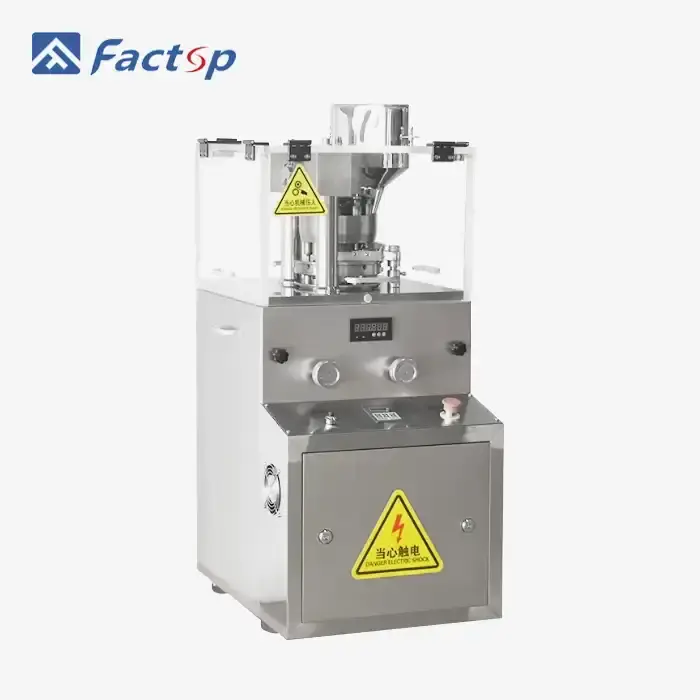
Understanding Small Tablet Press Machines for Nutraceutical Production
Small tablet press machines are the most important part of making nutraceuticals. They use controlled compression processes to turn powdered ingredients into pills that are exactly the right size. Compression, feeding, and release are the basic ideas behind these specialized machines. Powdered materials go into the die hole, are compressed under controlled pressure, and come out as regular tablets that are ready to be packaged.
Core Functions and Operational Principles
The compression method has three separate steps that make sure tablets are always formed the same way. It is during the filling stage that granules or powders are fed into the die hole by either automatic or human methods. The upper and lower punches in the compression stage apply controlled force, making pills with certain hardness, thickness, and weight parameters. Lastly, the release stage takes finished tablets out of the die hole and gets the machine ready for the next compression cycle.
Modern equipment for pressing tablets has improved pressure control systems that keep the crushing forces constant during production runs. This accuracy makes sure that every tablet exactly meets the requirements for even weight, fast breakdown, and strong structure. The automated nature of these systems cuts down on mistakes made by people while also making work more efficient over longer periods of time.
Machine Types and Production Capacities
Single-punch tablet presses are the most common type for making small amounts of nutraceuticals because they let you precisely control how each tablet is formed. These tools work great in R&D settings where trying new recipes needs small batches that must meet exact specs. Because they are small, they can be used in places with limited floor room and still produce professional-quality work.
Rotary tablet press systems can make more because they have more die sites that can work at the same time. Mini rotary presses are in between single-punch machines and large production tools. They offer higher speed while still being flexible enough to make a wide range of nutritional products. These systems can handle different pill sizes and the complicated, multi-layer formulas that are needed for certain vitamin products.
Hydraulic tablet presses use hydraulic pressure systems to make tablets that are very hard and evenly distributed. For nutritional goods that need to have extended-release properties or special coating uses, this technology is especially useful. The controlled pressure method makes sure that the pill mass stays the same, which has a direct effect on how the active ingredients dissolve and are used in the body.
Benefits for Nutraceutical Applications
Small tablet press machines have a lot of benefits for companies that make nutraceuticals and want to find a balance between production efficiency and operating freedom. These methods let formulas be changed quickly, so companies can make new vitamin mixes, plant supplements, or specialty health goods quickly in response to market needs. Being able to make small amounts cheaply helps with product development and making supplement lines that are only available for a short time.
Modern equipment for making tablets, like the Small Tablet Press Machine manufacturer, keeps exact control over their weight, hardness, and ability to break apart. This is another important benefit. This regularity meets legal requirements and gives customers faith in the product's dependability. Advanced tracking systems keep an eye on production factors in real time and record the information needed for legal reports and quality management systems.
How to Choose the Right Small Tablet Press Machine for Your Nutraceutical Business?
To choose the right tablet pressing tools, you need to carefully think about your long-term business goals, production needs, and building limitations. Professionals in procurement have to find a mix between current output needs and the ability to grow in the future, all while making sure they follow all legal rules.
Production Volume and Capacity Considerations
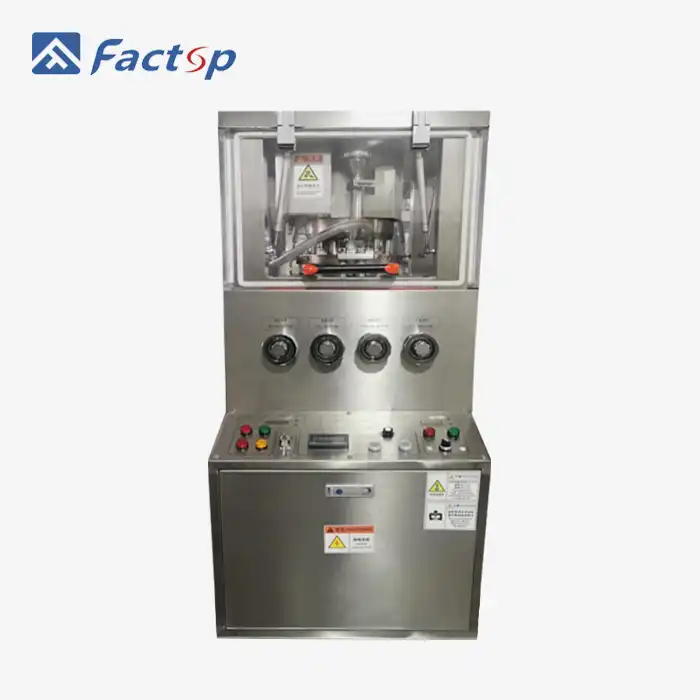
Analysis of the production amount is the basis for choosing the right tools. Depending on the complexity of the product and the demand in the market, small nutrition businesses usually need tools that can make between 1,000 and 15,000 pills per hour. With a maximum capacity of 13,000 pieces per hour, the ZP-7B model is the best choice for medium-scale output needs while still being flexible enough to handle different formulas.
Because some nutritional goods need to switch between different formulas often, batch size requirements affect the choice of machine. Single-punch machines work best in places that need to be as adaptable as possible. Mini-rotary systems, on the other hand, make it easier to make straight lines of products. Finding the best balance between the number of items and the number of items being made helps find the tools that will save the most money.
When you figure out how much power you need, you should think about when the most people would like it. At certain times of the year, more supplements that boost the immune system or for sports may need to be made. You can be sure that the money you spend on tools will help your business grow if you plan for these capacity spikes. Just make sure that production doesn't slow down when sales are high.
Regulatory Compliance and Quality Standards
How to make nutraceuticals is regulated by strict rules that change from market to market. When you choose tools, you should make sure they follow all the rules that matter. These rules could come from the FDA in the US, Health Canada, the European Union, or another group. GMP has to clear any tools that are used to make nutraceuticals. This checks to make sure that the ways the product is made are good.
If something has a CE mark on it, it means that it is safe and healthy in Europe. Quality control rules are used all over the world if it says ISO 9001 on it. When companies that make tools get these licenses, it means they regularly check the quality of their work and can help with legal checks when needed.
There needs to be more than just signatures in the documentation. There should also be ways to check the installation, operation, and performance. An honest manufacturer will give you all the information you need to get your equipment certified and show that it can be used for what it was made for.
Energy Efficiency and Operational Costs
The amount of power used has a direct effect on running costs, so choosing equipment that is energy efficient is very important. Modern tablet presses have motors that use less electricity and perfectly designed mechanical systems that keep production at the same level. Advanced pressing equipment only needs 2.2 kW of power, which is a good way to handle energy.
Modern equipment comes with voltage choices like 110V, 220V, and 380V, which makes installation easier in a wide range of building layouts. This flexibility cuts down on changes to the electricity equipment and the costs of installing it. Being able to work with multiple voltages also helps with activities that take place in countries with different electricity standards.
Total cost of ownership estimates are greatly affected by the amount of maintenance that needs to be done. Maintenance is easier and costs less when equipment is made with easily available parts and standard substitute parts by a small tablet press machine manufacturer. Preventive repair plans that are backed by maker knowledge help technology last longer and have less unwanted downtime.
Where to Find Reliable Small Tablet Press Machines: Trusted Manufacturers and Suppliers?
To find reliable equipment providers, you need to carefully look at the qualifications of the manufacturers, the quality of the products, and their customer service. Because pharmacy equipment is made all over the world, buying teams have to look at providers based on a number of different factors to make sure that the relationships work out well.
Manufacturer Credentials and Certifications
Well-known brands show their dedication to quality by having a lot of certifications and being recognized in the business. GMP approval is the minimum standard for companies that make medicinal equipment. It shows that the company follows good manufacturing practices throughout the whole production process. It is with this license that factories make sure they follow the right rules for safety, quality control, and keeping records.
Getting certified as an ISO 9001 quality management system gives you even more peace of mind about regular manufacturing processes and efforts to keep getting better. Manufacturers who have this certification have shown that they can regularly make goods that meet legal and customer needs while also making customers happier by using quality management principles well.
Research and development skills set top makers apart from basic equipment sellers. When companies spend money on tech teams and testing grounds, they can find new ways to solve problems that come up while making nutraceuticals. These features come in handy when you need to make changes or use something in a way that doesn't require standard tools' technical know-how.
Global Supply Networks and Support Infrastructure
When it comes to local support, parts availability, and service timeliness, international makers with well-established distribution networks are a big plus. Jining Factop Pharmacy Machinery Company and other companies have formed relationships in North America, Europe, South Africa, and Asia. These partnerships have created large support networks that can meet the needs of customers no matter where they live.
Local presence makes sure that expert help, repair services, and extra parts are always easy to get for as long as the equipment is in use. This support system is very important when production is being scaled up or when unexpected technology problems come up. Companies that make things and sell them all over the world can use the knowledge and experience of people in other countries while also offering native help that knows the rules and ways of doing business in each area.
Logistics skills affect how long it takes to send items and how much the whole job costs. Manufacturers who have shipped goods internationally before know what paperwork is needed for export, how to deal with customs, and what kind of protected packing is needed to keep equipment safe during travel. This knowledge cuts down on project delays and makes sure that equipment comes in perfect shape for setup and testing.
Evaluation Criteria for Supplier Selection
You should look at someone's engineering skills, quality control methods, and testing methods to figure out how skilled they are. A good manufacturer will show proof of factory acceptance testing (FAT), which checks how well the equipment works before it is sent out. Clients are sure that the equipment will work for them after it has been tested, and it also takes less time to set up at their sites.
Case studies and real customer stories can show you how well a business does with different kinds of customers and in different scenarios. Manufacturers have shown they can support nutritional uses well by completing similar projects successfully. Referrals from customers with similar production needs can tell you a lot about how well equipment works and how good the supplier's help is.
It's important to carefully consider the after-sales service options from your small tablet press machine manufacturer because ongoing help has a big effect on how much technology works and how much it costs to run. Full-service packages should include help with installation, training for operators, upkeep plans, and access to extra parts. The level of help provided after the sale is often what sets great equipment companies apart from average ones.
Practical Tips and Best Practices for Buying Small Tablet Press Machines
Successful equipment procurement requires strategic planning that extends beyond initial purchase decisions to encompass installation, operation, and long-term maintenance considerations. These practical approaches help ensure that equipment investments deliver expected returns while supporting sustainable production operations.
Installation and Commissioning Procedures
Site preparation requirements must be addressed before equipment arrival to ensure smooth installation processes. Electrical infrastructure, compressed air systems, and floor loading capabilities should meet manufacturer specifications to avoid installation delays. Proper planning includes coordination with facility maintenance teams and any required contractors to complete infrastructure modifications before equipment delivery.
Installation qualification protocols establish that equipment has been installed correctly according to manufacturer specifications and applicable regulatory requirements. These protocols typically include verification of utility connections, safety system functionality, and compliance with local codes and standards. Thorough installation qualification reduces the risk of operational problems and provides documentation required for regulatory compliance.
Operational qualification demonstrates that equipment performs according to design specifications across its intended operating range. This qualification typically includes testing of all operating modes, safety systems, and control functions to ensure proper performance before production begins. Comprehensive operational qualification provides confidence that equipment will meet production requirements consistently.
Maintenance Strategies and Best Practices
Preventive maintenance programs significantly impact equipment reliability and operational costs. Regular maintenance schedules should address lubrication requirements, wear part replacement, and calibration verification to maintain optimal performance. Manufacturer-recommended maintenance procedures provide the foundation for effective programs, while warranty requirements often specify minimum maintenance standards.
Spare parts inventory management balances carrying costs with production risk considerations. Critical wear components should be maintained in inventory to minimize downtime, while less critical parts may be sourced as needed. Manufacturer parts support programs can provide guidance on recommended spare parts inventory levels based on production requirements and equipment utilization patterns.
Training programs ensure that operators and maintenance personnel understand proper equipment operation and care procedures. Comprehensive training reduces the risk of operator error while maximizing equipment capability utilization. Ongoing training updates help personnel stay current with best practices and new techniques that can improve production efficiency.
Cost Optimization and Negotiation Strategies
Total cost of ownership analysis provides a comprehensive framework for equipment evaluation that extends beyond initial purchase prices. This analysis should include operating costs, maintenance expenses, spare parts requirements, and productivity impacts to determine true equipment value. Understanding total cost of ownership helps justify investment decisions and supports effective vendor negotiations.
Financing options can significantly impact cash flow and project economics. Many manufacturers offer financing programs that spread equipment costs over extended periods while preserving working capital for other business needs. Lease arrangements may provide tax advantages and simplified equipment upgrades as technology evolves.
Warranty terms and service agreements from your small tablet press machine manufacturer should be evaluated carefully to understand coverage scope and limitations. Extended warranty options may provide value for critical production equipment, while comprehensive service agreements can ensure consistent support availability. Understanding warranty requirements helps maintain coverage while avoiding unexpected service costs.
Conclusion
Selecting reliable small tablet press machines for nutraceutical production requires careful consideration of manufacturer credentials, equipment specifications, and comprehensive support capabilities. The investment in quality equipment from established manufacturers like Factop provides the foundation for successful nutraceutical production operations while ensuring regulatory compliance and operational efficiency. Our ZP-7B model represents the optimal balance of performance, reliability, and cost-effectiveness for diverse nutraceutical applications, backed by comprehensive support services and proven success across global markets.
FAQ
1. What maintenance schedule should I follow for optimal machine performance?
Regular maintenance schedules vary based on production volume and operating conditions but generally include daily cleaning and inspection procedures, weekly lubrication of moving components, and monthly calibration verification. Our recommended maintenance program includes specific intervals for wear part replacement, electrical system inspection, and comprehensive performance testing to ensure consistent operation and extend equipment life.
2. How do I choose between automatic and manual tablet press machines?
The choice between automatic and manual systems depends primarily on production volume requirements, operator skill levels, and budget constraints. Automatic systems like our ZP-7B model provide higher throughput and consistent quality with minimal operator intervention, making them ideal for established production operations. Manual systems offer lower initial costs and greater operational flexibility for research applications or small-batch production requirements.
3. What installation support and training do you provide?
We provide comprehensive installation guidance, including site preparation specifications, utility requirements, and step-by-step installation procedures. On-site commissioning services are available to ensure proper startup and performance verification. Our training programs cover equipment operation, maintenance procedures, safety protocols, and troubleshooting techniques, with ongoing support available through our technical team and online resources.
4. Can the equipment handle different tablet sizes and formulations?
Our tablet press machines accommodate diverse tablet sizes and formulations through interchangeable tooling systems and adjustable compression parameters. The equipment handles standard round tablets, custom shapes, and specialized formulations, including multi-layer tablets and coated products. Tooling changes can be completed quickly to support production flexibility and rapid changeovers between different products.
5. What certifications and documentation do you provide?
All equipment includes comprehensive certification documentation, including CE marking, GMP compliance certificates, and ISO 9001 quality management verification. We provide factory acceptance testing reports, installation qualification protocols, and operational qualification procedures to support customer validation activities. Complete technical documentation includes operating manuals, maintenance procedures, and spare parts catalogs. When purchasing, procurement managers need to find trustworthy small tablet press machines for making nutraceuticals; they have to make the difficult choice of which small tablet press machine manufacturer can provide consistent quality and full support. The nutrition business needs precise machinery that meets strict government rules and can meet a wide range of output needs at a low cost. Global companies like Jining Factop Pharmacy Machinery Company have become top suppliers by providing certified equipment that meets international standards and a lot of support after the sale to make sure it works well in research, health supplement, and pharmaceutical facilities around the world.
Ready to Source Your Reliable Small Tablet Press Machine from Factop?
Discovering the right equipment partner can transform your nutraceutical production capabilities and business success. Factop stands ready to support your equipment needs with our proven ZP-7B tablet press machines and comprehensive service excellence. Our small tablet press machine manufacturer expertise spans decades of successful implementations across pharmaceutical, health supplement, and research applications worldwide. Contact michelle@factopintl.com today to discuss your specific requirements and receive personalized consultation on optimal equipment solutions.
References
1. "Pharmaceutical Manufacturing Equipment Standards and Compliance Requirements for Nutraceutical Production Facilities." Journal of Pharmaceutical Manufacturing Technology, 2023.
2. "Small-Scale Tablet Press Technology: Design Considerations for Nutraceutical Applications." International Conference on Pharmaceutical Engineering Proceedings, 2023.
3. "Quality Management Systems in Pharmaceutical Equipment Manufacturing: Best Practices and Regulatory Compliance." Pharmaceutical Engineering Review, 2023.
4. "Energy Efficiency and Sustainability in Small Tablet Press Operations for Health Supplement Manufacturing." Green Manufacturing Technology Reports, 2023.
5. "Global Market Analysis: Small Tablet Press Equipment for Nutraceutical and Pharmaceutical Industries." Industrial Equipment Manufacturing Quarterly, 2023.
6. "Maintenance Strategies and Cost Optimization for Small-Scale Pharmaceutical Manufacturing Equipment." Pharmaceutical Operations Management Journal, 2023.
YOU MAY LIKE
_1761987044972.webp "Empty capsule filler")